« Flora & Fauna | Mammals | Reptiles & Amphibians | Insects | Spiders, crabs & snails | Sea creatures | Birds
Only two land reptiles reached Bermuda on their own: the Bermuda skink, found nowhere else in the world, and the diamondback terrapin. Both are rare and protected. The lizards you will see everywhere, on walls, fences and garden plants, are anoles from the Caribbean, brought to the island by people in the last 120 years.
There are no snakes in Bermuda. Out in the water, look for sea turtles: young green turtles graze in the seagrass beds around the island.
Key: found only in Bermuda endemic native arrived naturally migrant visitor passes through, does not live here introduced brought in by people protected protected by Bermuda law (Bermuda’s protected species: Protected Species Act 2003 and Fisheries (Protected Species) Order 1978) around the cottages you may see it at Watford Studios
Around the cottages
Our cottages sit right on the water at Sugar Cane Point, on Mangrove Bay in Somerset. In the garden, on the lawn, along the sea wall and out in the bay, look out for:
- Jamaican anole: Basking on the walls, steps and garden plants.
- Warwick lizard (Antiguan anole): In the bigger shrubs and trees.
- Somerset lizard (Barbados anole): Sandys is its only home in Bermuda, so look out for it in the garden.
- Green turtle: Often seen in Mangrove Bay, coming up to breathe.
- Whistling frog: You will hear their night-time chorus on warm evenings, roughly April to November.
- Cane toad (giant or marine toad): On the lawn and paths on summer evenings.
Bermuda’s own reptiles
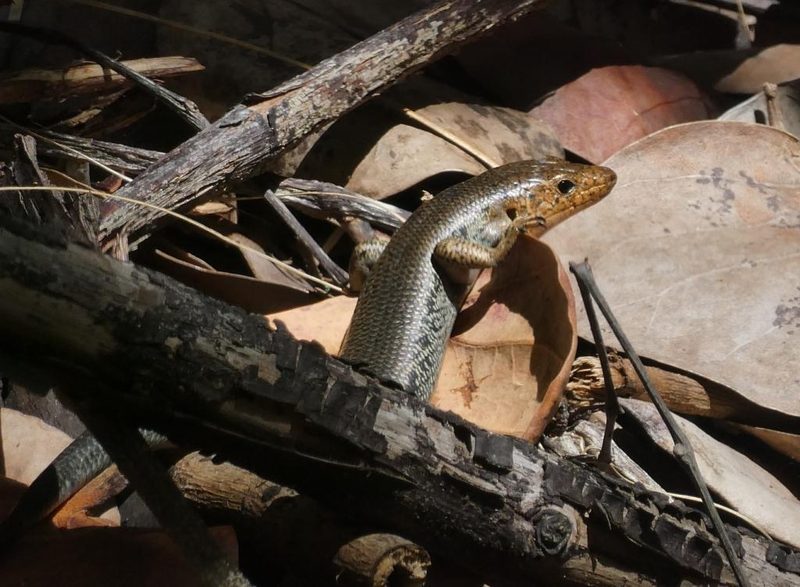
Bermuda skink (rock lizard) Plestiodon longirostrisfound only in BermudaprotectedBermuda’s only native lizard and critically endangered. Shiny brown-black with an orange throat; the young have striped sides and bright blue tails. It survives on rocky shores and small islands, mainly at Spittal Pond and the Castle Harbour islands. Litter such as glass bottles traps and kills skinks, so please take yours home.Photo: Alison Copeland (CC BY) 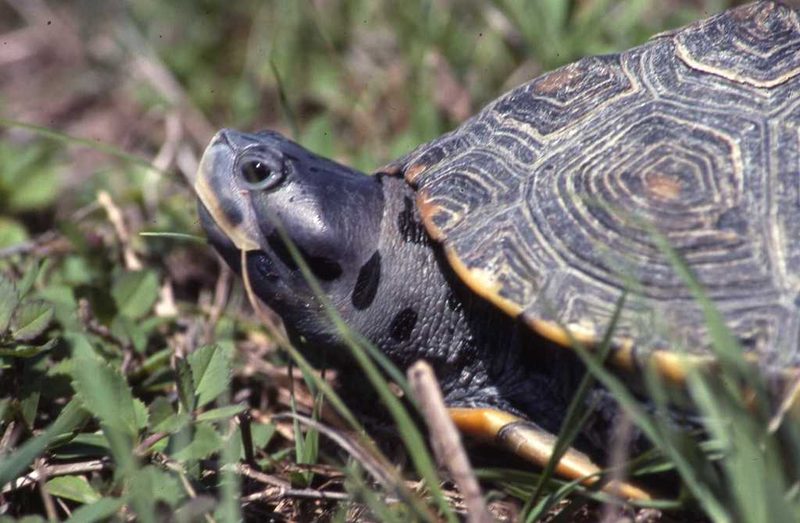
Diamondback terrapin Malaclemys terrapinnativeprotectedA small turtle of brackish, mangrove-fringed ponds. It reached Bermuda naturally, probably carried by the Gulf Stream, and now survives in only two ponds.Photo: iNaturalist user (CC0)
Lizards brought by people
Bermuda has three long-established anoles, all from the Caribbean, plus two recent arrivals. Anoles are harmless, change colour, and the males flash a coloured throat fan (a dewlap) to show off or warn off rivals.
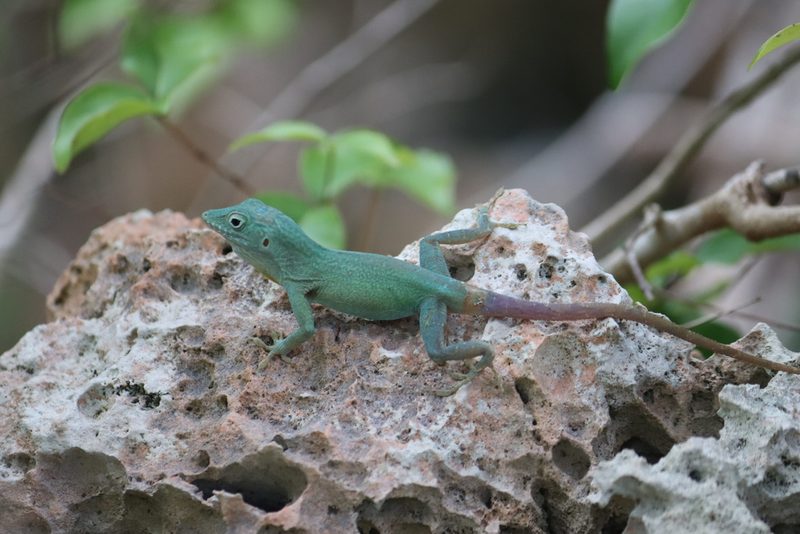
Jamaican anole Anolis grahamiintroducedaround the cottagesThe lizard you will see most often. Brought from Jamaica in 1905 to eat insect pests. Males are blue-green with an orange throat fan, but can turn dark brown in moments.Around the cottages: Basking on the walls, steps and garden plants.Photo: Aaron Doucett (CC BY-SA) 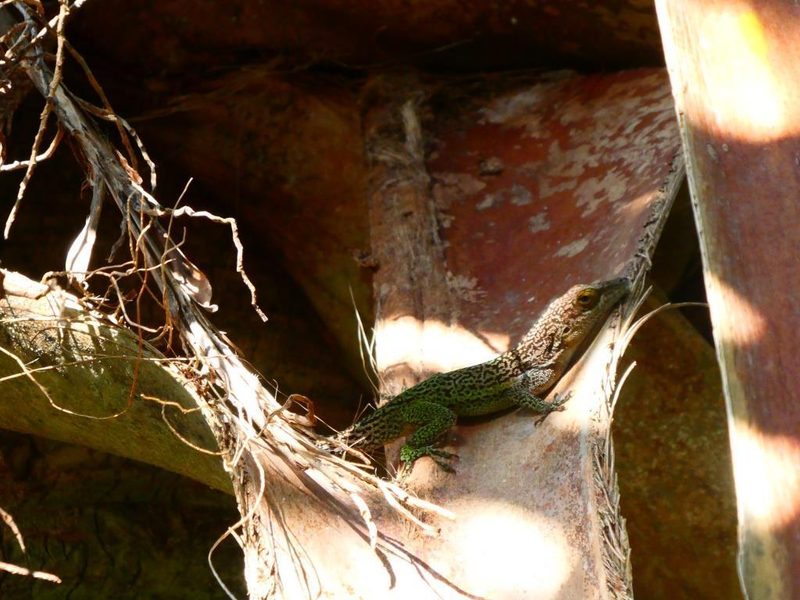
Warwick lizard (Antiguan anole) Anolis leachiiintroducedaround the cottagesA large anole from Antigua and Barbuda that arrived by accident, probably in the 1940s. First seen in Warwick and Paget, it has now spread over most of the island. Males have a large golden eye.Around the cottages: In the bigger shrubs and trees.Photo: Alison Copeland (CC BY) 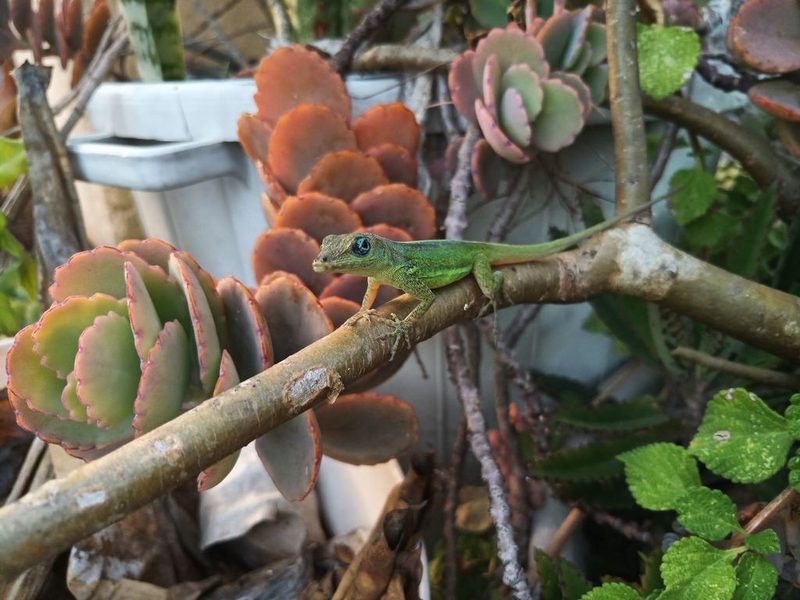
Somerset lizard (Barbados anole) Anolis extremusintroducedaround the cottagesFrom Barbados; probably arrived by accident in the 1940s on ships docking at the Dockyard. In Bermuda it lives only in the West End, in Sandys parish, where our cottages are. (Older books call it Anolis roquet.)Around the cottages: Sandys is its only home in Bermuda, so look out for it in the garden.Photo: Roland Taylor (CC BY) 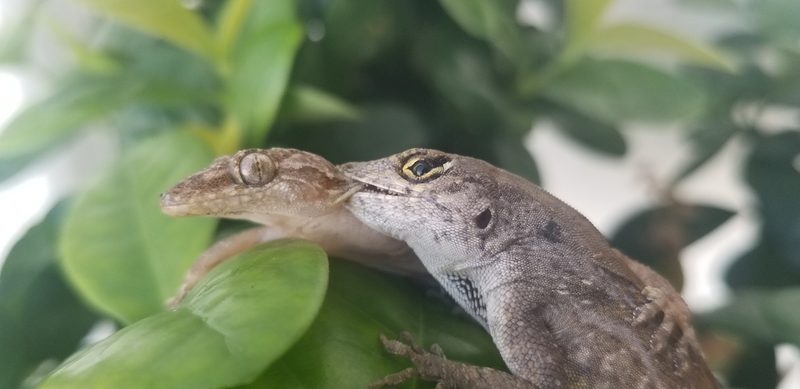
Brown anole Anolis sagreiintroducedA newcomer, first noticed in 2014 and thought to have come from Florida.Photo: chloe ⋆˚꩜。 (CC BY-SA) 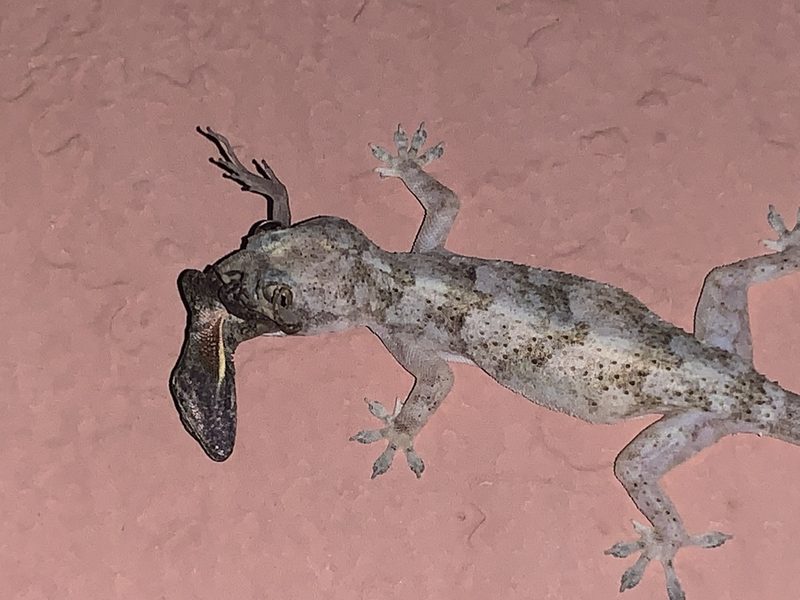
Tropical house gecko Hemidactylus mabouiaintroducedGeckos have recently settled in parts of the island. Pale and active at night, they hunt insects around outside lights.Photo: iNaturalist user (CC0)
Turtles brought by people
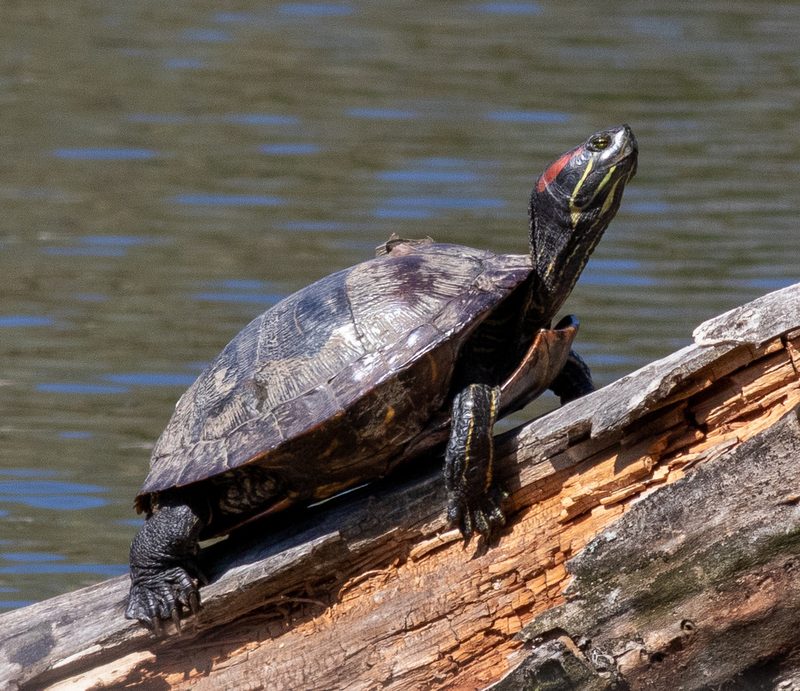
Red-eared slider Trachemys scripta elegansintroducedA North American pet turtle. Unwanted pets released into ponds now live wild in several of them.Photo: iNaturalist user (CC0)
Sea turtles
All sea turtles are protected in Bermuda. Bermuda once had a large nesting population of green turtles, but they were wiped out centuries ago by over-harvesting; there has been no regular nesting since, and the green turtles seen today are juveniles that drifted here from nesting beaches in the Caribbean and Florida and stay for some years before leaving to breed. The Bermuda Turtle Project has studied them for more than 50 years. If you take a boat out, go slowly over the seagrass and in the bays, as turtles come up to breathe.
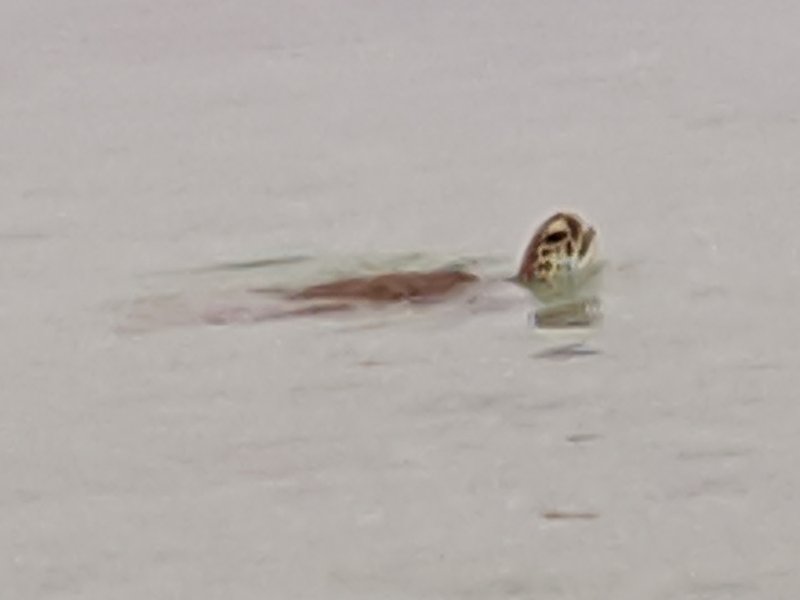
Green turtle Chelonia mydasnativeprotectedaround the cottagesThe turtle you are most likely to see, grazing in seagrass beds and bays. Numbers fell sharply around 2020 as Bermuda’s seagrass declined.Around the cottages: Often seen in Mangrove Bay, coming up to breathe.Photo: Watford Studios (Just off the beach at Sugar Cane Cottage, 10 June 2019) 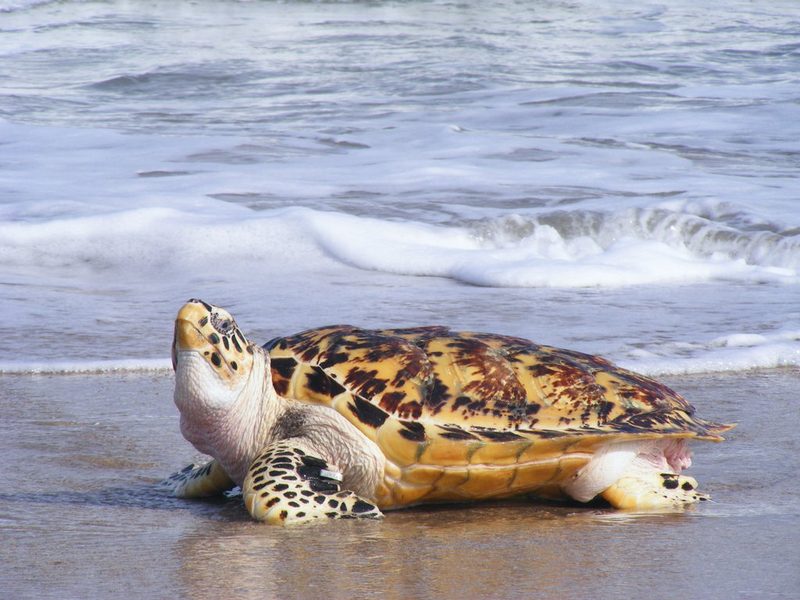
Hawksbill turtle Eretmochelys imbricatanativeprotectedSeen on the coral reefs. A narrow, hawk-like beak and a beautiful shell of overlapping plates.Photo: Iván Cumpián (CC BY) 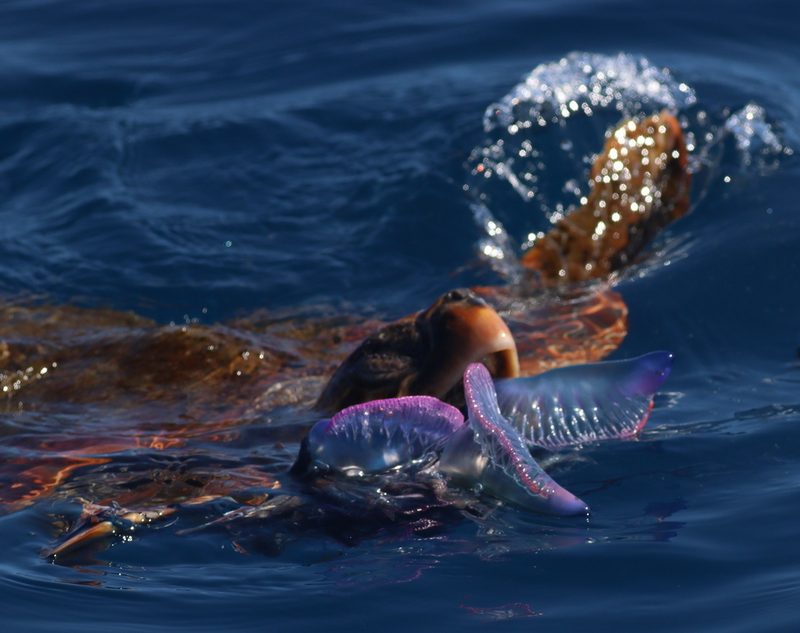
Loggerhead turtle Caretta carettanativeprotectedOccasionally seen offshore. A big head and a reddish-brown shell; young loggerheads drift with the floating Sargassum weed.Photo: Jan Ebr & Ivana Ebrová (CC BY) 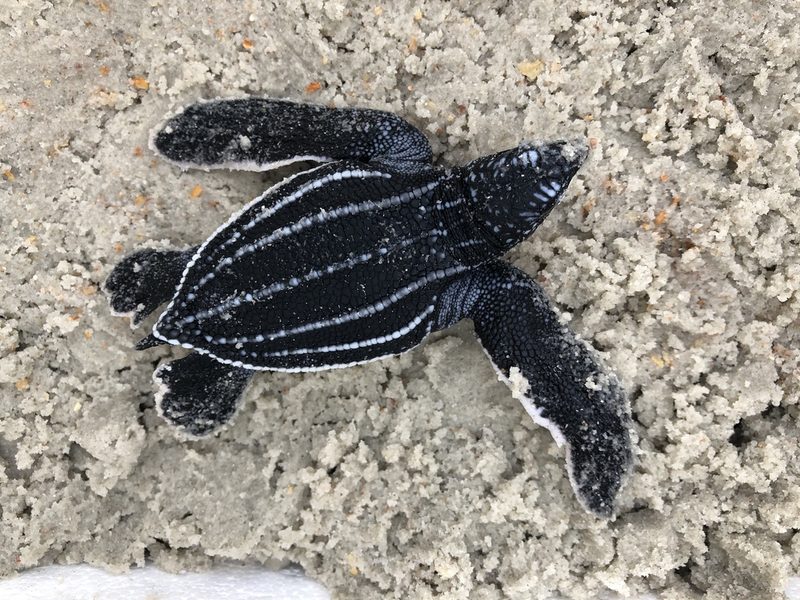
Leatherback turtle Dermochelys coriaceanativeprotectedThe world’s largest turtle, with a leathery, ridged back instead of a hard shell. A rare visitor to Bermuda’s offshore waters.Photo: Pam Kleinsasser (CC BY) 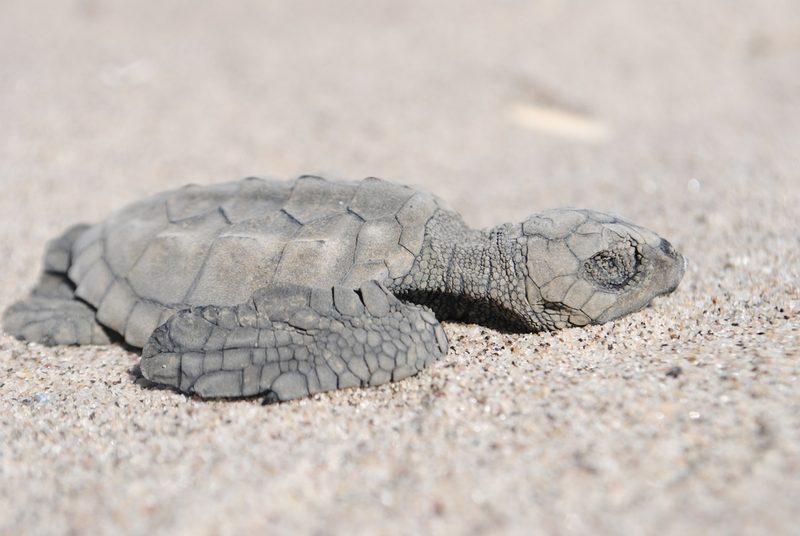
Kemp’s ridley turtle Lepidochelys kempiinativeprotectedThe smallest and rarest sea turtle in the world; only very rarely recorded in Bermuda.Photo: Zihao Wang (CC BY)
Frogs: what is that whistling at night?
Bermuda has no native amphibians: there are no true freshwater ponds or streams, and frogs and toads could not cross the ocean on their own. The three species found here were all brought in by people in the late 1800s. Guests often ask about the high, sweet “gleep, gleep” chorus that fills the air after dark. It isn’t a bird or an insect: it’s the tiny whistling frog, no bigger than a thumbnail. Only the males call, by blowing up and deflating a large throat pouch. You’ll hear them on warm nights, roughly April to November, and especially after rain; they go quiet when it turns cool. They are very hard to spot, but if you look with a torch you may find one on a leaf or even on a window.
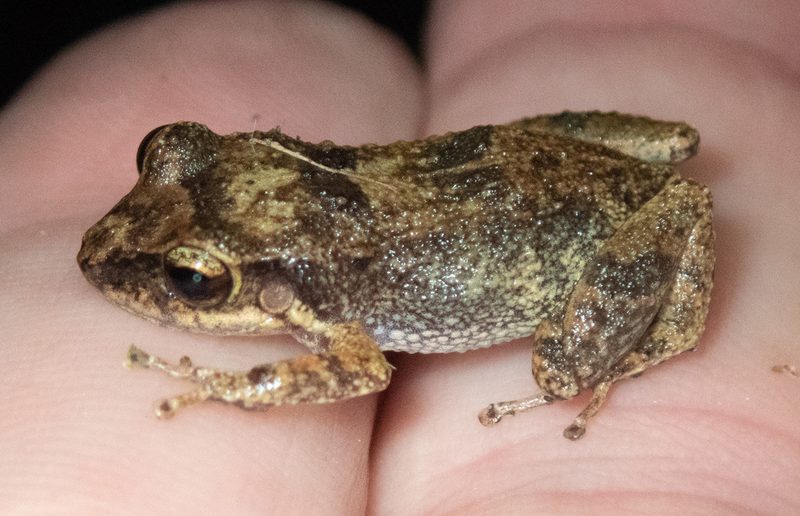
Whistling frog Eleutherodactylus johnstoneiintroducedaround the cottagesOnly 2 to 3 cm long, grey-brown to pinkish with darker markings, and sticky toe-pads that let it climb glass. Introduced in Pembroke in the 1880s, probably on imported plants. It eats ants, aphids and other pests, so it is a friend of the garden. (A 2022 study suggests Bermuda’s frogs may belong to a closely related species, the Montserrat whistling frog, E. montserratae.)Around the cottages: You will hear their night-time chorus on warm evenings, roughly April to November.Photo: Don Loarie (CC BY) 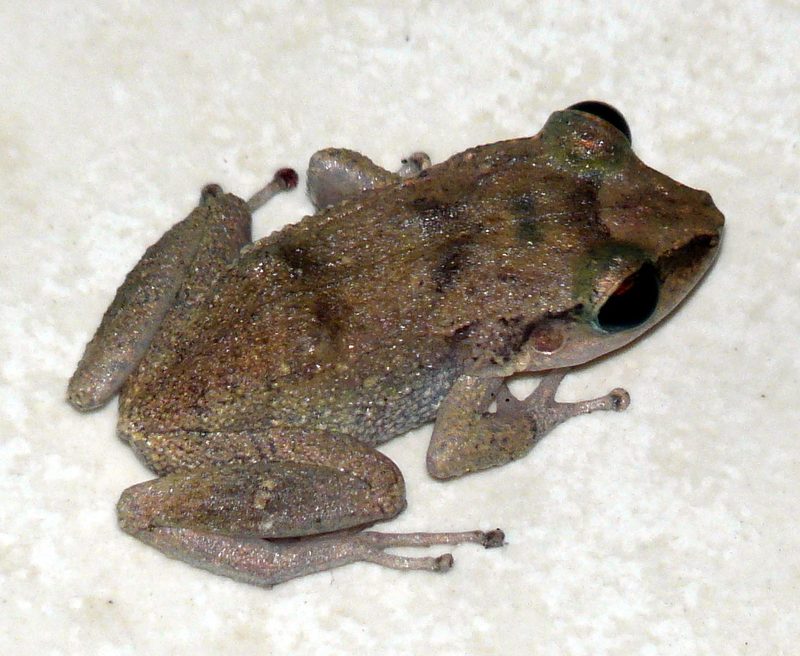
Jamaican whistling frog Eleutherodactylus gosseigone from BermudaArrived from Jamaica on imported plants around 1895. Its call is a single repeated note, “tew, tew, tew”. It has not been found in recent years despite searches, so it has probably died out in Bermuda.Photo: iNaturalist user (CC0)
Toads
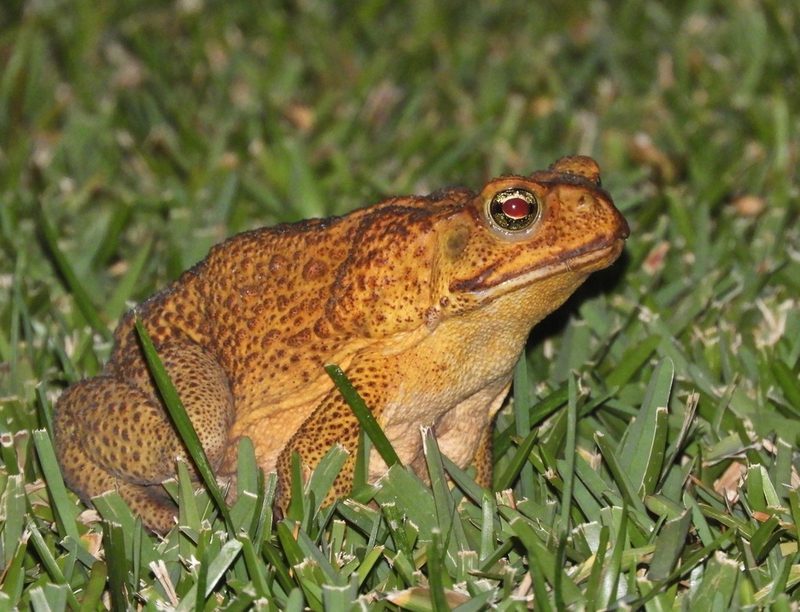
Cane toad (giant or marine toad) Rhinella marinaintroducedaround the cottagesBrought from Guyana in 1885 by Captain Nathaniel Vesey to eat garden pests; females grow up to 14.5 cm long. Toads hide by day and come out on summer evenings, often onto roads, which is why Bermudians call them road toads. They are not aggressive, but the glands behind the eyes hold a poison that is dangerous to dogs. Wash your hands if you touch one.Around the cottages: On the lawn and paths on summer evenings.Photo: Akr (CC BY)
See the complete list of reptiles and amphibians recorded in Bermuda (17 species) »
« Flora & Fauna | Mammals | Reptiles & Amphibians | Insects | Spiders, crabs & snails | Sea creatures | Birds