« Flora & Fauna | Mammals | Reptiles & Amphibians | Insects | Spiders, crabs & snails | Sea creatures | Birds
Not every creepy-crawly is an insect. This page covers Bermuda’s other land invertebrates: land crabs, snails and slugs, spiders, centipedes, millipedes and woodlice. Insects have their own page, and crabs, urchins and other animals of the shore and sea are on Crabs, Lobsters, Urchins and Other Sea Creatures.
Bermuda has some rare and special ones. Two land crabs and Bermuda’s own two land snails are protected by law, and the greater Bermuda land snail was thought to be extinct until it was found again in 2014. Many of the snails, spiders and millipedes you will see in gardens, though, arrived with plants and cargo.
Key: found only in Bermuda endemic native arrived naturally migrant visitor passes through, does not live here introduced brought in by people protected protected by Bermuda law (Bermuda’s protected species: Protected Species Act 2003 and Fisheries (Protected Species) Order 1978) around the cottages you may see it at Watford Studios
Around the cottages
Our cottages sit right on the water at Sugar Cane Point, on Mangrove Bay in Somerset. In the garden, on the lawn, along the sea wall and out in the bay, look out for:
- Milk snail: In and around the cottages, especially after rain.
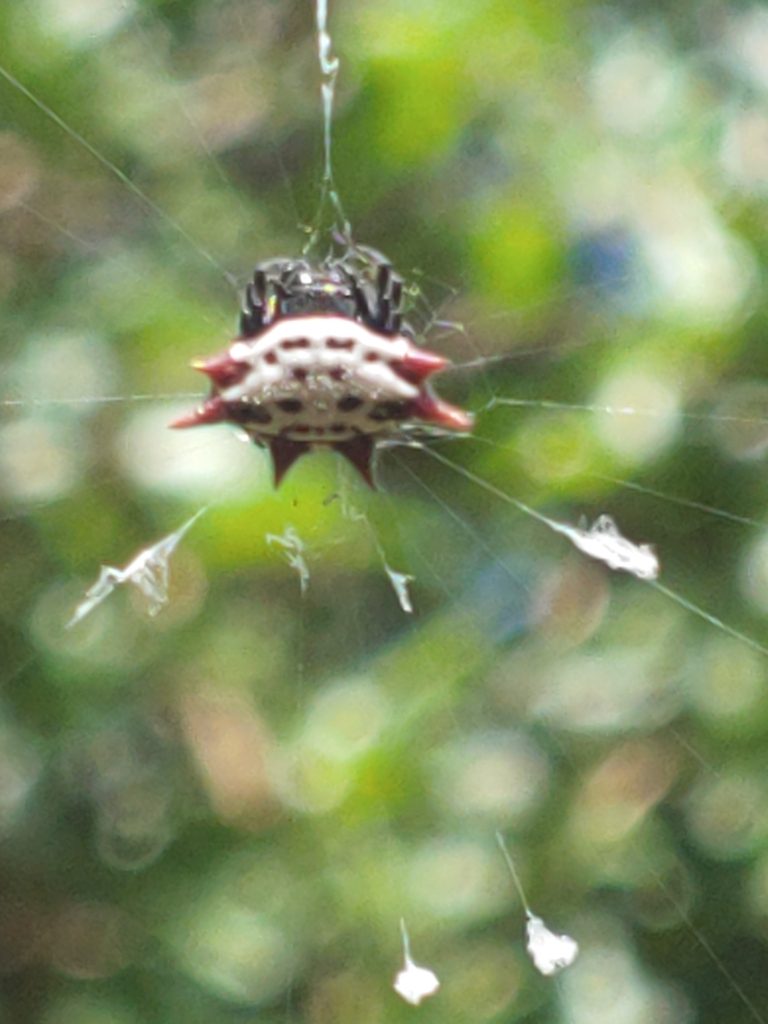
- Spiny orb-weaver (crab spider): Their webs are strung between the garden shrubs.
Land crabs
Land crabs live in burrows on land but still need the sea: their eggs hatch in salt water and the young drift as plankton before coming ashore.
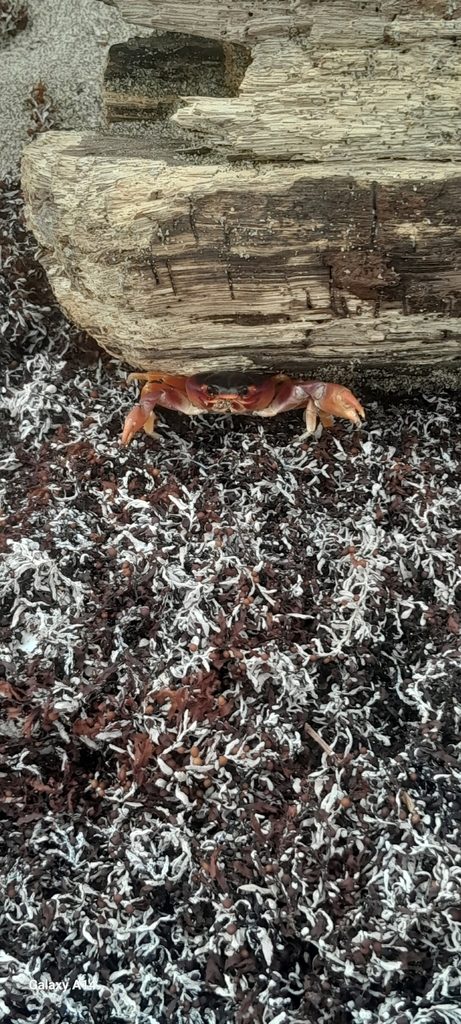
Red land crab (blackback land crab) Gecarcinus lateralisnativePurple-black shell, red legs and claws, up to 10 cm across. Once one of the most commonly seen native animals in Bermuda, it was poisoned as a garden and golf-course pest and collected for fishing bait, and is now much scarcer. It lives in burrows in sandy coastal woodland and dunes, especially on the South Shore, and comes out at night or on rainy days.Photo: iNaturalist user (CC0) 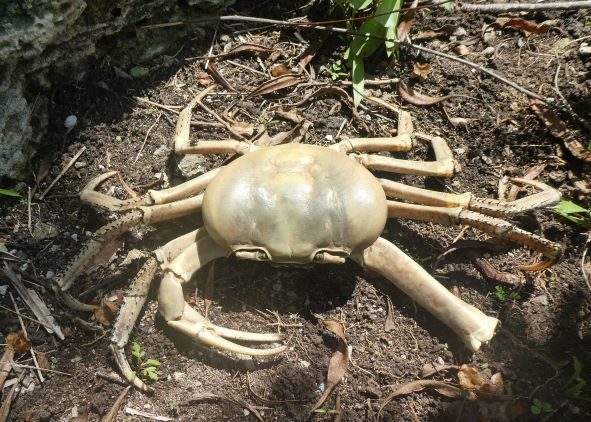
Giant land crab (blue land crab) Cardisoma guanhuminativeprotectedBermuda’s largest land crab, up to 15 cm across, blue, lavender or grey, with one claw much bigger than the other. It digs deep burrows down to the water table in muddy coastal ground and mangroves. In summer the crabs head to the sea to release their eggs and can get stranded on roads. It is an offence to disturb, injure or kill one or damage its burrow; if you find one in trouble, tell us and we will contact the Department of Environment and Natural Resources.Photo: Alison Copeland (CC BY) 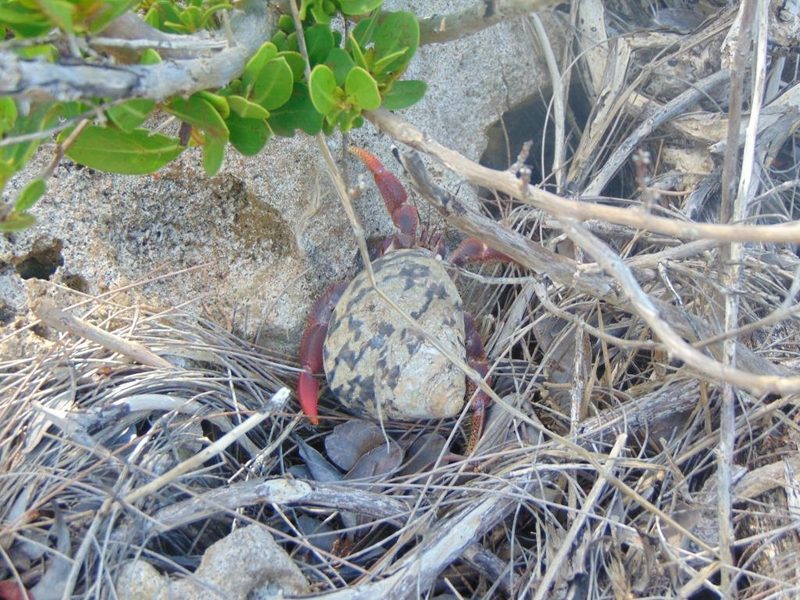
Land hermit crab Coenobita clypeatusnativeprotectedBermuda’s only land-living hermit crab, up to 10 cm long, with big claws and hairy red and purple legs. It needs large empty shells, mostly West Indian topshells, and is now rare; the largest population lives by the Hungry Bay mangrove swamp. It climbs high into coastal trees and scavenges along the shore.Photo: Alison Copeland (CC BY)
Land snails and slugs
Fossils show that Bermuda once had at least 12 species of its own land snails (Poecilozonites); only two survive, and both are critically endangered.
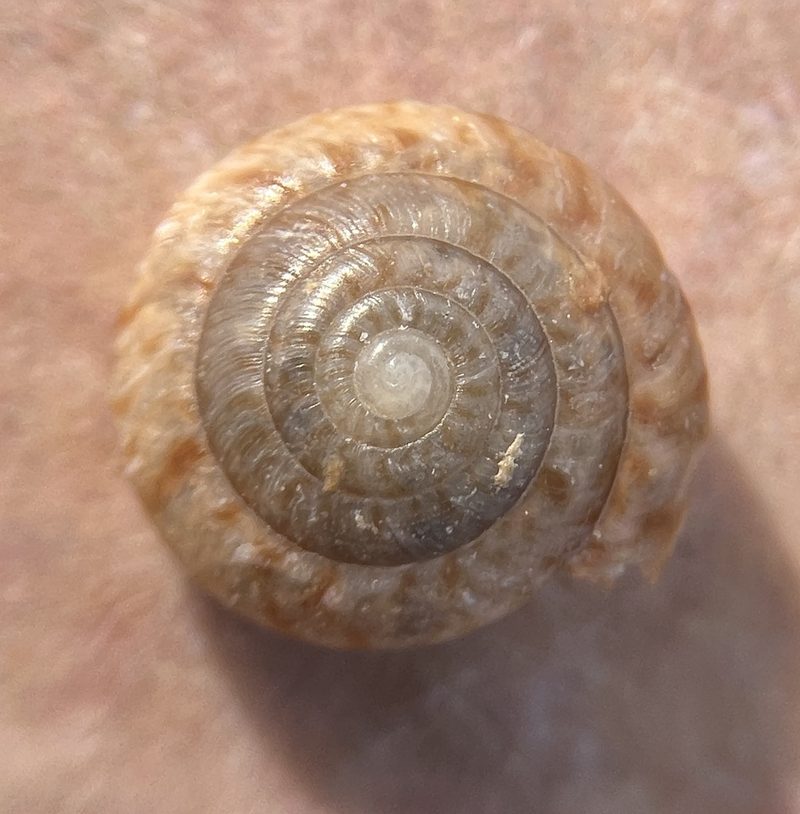
Greater Bermuda land snail Poecilozonites bermudensisfound only in BermudaprotectedAbout the size of a Bermuda 25-cent coin (23 mm). Thought extinct by the early 1990s, it was rediscovered by a member of the public in a City of Hamilton alleyway in 2014. Chester Zoo in the UK began breeding it in 2016, and thousands of snails have since been returned to island nature reserves where threats can be controlled.Photo: Thomas Irvine (CC BY) Lesser Bermuda land snail Poecilozonites circumfirmatusfound only in BermudaprotectedA tiny snail: adults grow to only about 10 mm. Critically endangered, and also kept at Chester Zoo as a safeguard against extinction. Bermuda micro-snail Vertigo bermudensisfound only in BermudaA tiny snail, only a couple of millimetres long, found only in Bermuda. It was feared extinct until a thriving population was found living under leaf litter at Southlands. Its closest relative lives on the coast of the south-eastern United States.
Bermuda amber snail Succinea bermudensisfound only in BermudaA small, thin-shelled amber snail found only in Bermuda.
Bermuda freshwater limpet Ferrissia bermudensisfound only in BermudaprotectedA tiny limpet-shaped freshwater snail found only in Bermuda, where it lives in the ponds and marsh at Pembroke Marsh. It is critically endangered and protected. 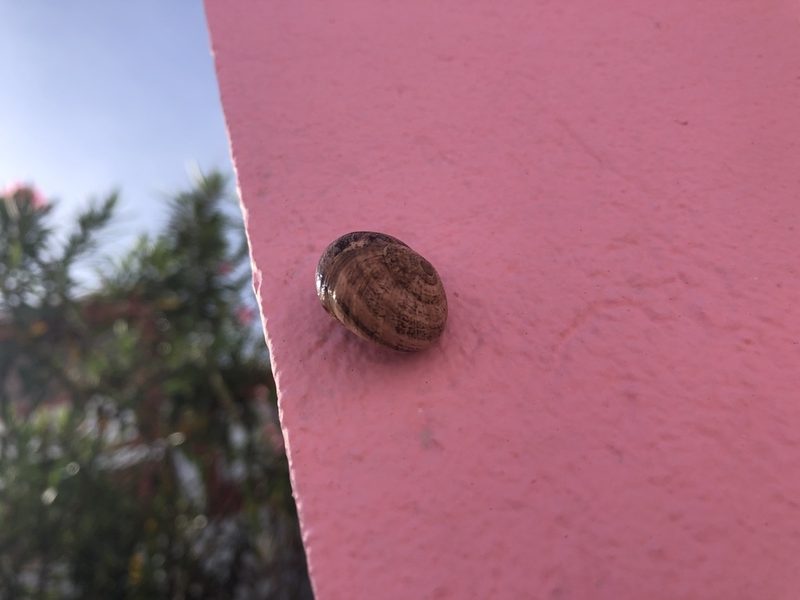
Milk snail Otala lacteaintroducedaround the cottagesThe big snail you are most likely to see in Bermuda gardens, out and about after rain. A Mediterranean species brought in by people; its shell has a dark brown mouth. It is an edible snail, also known as the Spanish snail: it is eaten around the Mediterranean much like French escargot, and the Romans ate it too. Please don’t try ours, though: garden snails can carry parasites.Around the cottages: In and around the cottages, especially after rain.Photo: iNaturalist user (CC0) 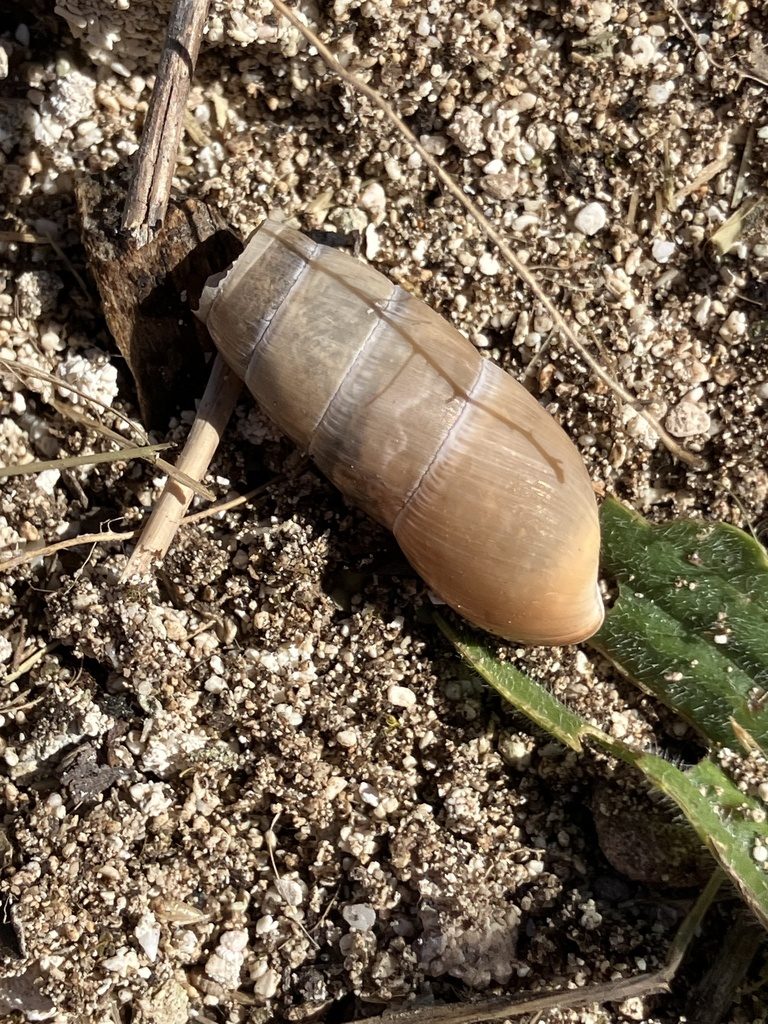
Decollate snail Rumina decollataintroducedA long, tapering shell whose tip breaks off as the snail grows, leaving a blunt end. Introduced from the Mediterranean; it eats other snails as well as plants.Photo: iNaturalist user (CC0) 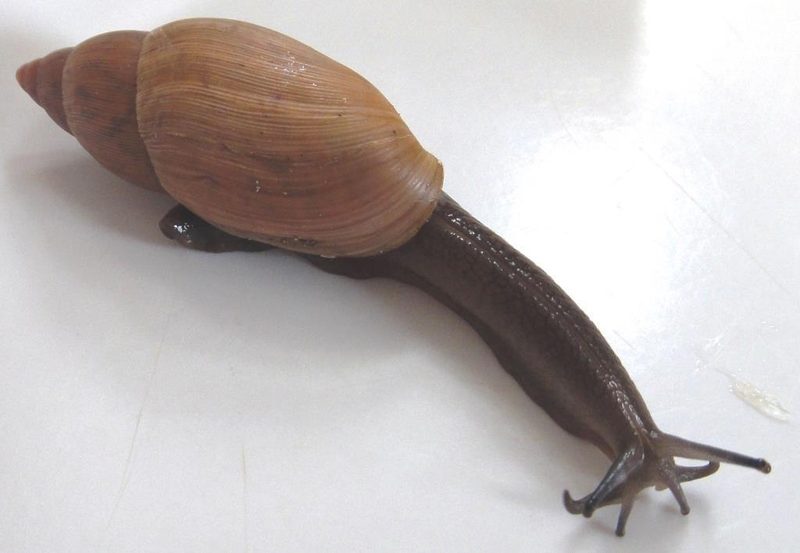
Rosy wolf snail Euglandina roseaintroducedA pinkish, torpedo-shaped snail that hunts other snails. It was brought to Bermuda to control the milk snail but also eats Bermuda’s own land snails, and helped push them to the edge of extinction.Photo: Alison Copeland (CC BY) 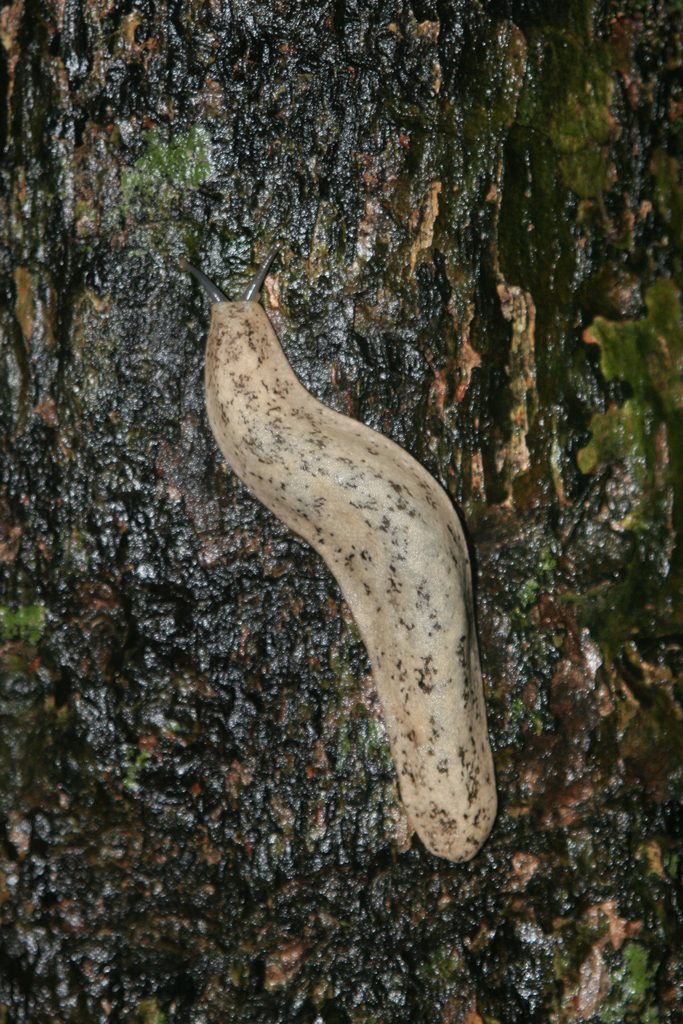
Pancake slug Veronicella sloaniiA flat, leathery slug with a mottled brown back that comes out on damp nights to feed on plants.Photo: Kristof Zyskowski (CC BY)
Spiders
None of Bermuda’s common spiders is dangerous. The brown widow (Latrodectus geometricus) has been recorded a few times; like any spider, it is best left alone.
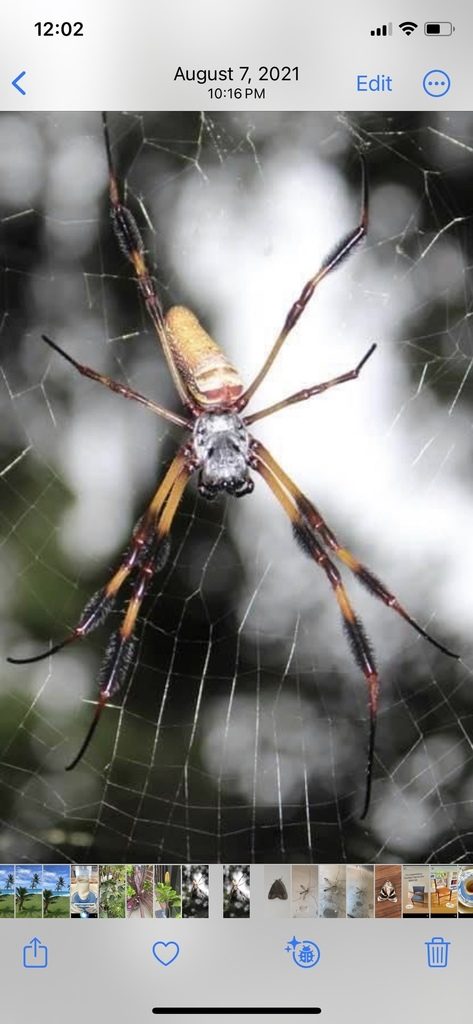
Golden silk orb-weaver Trichonephila clavipesnativeA large, long-legged spider with tufted, banded legs that spins big webs of golden-yellow silk in woods and gardens. The female is far bigger than the male. Not dangerous to people.Photo: nebrooks (CC BY) 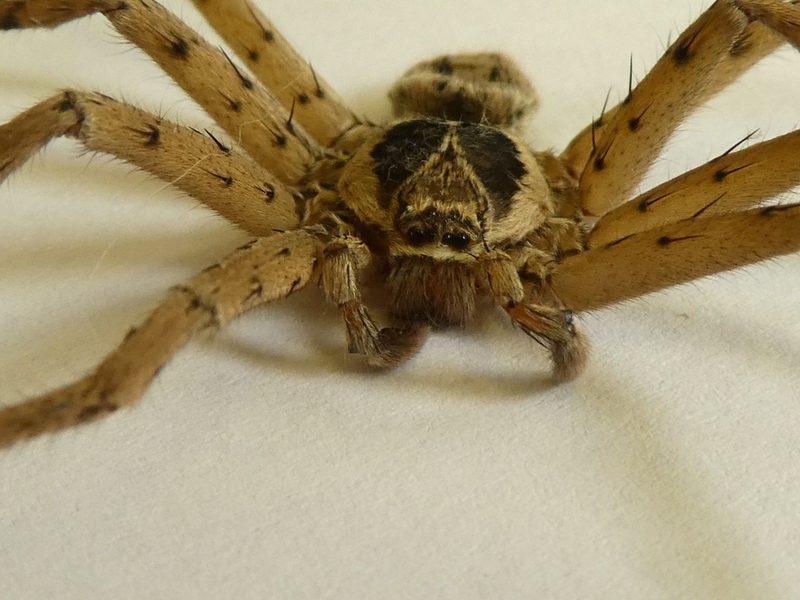
Huntsman spider Heteropoda venatoriaintroducedA big, flat, long-legged brown spider that runs fast and hunts at night, sometimes indoors, where it eats cockroaches. Harmless, though it may nip if handled.Photo: Alison Copeland (CC BY) 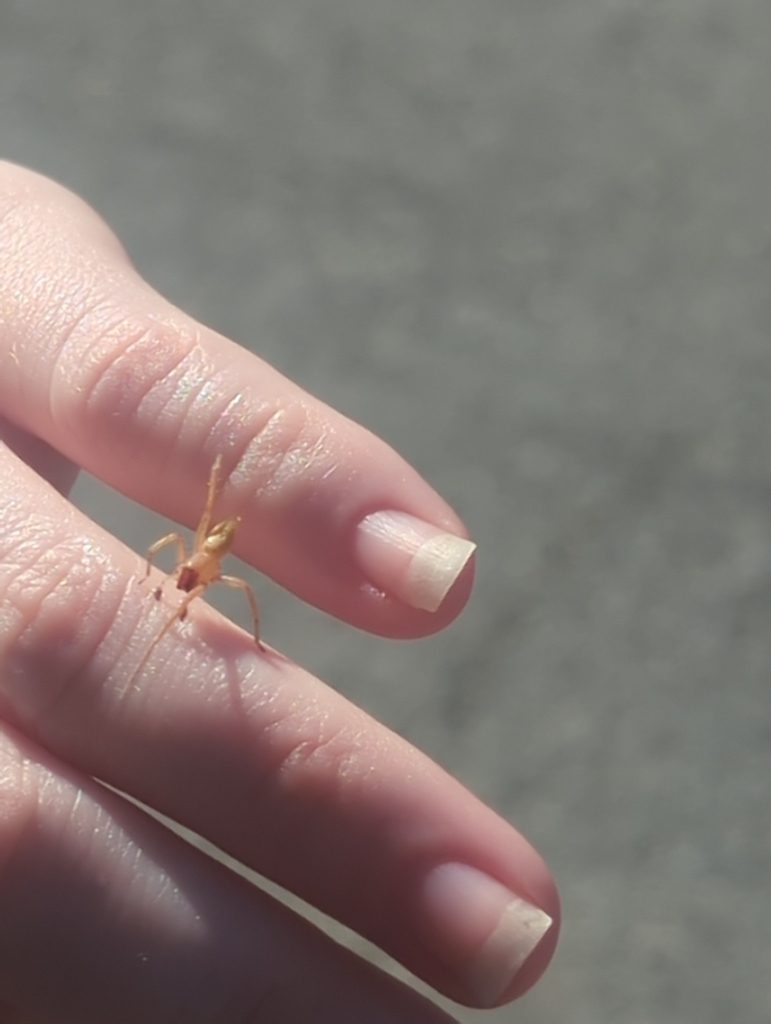
Yellow ghost spider Hibana veloxA pale yellowish spider that spins no web but hunts on leaves at night, hiding in a silk retreat by day.Photo: iNaturalist user (CC0)
Centipedes, millipedes and woodlice
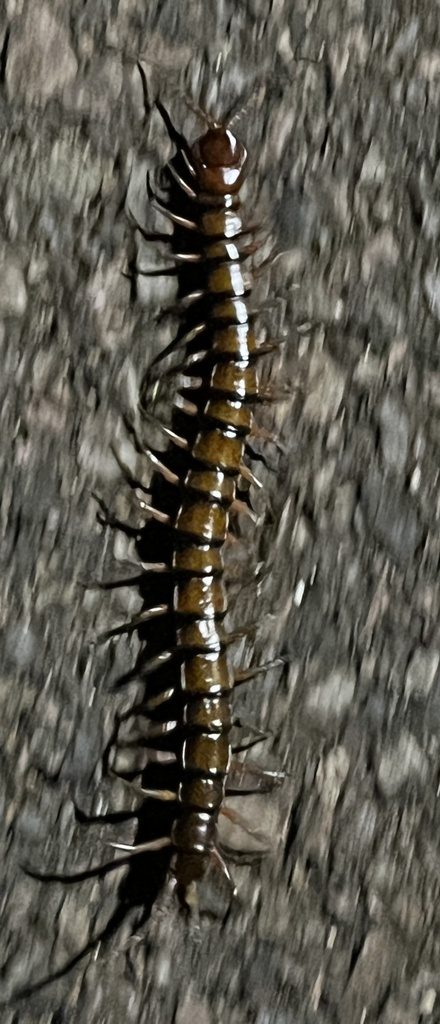
Bermuda centipede Scolopendra subspinipesBermuda’s large reddish-brown centipede can give a painful bite. It hides under stones, leaves and anything left on the ground, and occasionally comes indoors at night. Shake out shoes, towels and beach bags left outside, never pick one up, and tell us if you see one inside.Photo: Thomas Irvine (CC BY) 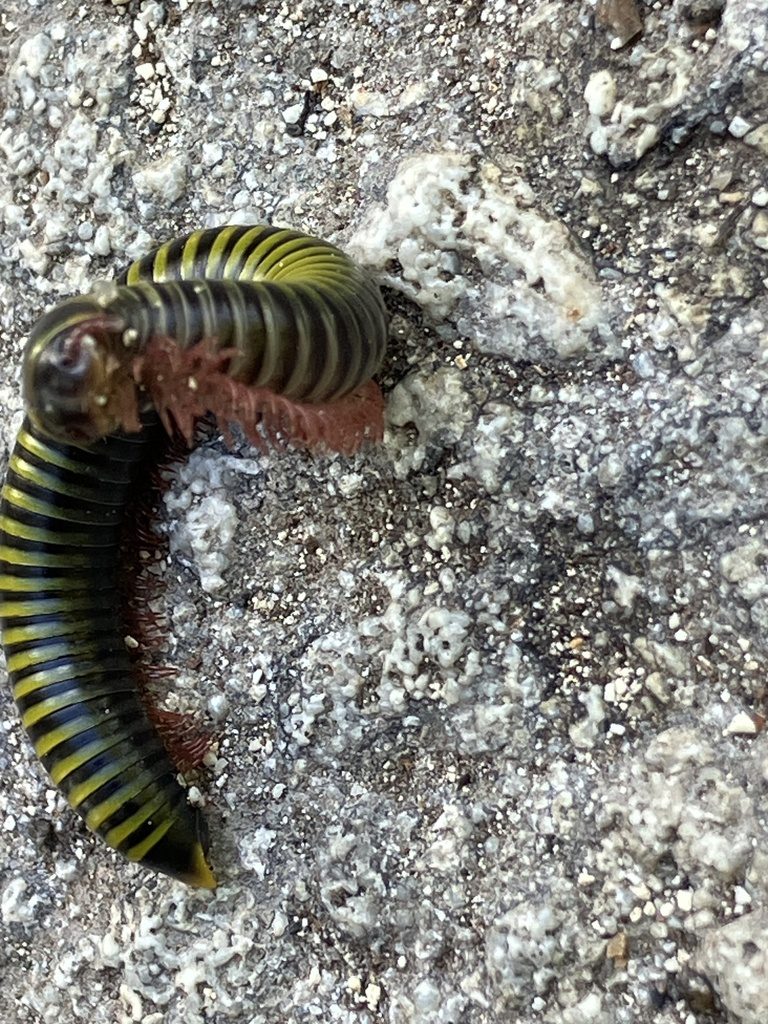
Bumblebee millipede Anadenobolus monilicornisA shiny dark millipede ringed with yellow, with red legs, often seen after rain. Millipedes don’t bite, but this one can ooze an irritating liquid, so wash your hands if you pick one up.Photo: iNaturalist user (CC0) 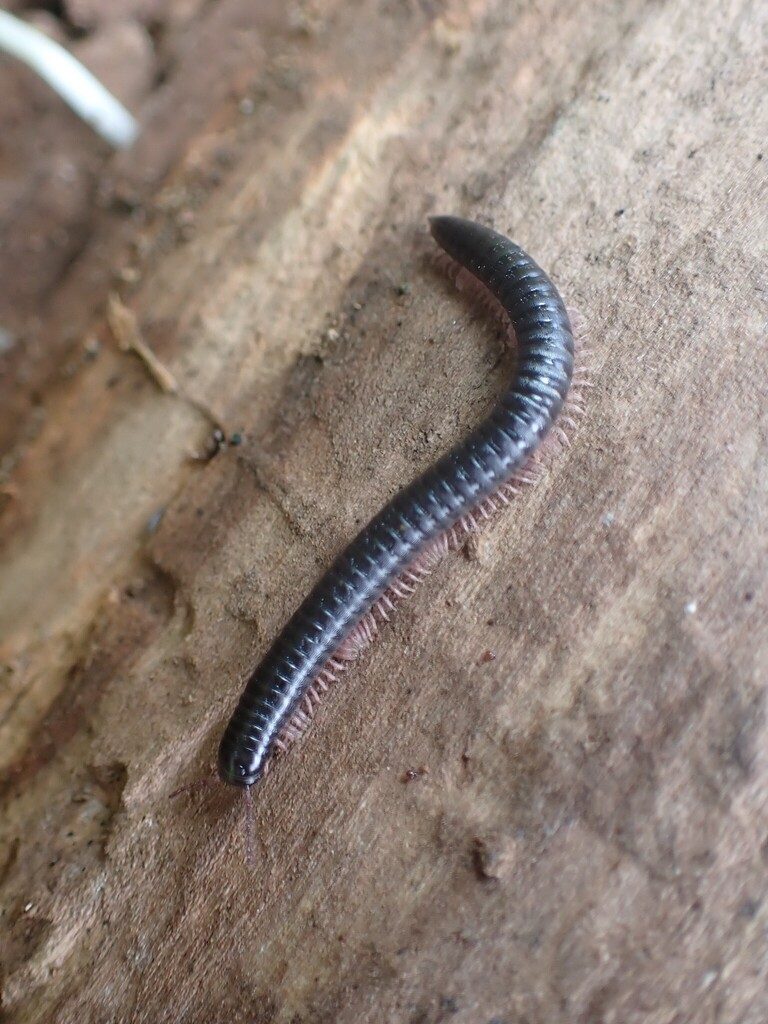
Portuguese millipede Ommatoiulus moreletiintroducedA slim black millipede from Portugal and Spain that curls into a tight spiral when disturbed and can turn up in large numbers after rain, sometimes wandering indoors.Photo: Sean Clifford (CC BY) 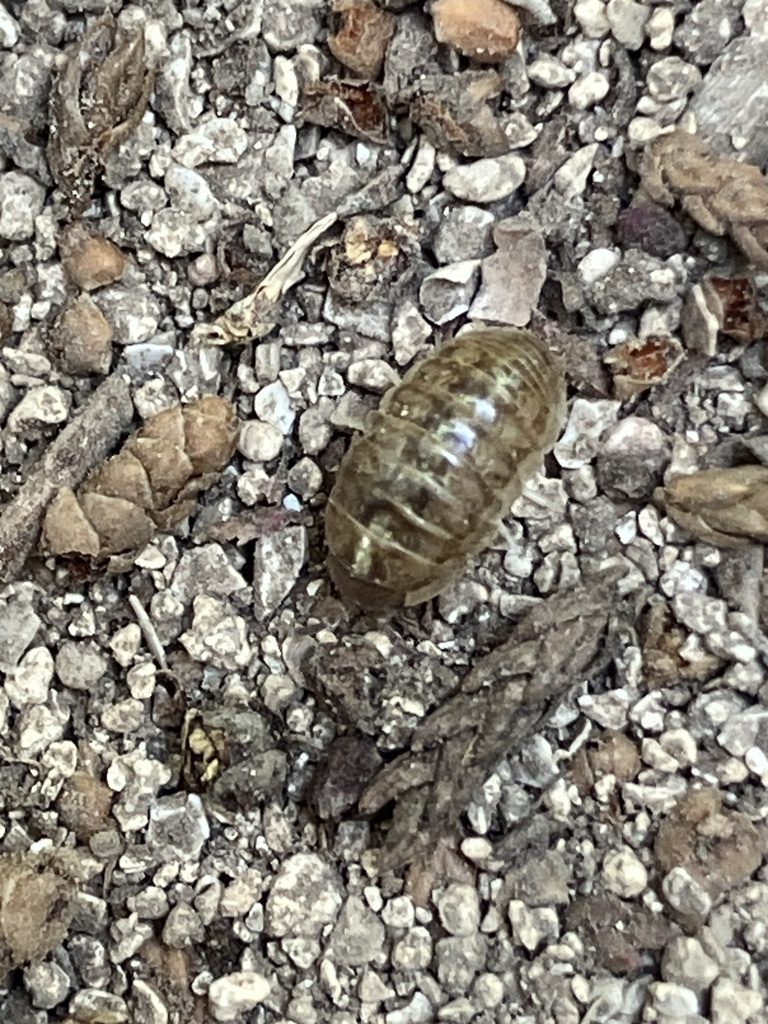
Pill woodlouse Armadillidium vulgareintroducedThe pill bug or roly-poly, which rolls into a ball when touched. A European arrival, it does useful work recycling dead leaves.Photo: iNaturalist user (CC0)
See the complete list of spiders, centipedes, land crabs and snails recorded in Bermuda (218 species) »
« Flora & Fauna | Mammals | Reptiles & Amphibians | Insects | Spiders, crabs & snails | Sea creatures | Birds