« Flora & Fauna | Plants of Bermuda | Old Roses | All the plants | Parks & Nature Reserves | Insects
Bermuda is a small, isolated island nearly 1,000 km from the nearest land, so every native plant arrived by itself: seeds carried by birds, wind or ocean currents. Only around 150 to 165 kinds of flowering plants and ferns are native, and about 15 of them are found nowhere else on Earth. Today they are far outnumbered by plants brought in by people: well over a thousand kinds have been introduced, mostly for gardens, and some now run wild.
When the first settlers arrived in the 1600s the island was covered in a forest of Bermuda cedar and palmetto. Much of it was cleared over the centuries, and then between 1946 and 1953 two accidentally introduced scale insects killed about 95% of the cedars. Invasive plants filled many of the gaps. Bermuda’s conservationists have been replanting native and endemic plants ever since, and the best places to see them are the nature reserves listed on our Parks & Nature Reserves page, especially Paget Marsh, Walsingham (Tom Moore’s Jungle), Spittal Pond and the Botanical Gardens.
Jump to: Found only in Bermuda | Trees and palms | Flowers and shrubs | Seaside plants | Ferns and mosses | Seagrasses and seaweeds | Fruit and garden plants | Old roses | Plants that cause trouble | Around the cottages
Key: found only in Bermuda endemic native arrived naturally introduced brought in by people invasive introduced and spreading at the expense of native plants protected protected by Bermuda law (Bermuda’s protected species: Protected Species Act 2003, Protected Species Orders 2012 and 2015) around the cottages you may see it at Watford Studios
Found only in Bermuda
These plants are endemic: they grow wild nowhere else in the world. Some are common, like the Bermudiana and the maidenhair fern; others survive in just a few places and are being carefully grown and replanted.
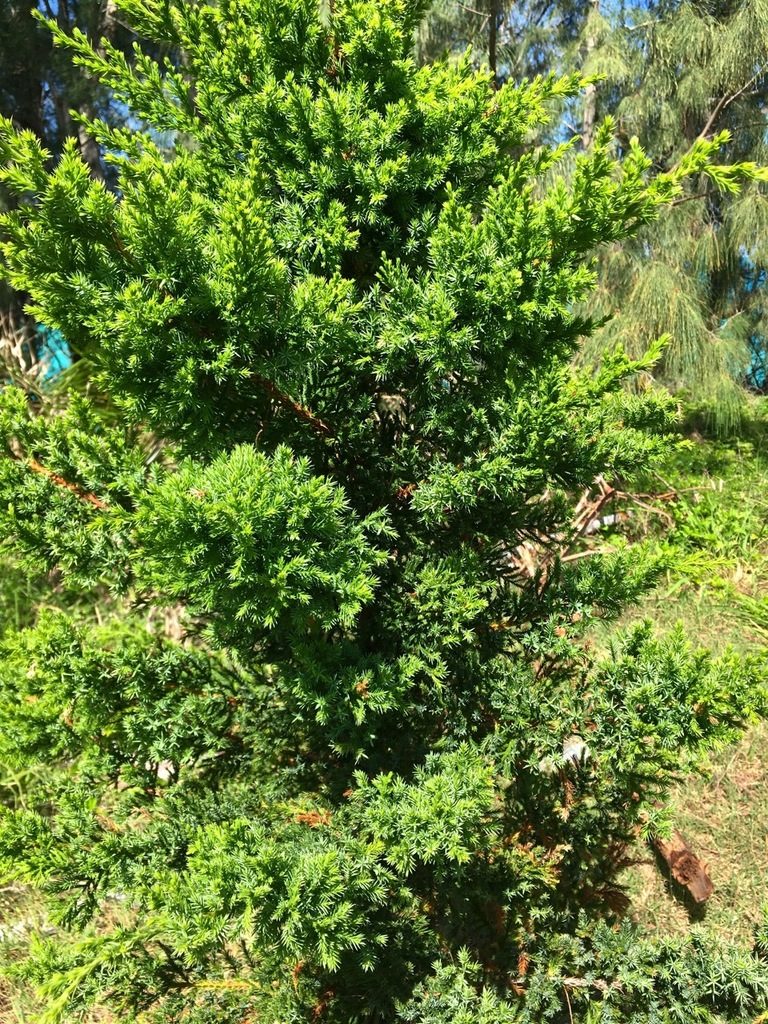
Bermuda cedar Juniperus bermudianafound only in Bermudaprotectedaround the cottagesNot a true cedar but a juniper. It once covered much of the island, and its fragrant red wood built Bermuda’s ships, houses and furniture. Between 1946 and 1953 two introduced scale insects killed about 95% of the trees; replanting from seed of the survivors began in the 1980s.Around the cottages: In the graveyard near the cottages.Photo: Akr (CC BY) 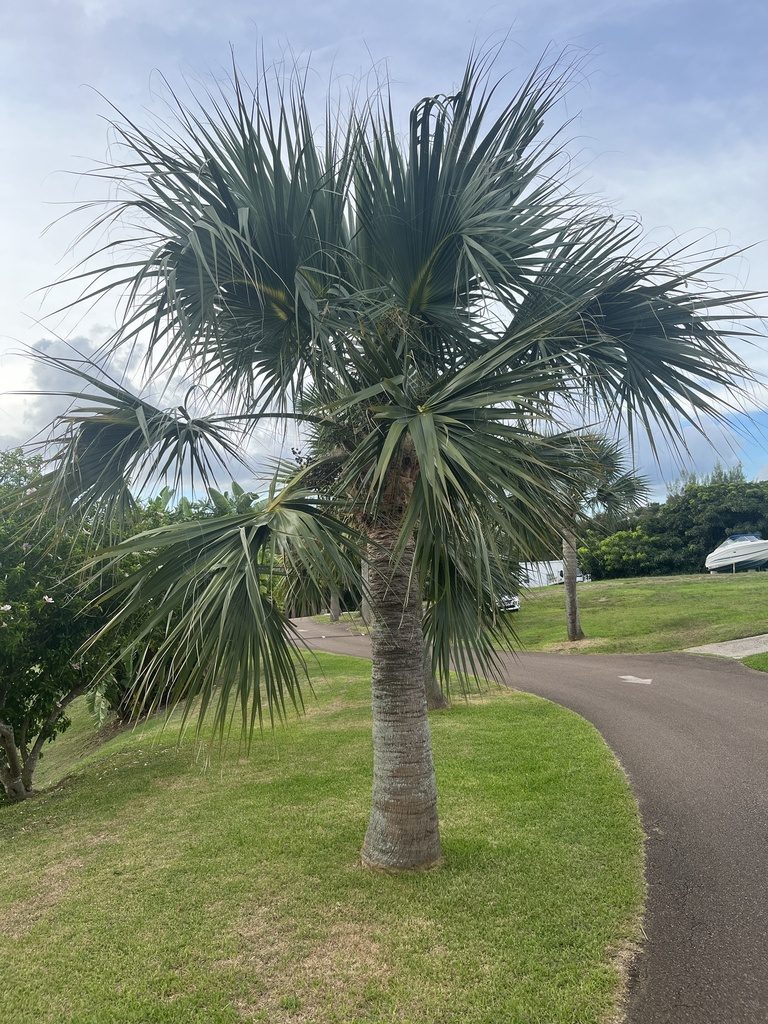
Bermuda palmetto Sabal bermudanafound only in Bermudaaround the cottagesBermuda’s only native palm, growing to about 10 m. Its leaves were once used for thatch, hats, baskets and rope, and its fruit for a strong drink called bibby. Tell it from the invasive Chinese fan palm by the yellow patch in the middle of the leaf and its smooth, spineless leaf stalks.Around the cottages: In the graveyard near the cottages.Photo: Thomas Irvine (CC BY) 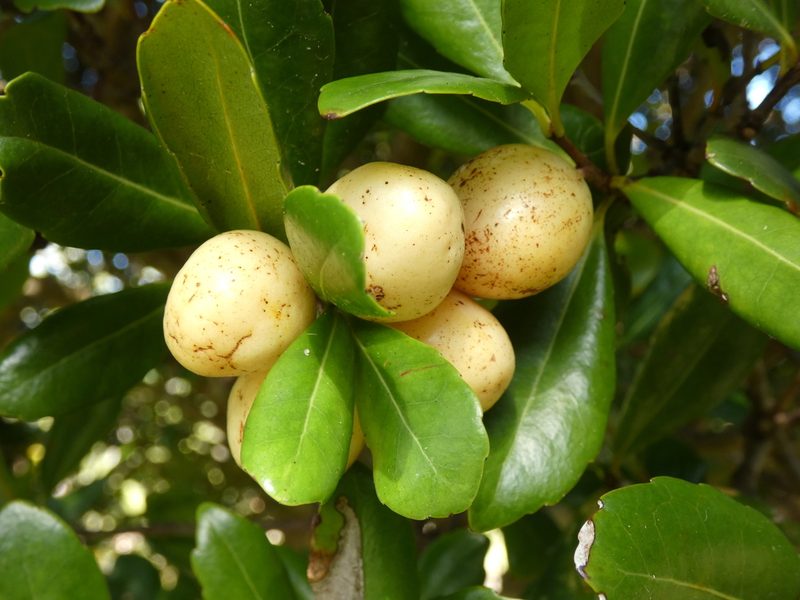
Bermuda olivewood Elaeodendron laneanumfound only in Bermudaaround the cottagesOne of Bermuda’s three endemic trees, 8 to 14 m tall with smooth bark. It grew in sheltered valleys; rats and birds eat the fruit, so few seedlings survive on the main island. Listed as Endangered by the IUCN, it is now widely planted.Around the cottages: The hedge at Sugar Cane Cottage is Bermuda olivewood.Photo: Alison Copeland (CC BY) 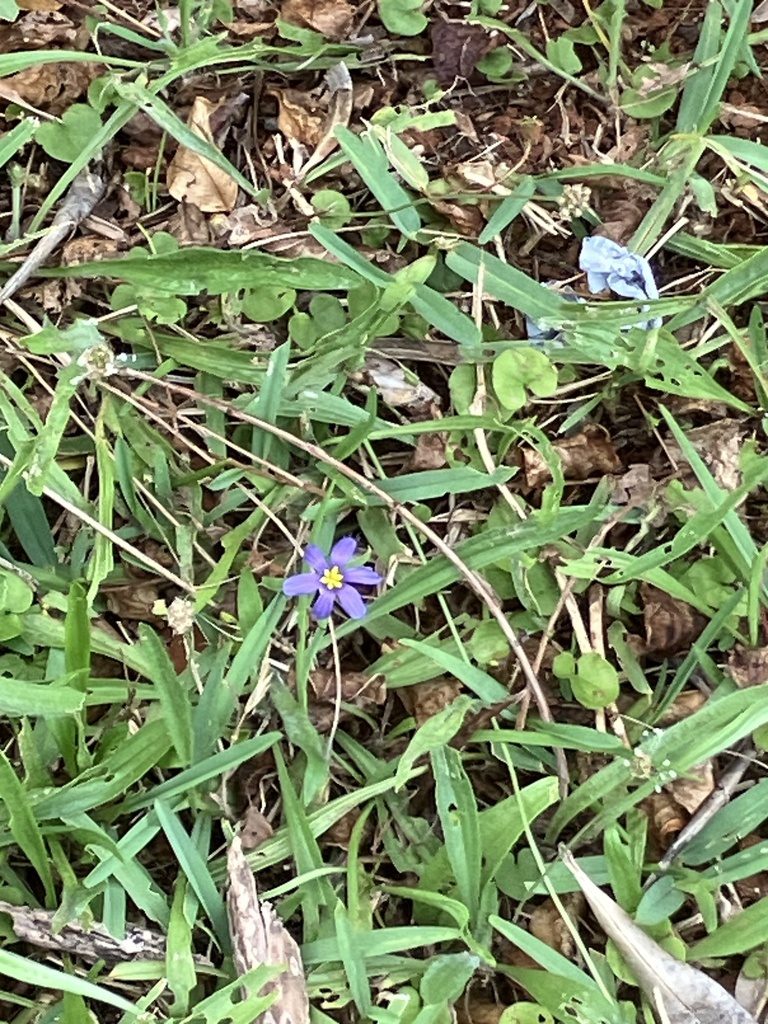
Bermudiana Sisyrinchium bermudianafound only in Bermudaaround the cottagesBermuda’s national flower: a small member of the iris family with purple flowers and yellow centres in spring. It grows on dunes and rocky shores and seeds itself into unmown lawns, so it is common enough not to need protection.Around the cottages: Look for it in spring in the grass and garden beds.Photo: iNaturalist user (CC0) 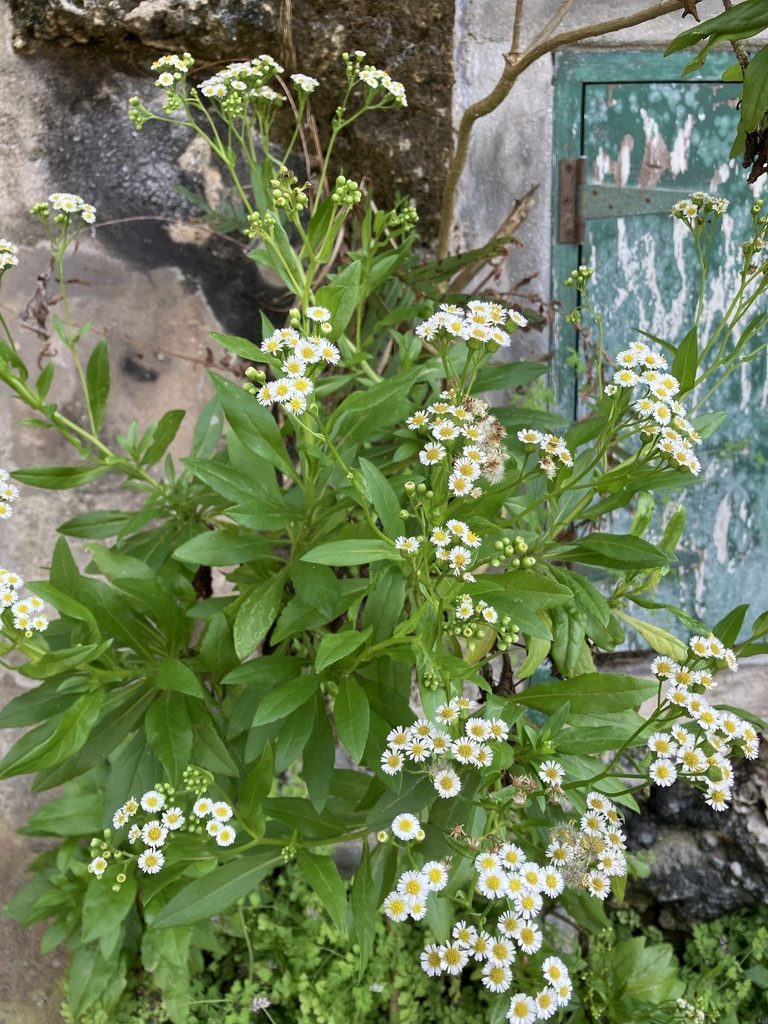
Darrell’s fleabane Erigeron darrellianusfound only in BermudaprotectedA small, shrubby daisy with clusters of white, yellow-centred flowers in spring. It grows on sandy and rocky coasts and walls: look for it at Astwood Park, Spittal Pond and along the South Shore between Warwick Long Bay and Horseshoe Bay.Photo: iNaturalist user (CC0) 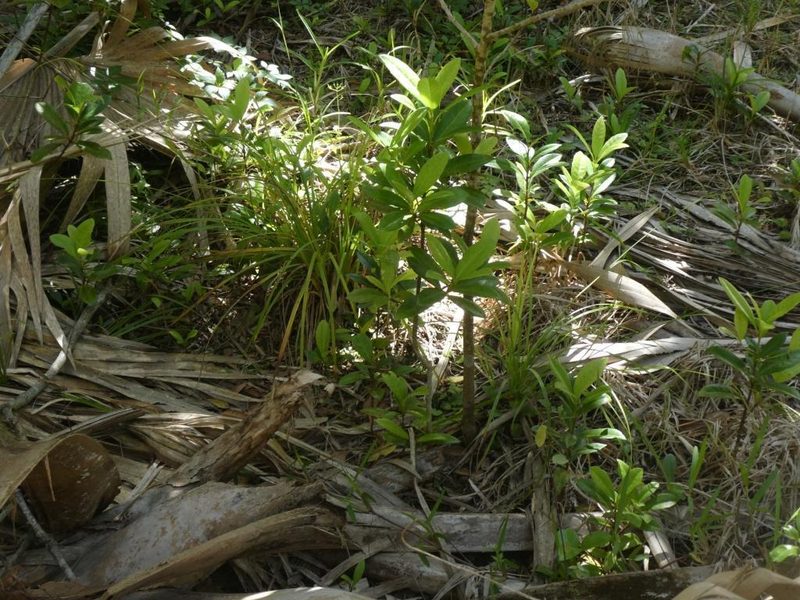
Bermuda sedge Carex bermudianafound only in BermudaprotectedA tall, grass-like sedge of the old cedar and palmetto forest floor, now critically endangered. It survives at Paget Marsh, Abbot’s Cliff and rat-free Nonsuch Island, and is being replanted in restored forests (rats eat its seeds).Photo: Alison Copeland (CC BY) 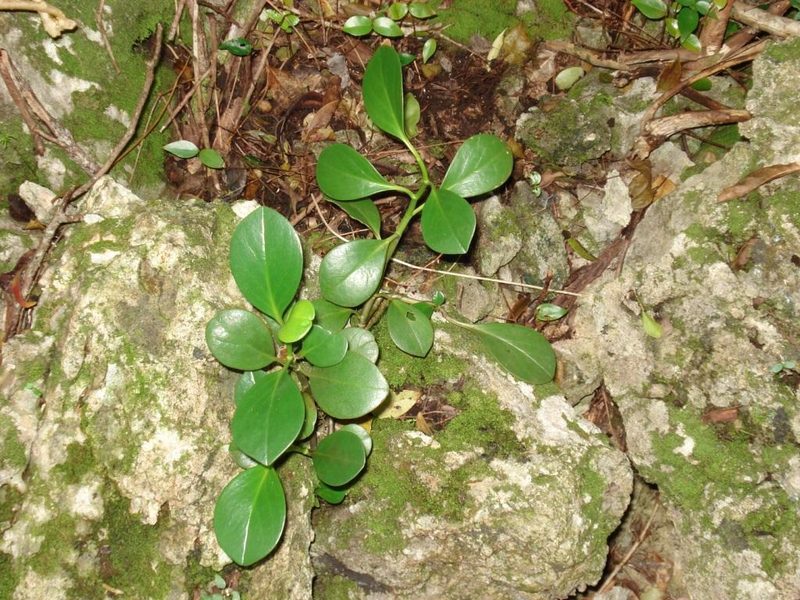
Wild Bermuda pepper Peperomia septentrionalisfound only in BermudaprotectedA small herb with thick, waxy, bright green leaves, growing from damp rock faces and cave mouths. Endangered; today it is found mainly in the Walsingham area, Blue Hole Hill and Paget Marsh.Photo: Alison Copeland (CC BY) 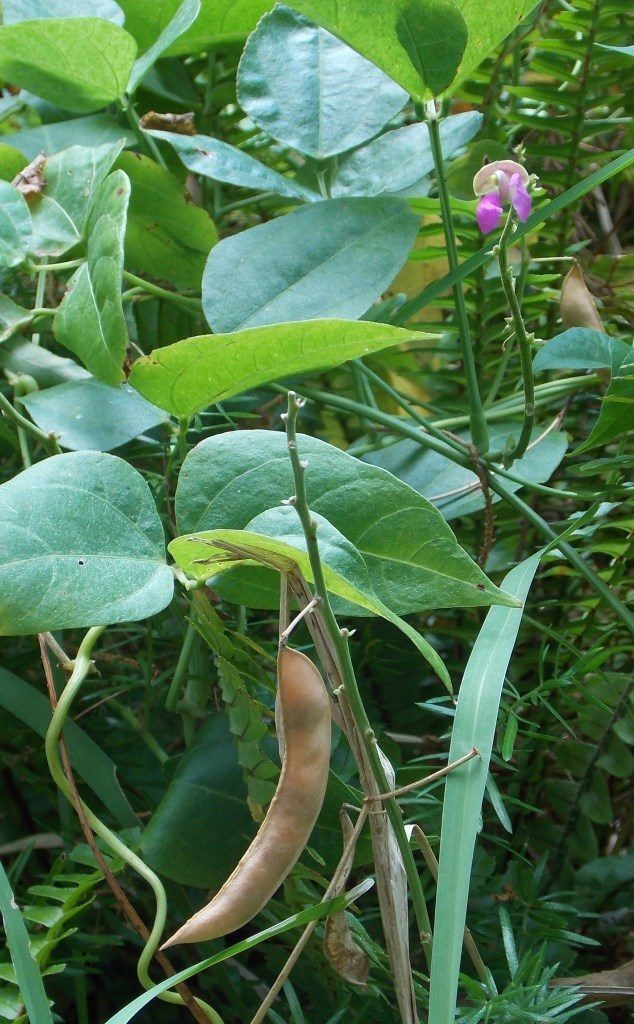
Bermuda bean Phaseolus lignosusfound only in BermudaprotectedA climbing vine of the pea family with small white or purple flowers and flat, curved pods. Critically endangered, and grown from seed by conservationists to keep it going.Photo: Alison Copeland (CC BY) 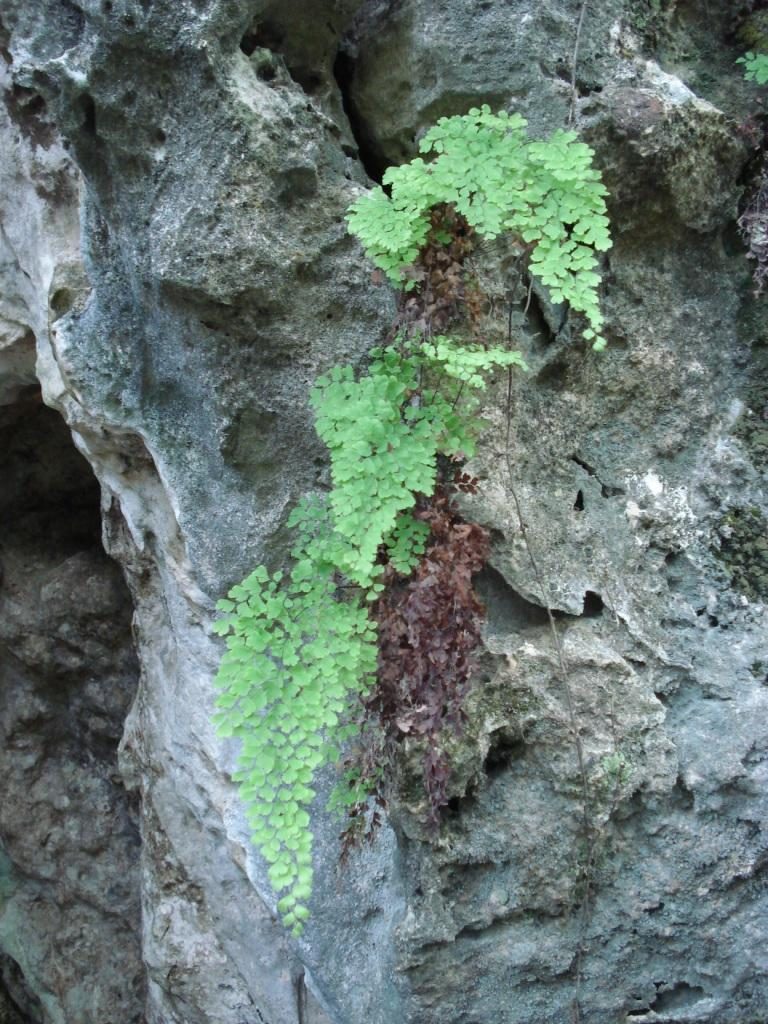
Bermuda maidenhair fern Adiantum bellumfound only in BermudaThe endemic plant you are most likely to find: a delicate little fern that is common island-wide on damp walls, rocks, cliffs and cave mouths.Photo: Alison Copeland (CC BY) 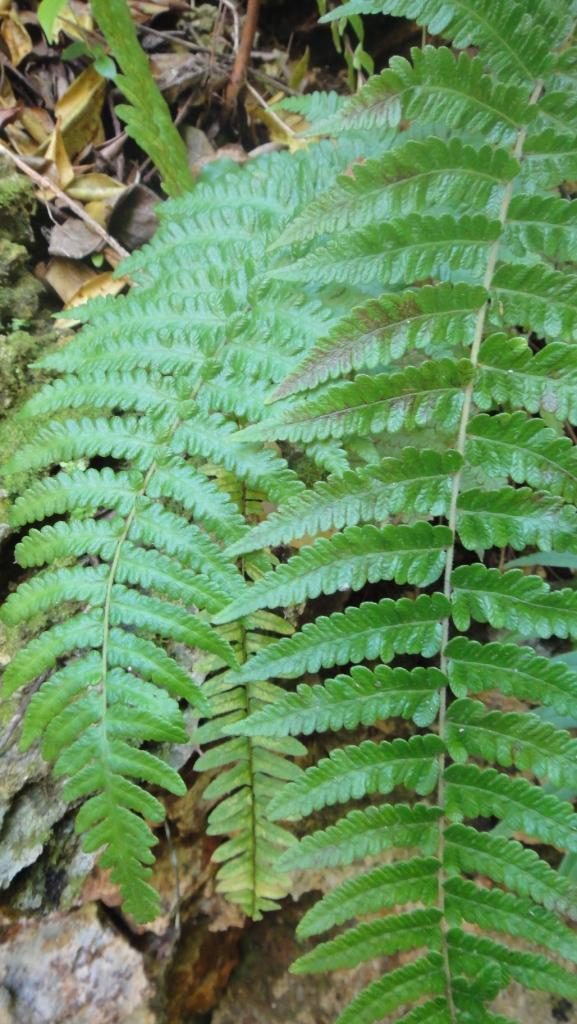
Bermuda shield fern Thelypteris bermudianafound only in BermudaprotectedA rare fern of damp rock faces at cave entrances in old woodland, now found mainly in the Walsingham area between Harrington Sound and Castle Harbour. Listed as Endangered by the IUCN.Photo: Alison Copeland (CC BY) Governor Laffan’s fern Diplazium laffanianumfound only in BermudaprotectedNot seen in the wild after 1905, it survived only in cultivation. Spores sent to Henry Doorly Zoo in Omaha were grown into young ferns, which have been brought home and replanted around Walsingham since 2014; reintroduced plants produced spores in the wild for the first time in 2020. Bermuda campylopus moss Campylopus bermudianusfound only in BermudaprotectedA small dark green moss that grows in only one place on Earth: at the foot of palmettos in Paget Marsh. Critically endangered.
Also listed as endemic by the Department of Environment are the Bermuda spike rush (Eleocharis bermudiana), a plant of the peat marshes that was once feared extinct and which some botanists now treat as a form of a wider-ranging species, and a second endemic moss. Some plants with “Bermuda” in their name grow elsewhere too: the Bermuda cave fern (below) and the protected Bermuda bedstraw (Galium bermudense), which also grows in the Bahamas and the south-eastern United States and is now extremely rare here.
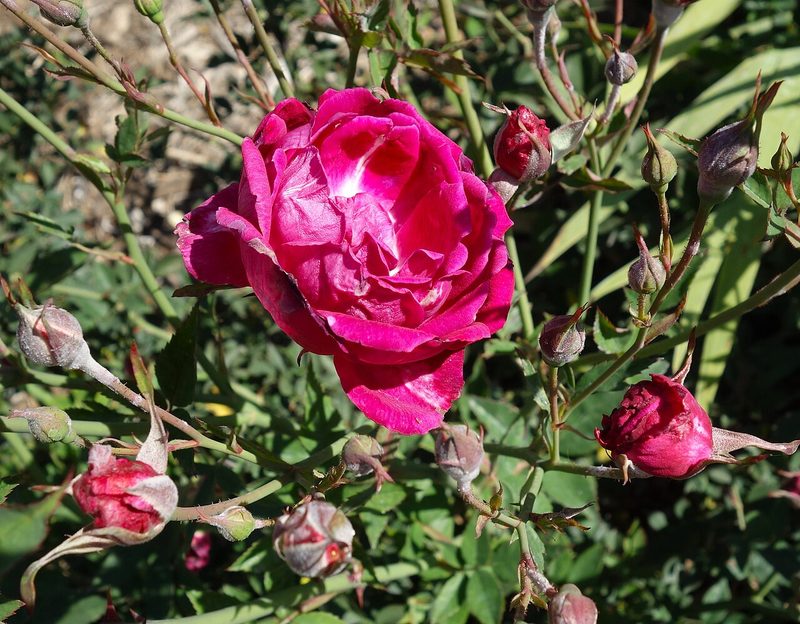
Bermuda’s old roses
Bermuda is famous among rose lovers as “a living museum of roses”. Old roses lost elsewhere survived in its gardens and churchyards, including Slater’s Crimson China, one of the four roses behind almost every modern rose, rediscovered in 1953 at Belfield, here in Somerset. Many more are Bermuda’s own “mystery roses”, whose real names have been lost.
Discover the Old Roses of Bermuda »
Trees and palms
Bermuda’s three endemic trees (cedar, palmetto and olivewood) are above. These are the other trees and palms you will notice, native and introduced. Several of the introduced ones have become invasive: see Plants that cause trouble.
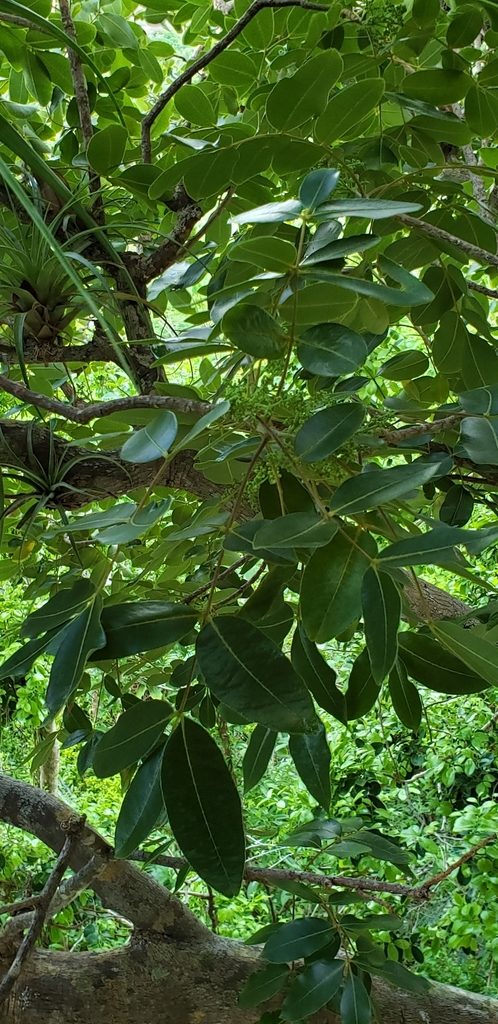
Yellowwood Zanthoxylum flavumnativeprotectedA native tree of the old upland forest, known elsewhere as West Indian satinwood for its fine, pale wood. Now rare in Bermuda and protected.Photo: Heather Mazzaccaro (CC BY) 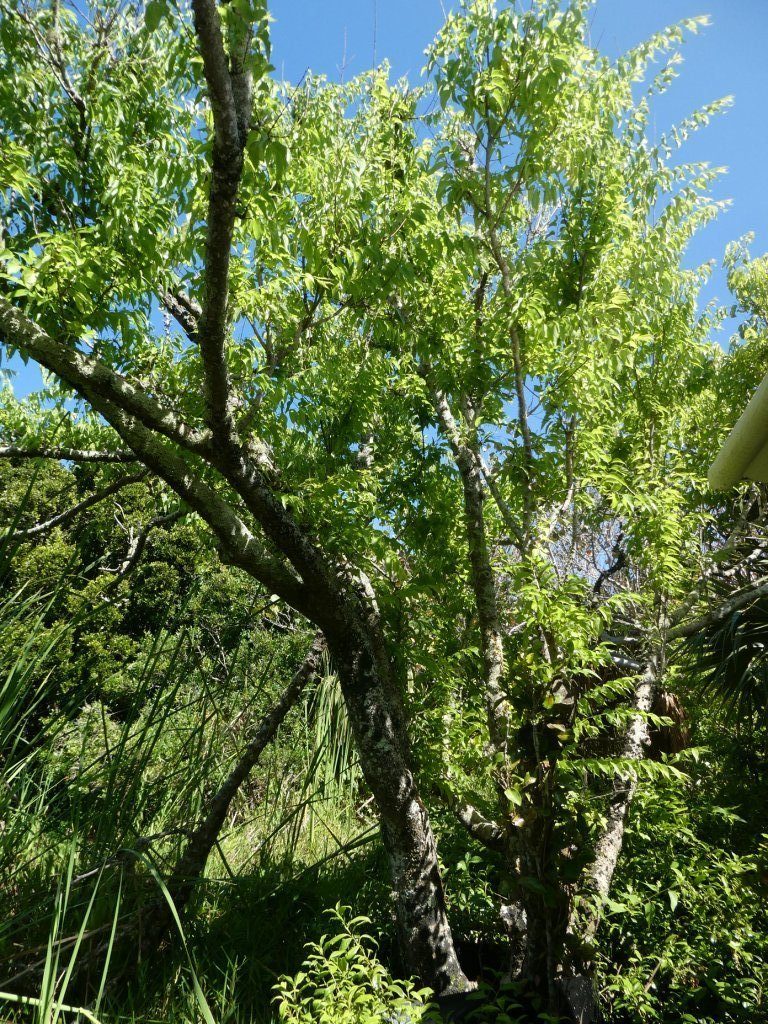
Southern hackberry Celtis laevigatanativeA native woodland tree with smooth grey bark and small berries that are eaten by birds.Photo: Alison Copeland (CC BY) 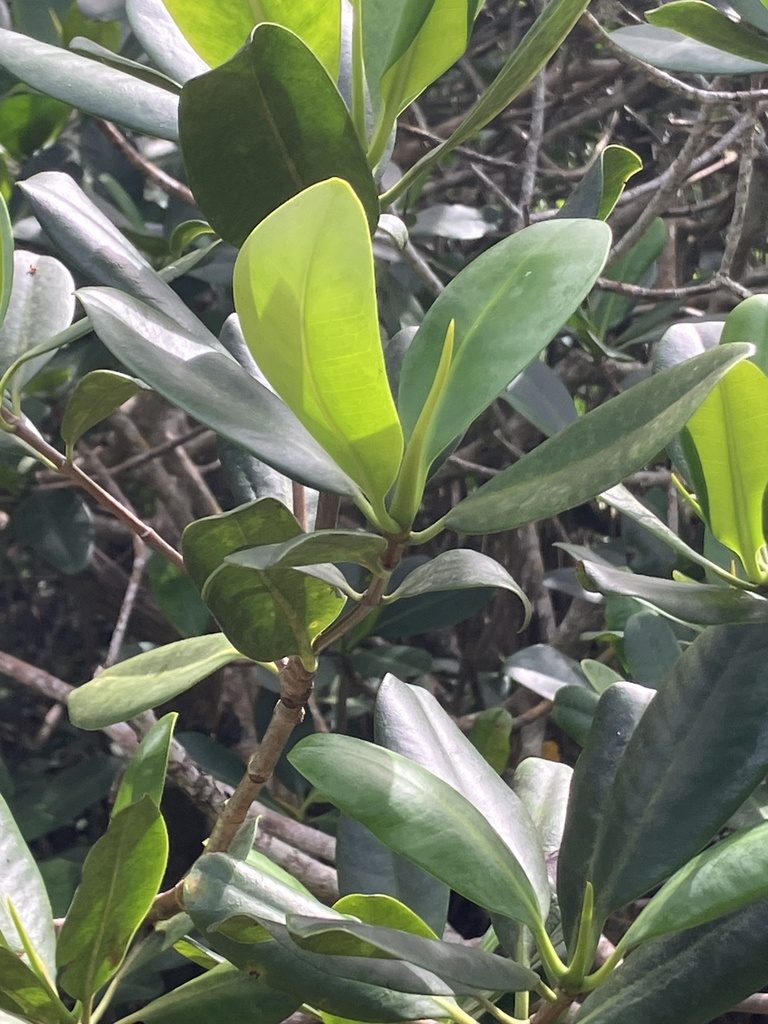
Red mangrove Rhizophora manglenativeprotectedStands on arching prop roots in sheltered bays and ponds. Bermuda’s mangroves are the most northerly in the Atlantic. In summer cigar-shaped seedlings hang from the branches, then drop and float off to root elsewhere.Photo: iNaturalist user (CC0) 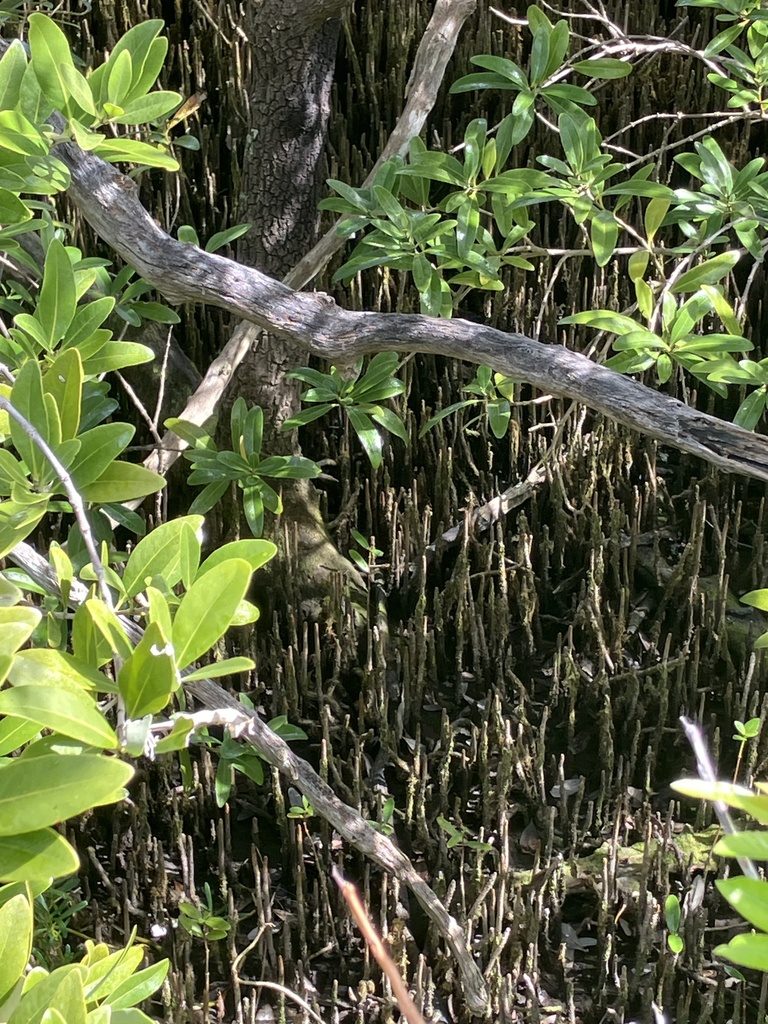
Black mangrove Avicennia germinansnativeprotectedGrows a little further from the water than the red mangrove and pushes up finger-like breathing roots through the mud around it.Photo: iNaturalist user (CC0) 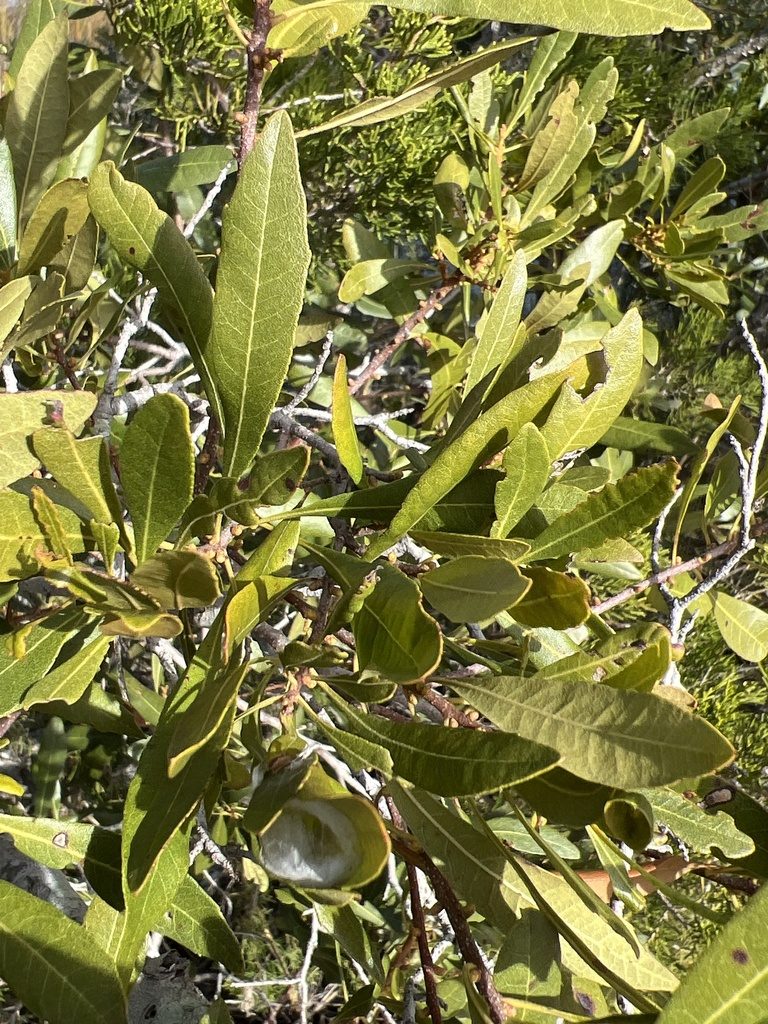
Wax myrtle Morella ceriferanativeA native shrub or small tree of marshes such as Paget Marsh, with aromatic leaves and small waxy berries.Photo: iNaturalist user (CC0) 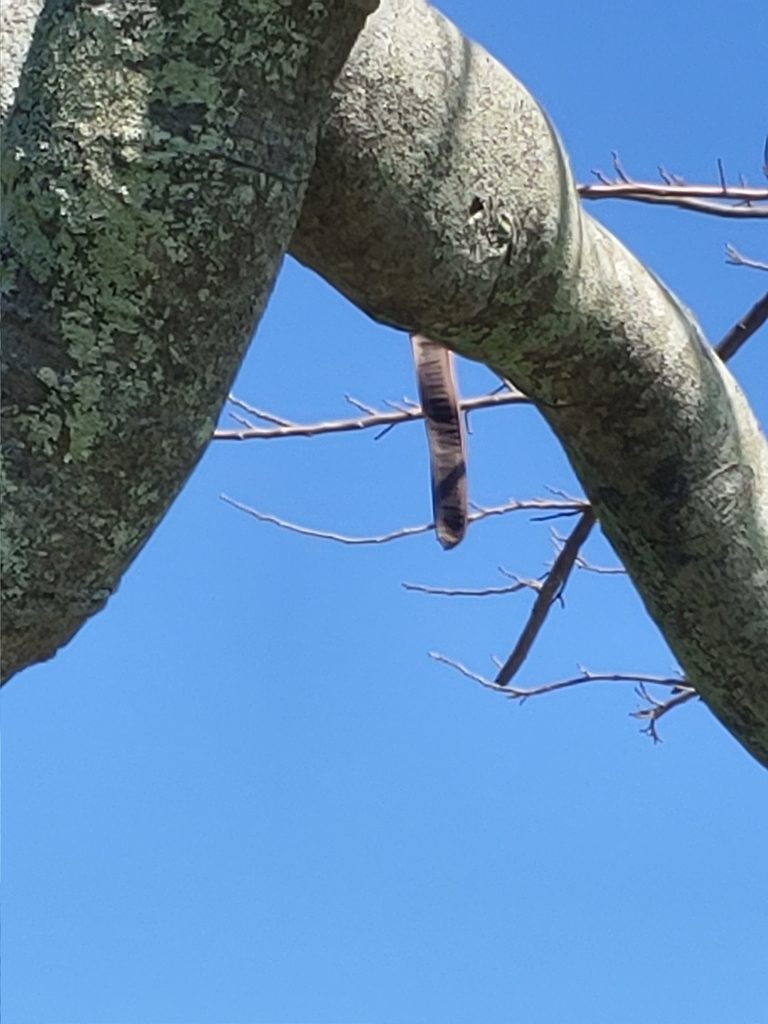
Royal poinciana Delonix regiaintroducedA spreading tree from Madagascar that covers itself in flame-red flowers in early summer: one of the island’s great sights.Photo: Scott Harris (CC BY) 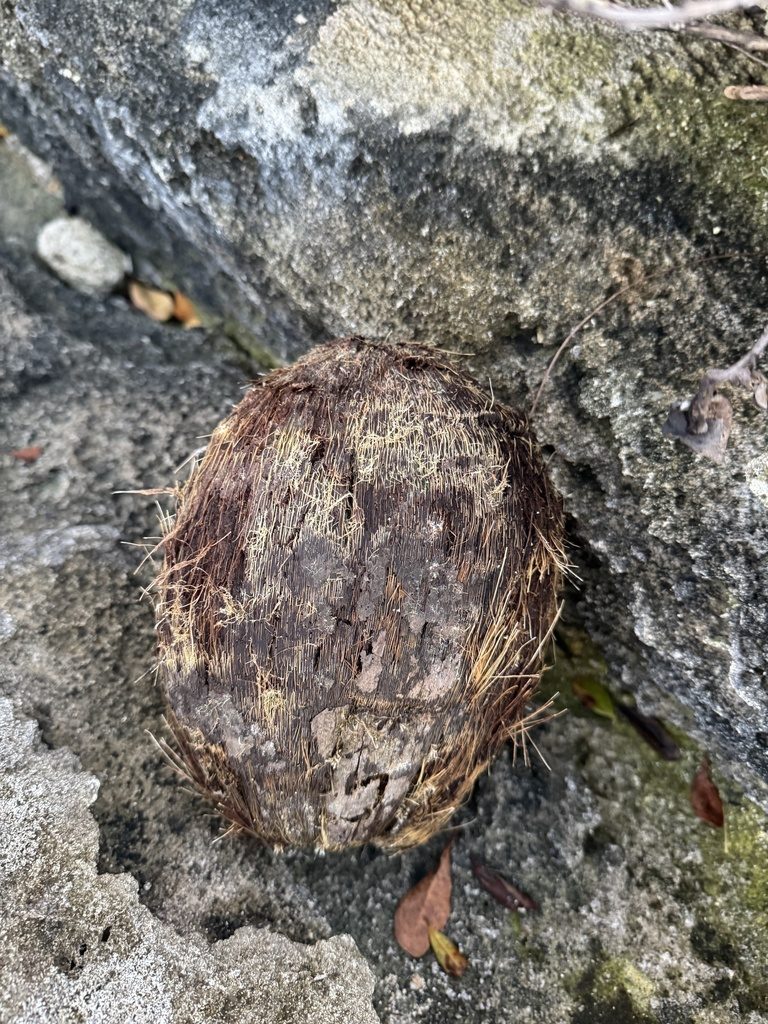
Coconut palm Cocos nuciferaintroducedaround the cottagesPlanted in gardens and along the shore; like most of Bermuda’s palms, it was brought in by people.Around the cottages: We have coconut palms at Sunset and Sugar Cane Cottage.Photo: Isabella Hackett (CC BY) 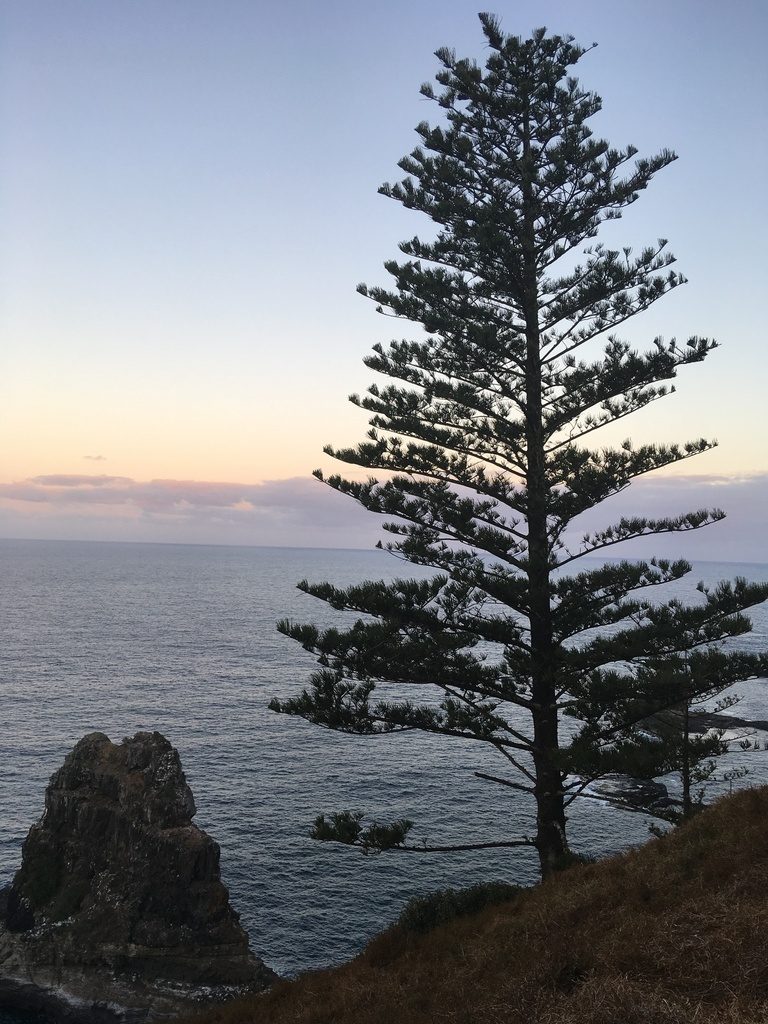
Norfolk Island pine Araucaria heterophyllaintroducedThe tall, tiered, very symmetrical conifer you will see on many skylines. Not a true pine; it comes from a small island in the Pacific.Photo: Donna Belder (CC BY) 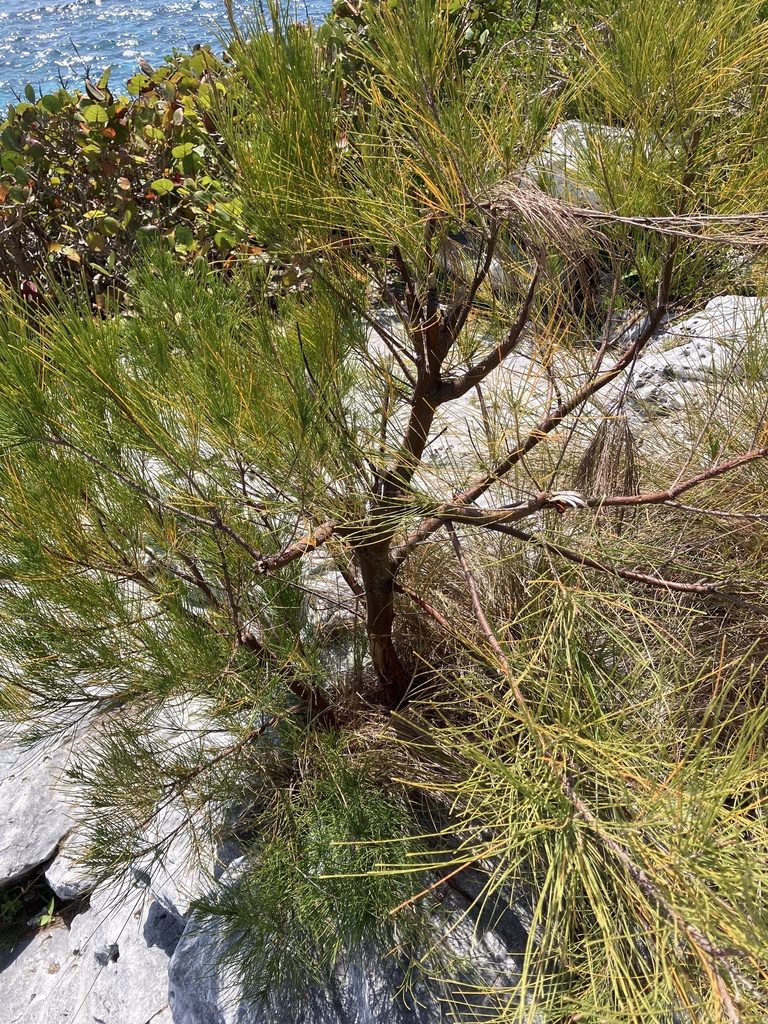
Casuarina Casuarina equisetifoliainvasiveBrought from Australia in the 1950s to reforest the island after the cedars died. It grows fast in poor, salty soil, but its fallen needles smother other plants, and it is easily blown down in hurricanes, tearing up soil and rock as it falls.Photo: iNaturalist user (CC0) 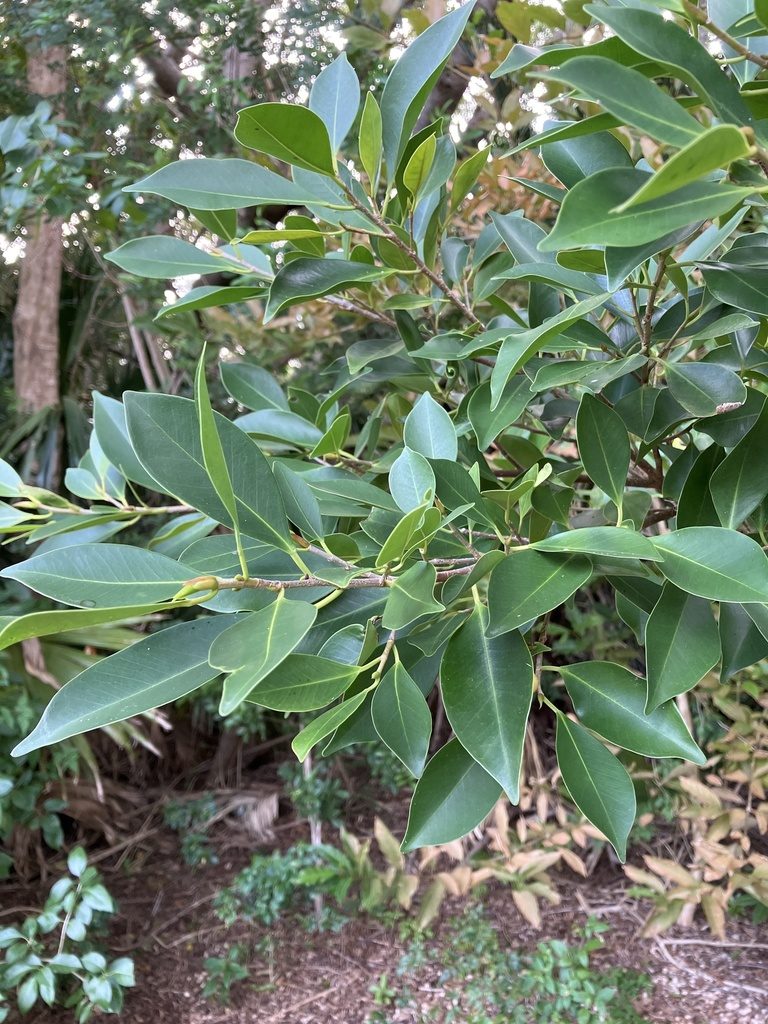
Indian laurel Ficus microcarpainvasiveA big shady fig planted as a street tree. Birds spread its seeds into cracks in walls, roofs and foundations, where its roots can do serious damage.Photo: iNaturalist user (CC0) 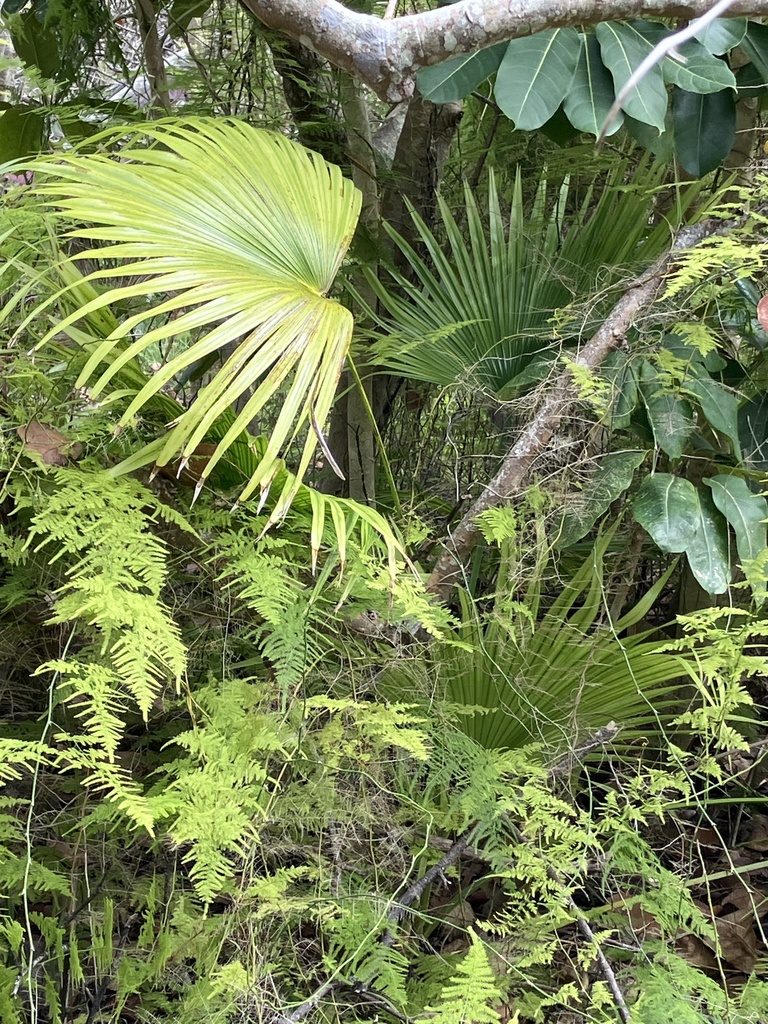
Chinese fan palm Livistona chinensisinvasiveLooks very like the endemic palmetto and spreads into woodland. Its leaf stalks have spines along the edges, and the stalk joins the leaf in a C shape.Photo: iNaturalist user (CC0) 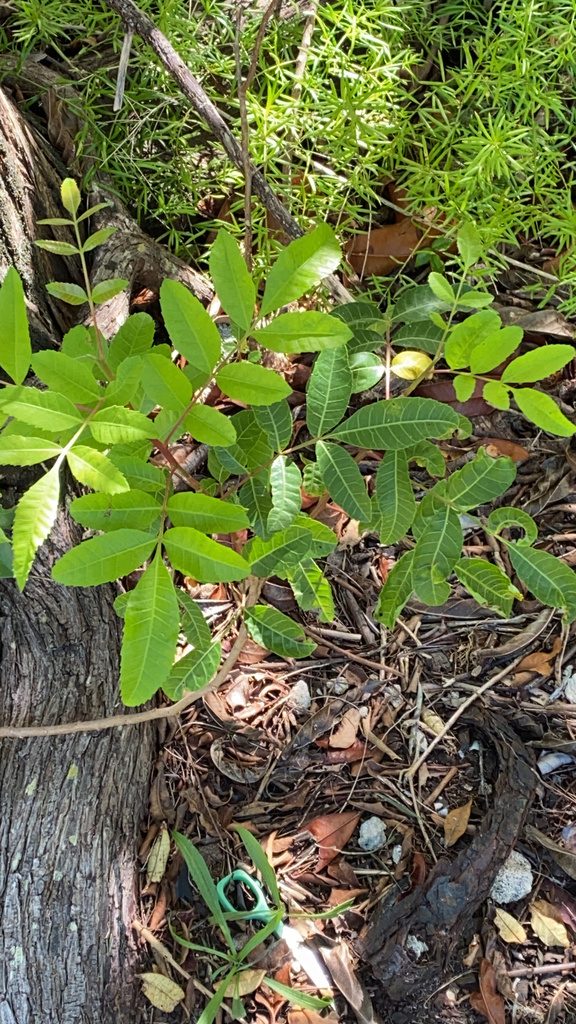
Brazil pepper (Mexican pepper) Schinus terebinthifoliainvasivePerhaps the most damaging invasive plant in Bermuda. Brought in as a garden plant before the 1950s, it forms dense thickets that crowd out native plants; birds spread its bright red berries.Photo: nebrooks (CC BY) 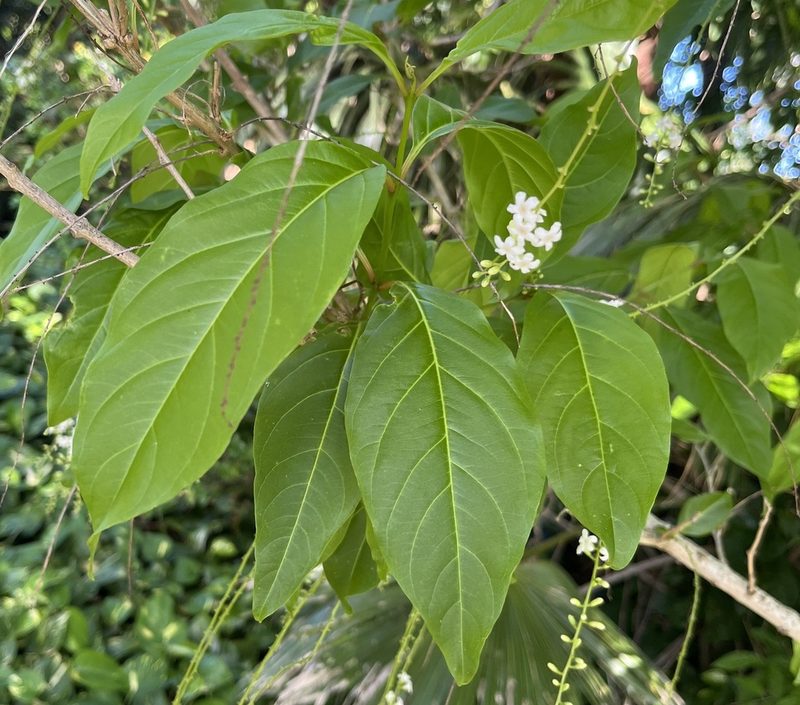
Fiddlewood Citharexylum spinosumintroducedA common tree with fragrant white flower spikes. Birds eat its berries and spread it into woodland; the Department of Environment lists it among the introduced or invasive woodland species.Photo: Thomas Irvine (CC BY) 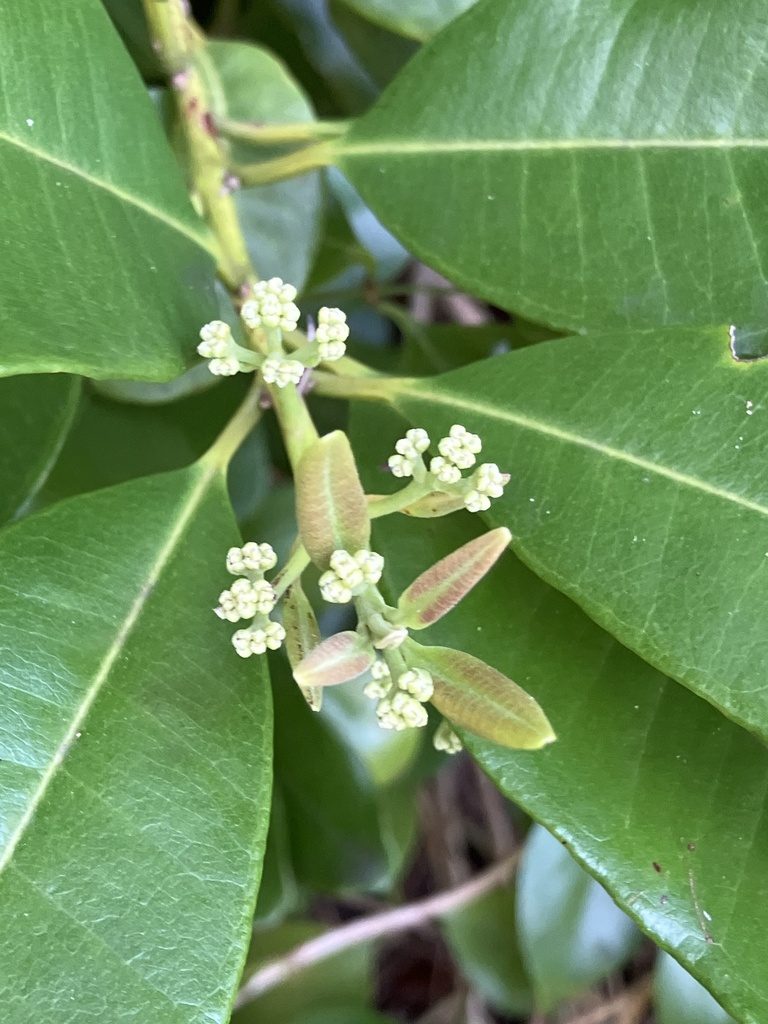
Allspice Pimenta dioicaintroducedThe spice tree from the Caribbean: crush a leaf and it smells of cloves. It has spread into woodland and is listed with fiddlewood among the introduced or invasive woodland species.Photo: iNaturalist user (CC0)
Mangroves: bringing them back to Mangrove Bay
Bermuda has two mangroves, the red mangrove and the black mangrove (see their cards above), and they are the most northerly mangroves in the Atlantic. The red mangrove stands right in the water on arching prop roots; the black mangrove grows a little further back and pushes finger-like breathing roots up through the mud. Together they shelter young fish and other sea life among their roots, and they help protect the shore from storm waves. Both are protected in Bermuda.
As its name suggests, Mangrove Bay was once fringed with mangroves. The Watford Sports Club has planning permission to build a rock wall at our end of Mangrove Bay, right by Watford Bridge, to make a sheltered place for planting and reintroducing mangroves, as part of its small watersports facility. Look out for them in the years to come.
Flowers and shrubs
Bermuda’s gardens and roadsides are full of colour all year. Most of the showiest flowers were brought in by people; a few of the quieter ones are native. For Bermuda’s famous old roses, see our Old Roses of Bermuda page.
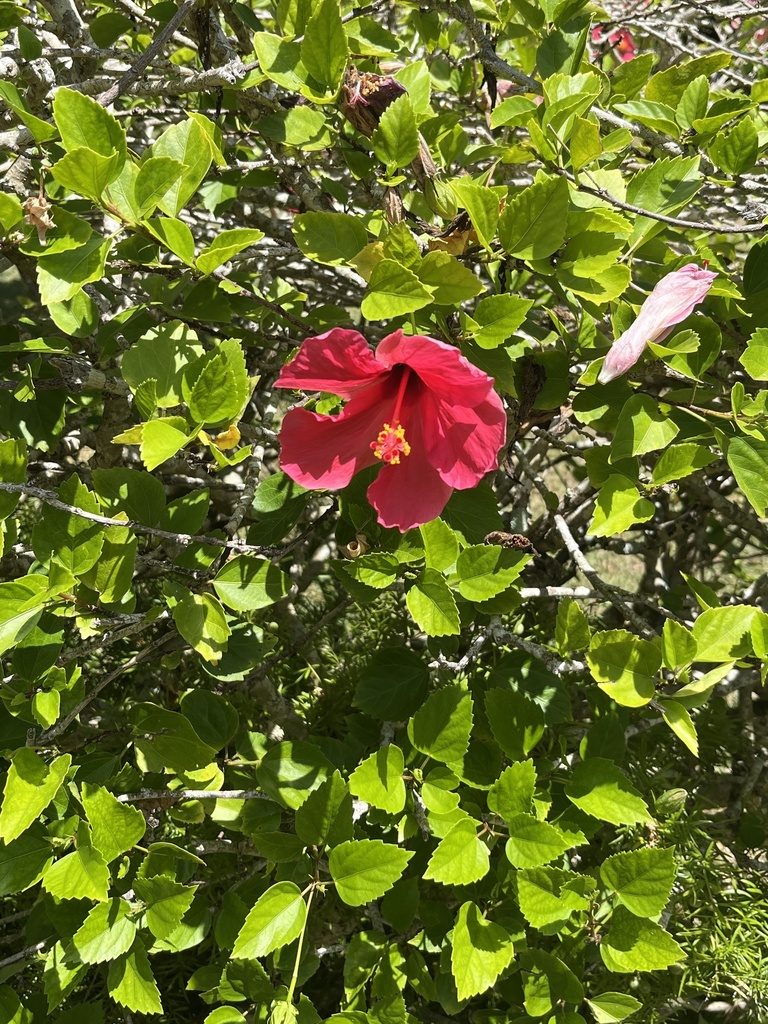
Hibiscus Hibiscus rosa-sinensisintroducedBig red, pink, orange or yellow flowers that last just a day, in gardens and hedges all over the island.Photo: Thomas Irvine (CC BY) 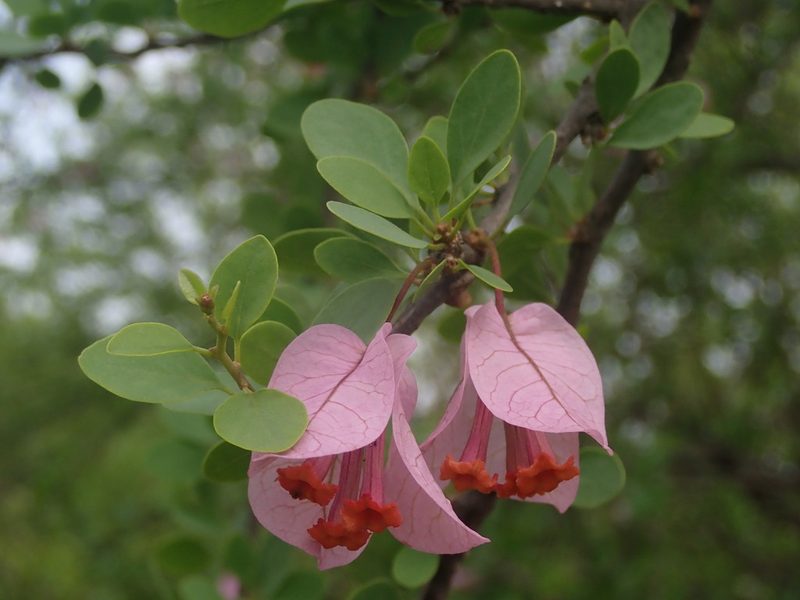
Bougainvillea BougainvilleaintroducedCascades of magenta, purple, orange or white over walls. The colour is in papery bracts around the tiny white flowers.Photo: Nolan Exe (CC BY) 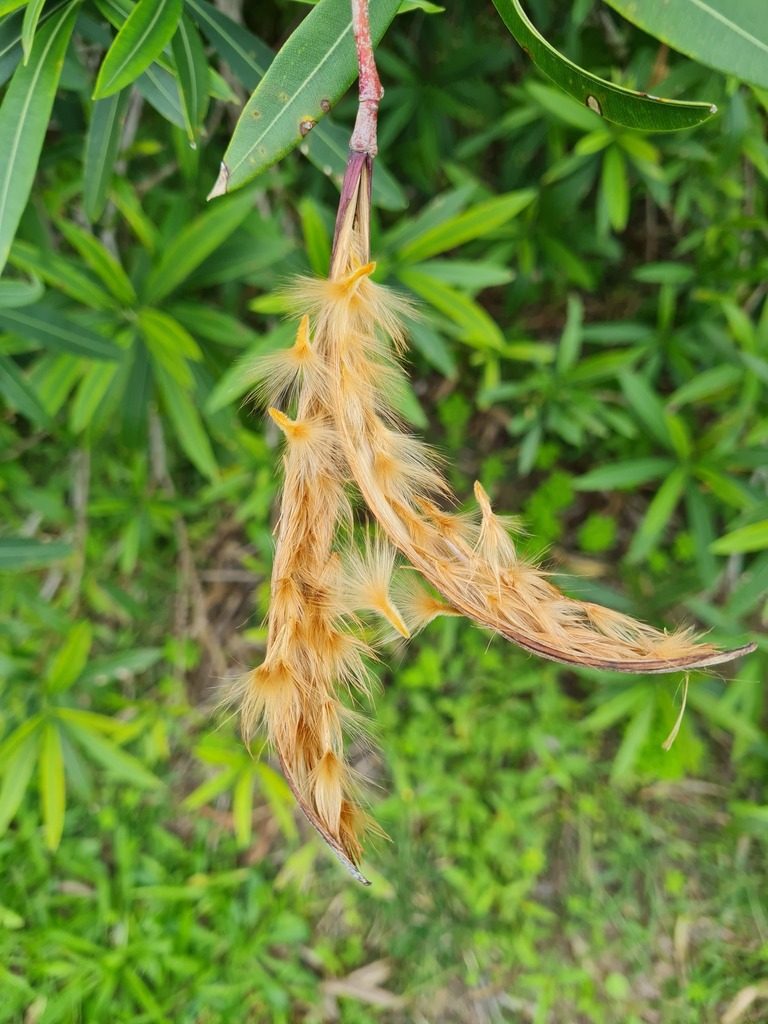
Oleander Nerium oleanderintroducedPlanted all over Bermuda as hedges and windbreaks, with pink, red or white flowers in summer. Every part of the plant is poisonous, so never chew a leaf or use the stems as skewers.Photo: Alison Copeland (CC BY) 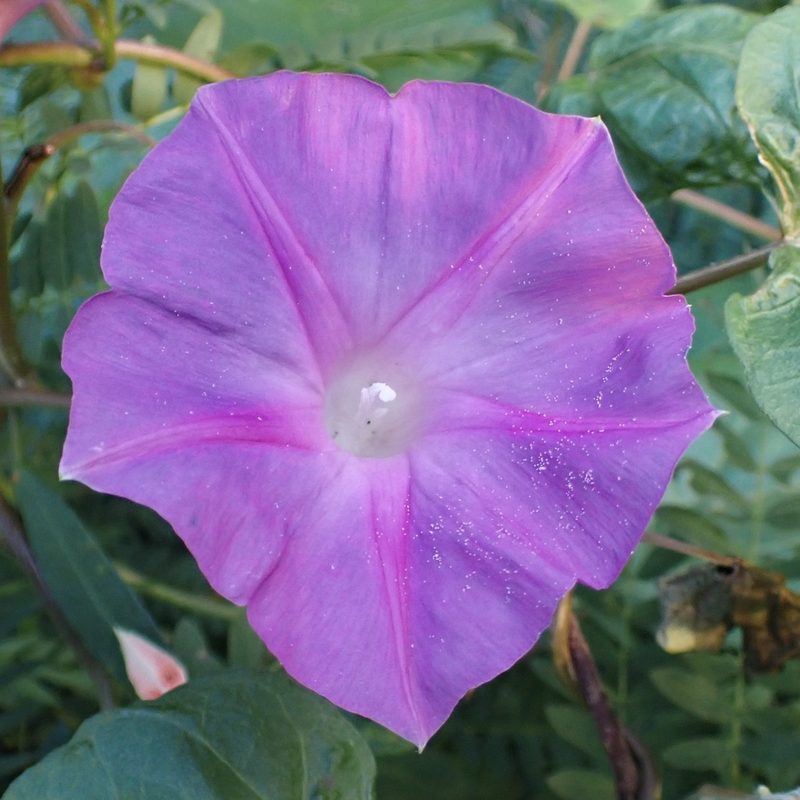
Blue morning glory Ipomoea indicaintroducedA vigorous vine with big sky-blue flowers that fade to purple by afternoon, scrambling over hedges and walls.Photo: Thomas Irvine (CC BY) 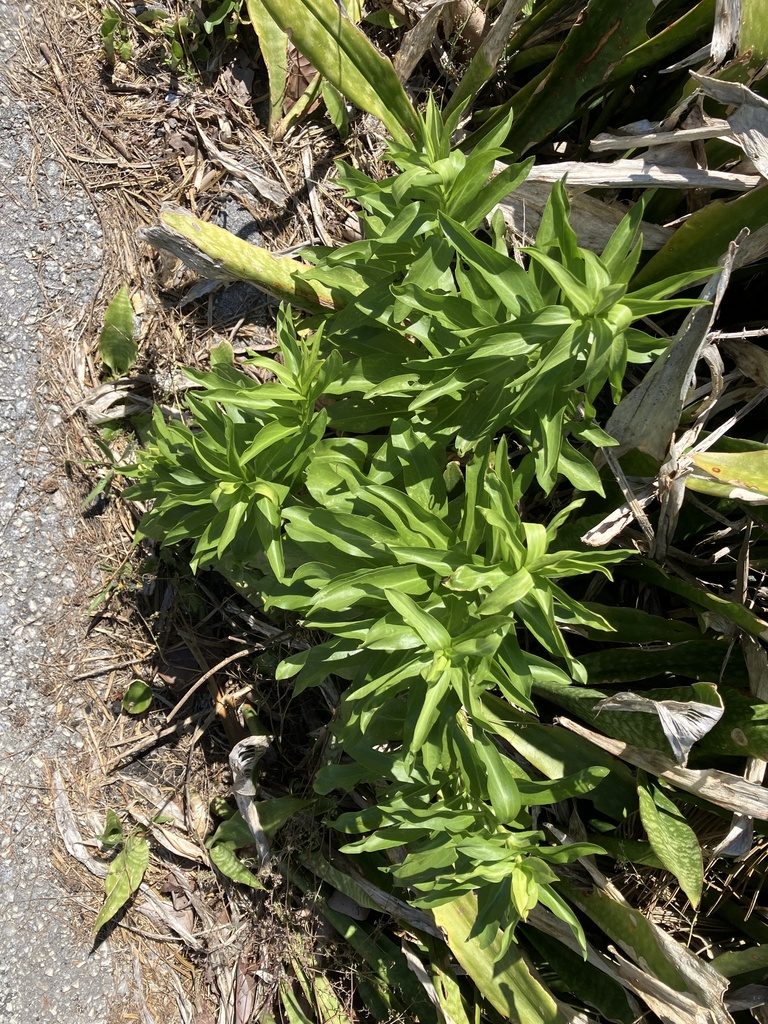
Seaside goldenrod Solidago sempervirensnativeFleshy leaves and spikes of bright yellow flowers in autumn, along the coast and in open ground; a favourite with butterflies.Photo: iNaturalist user (CC0) 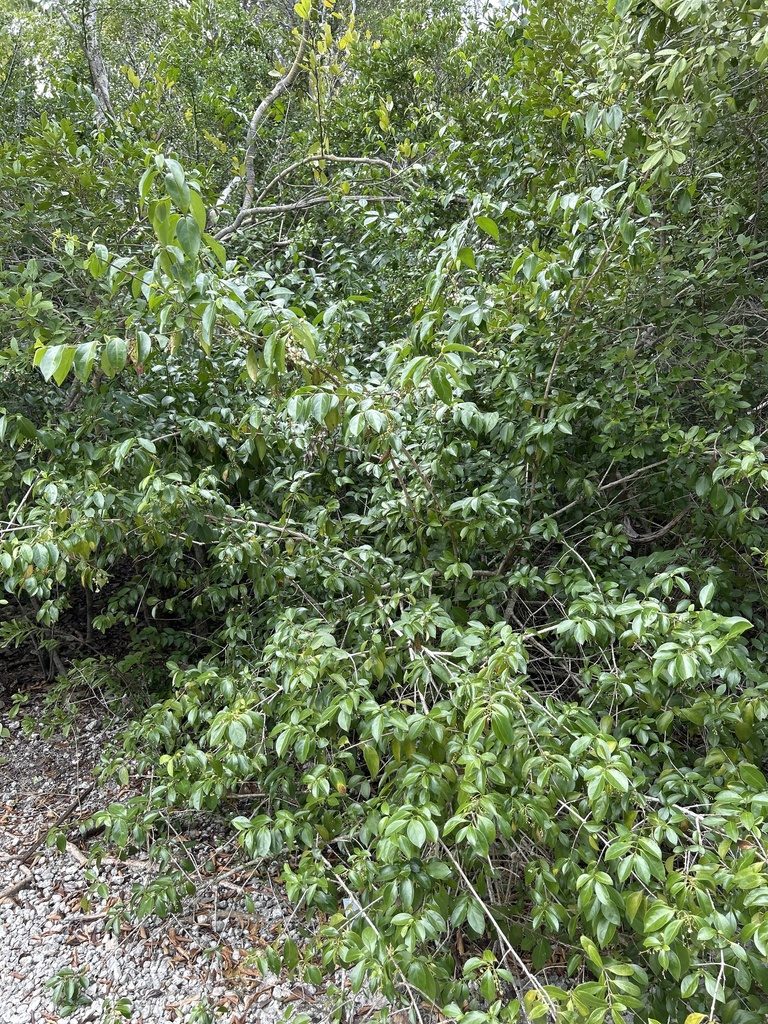
Bermuda snowberry Chiococca albanativeA native shrub of the old forest understorey, with fragrant yellow flowers in autumn and white berries in winter that feed birds. Rare in the wild; see it at the Botanical Gardens, Hog Bay Park, Walsingham and Nonsuch Island.Photo: Ann Redmond (CC BY) 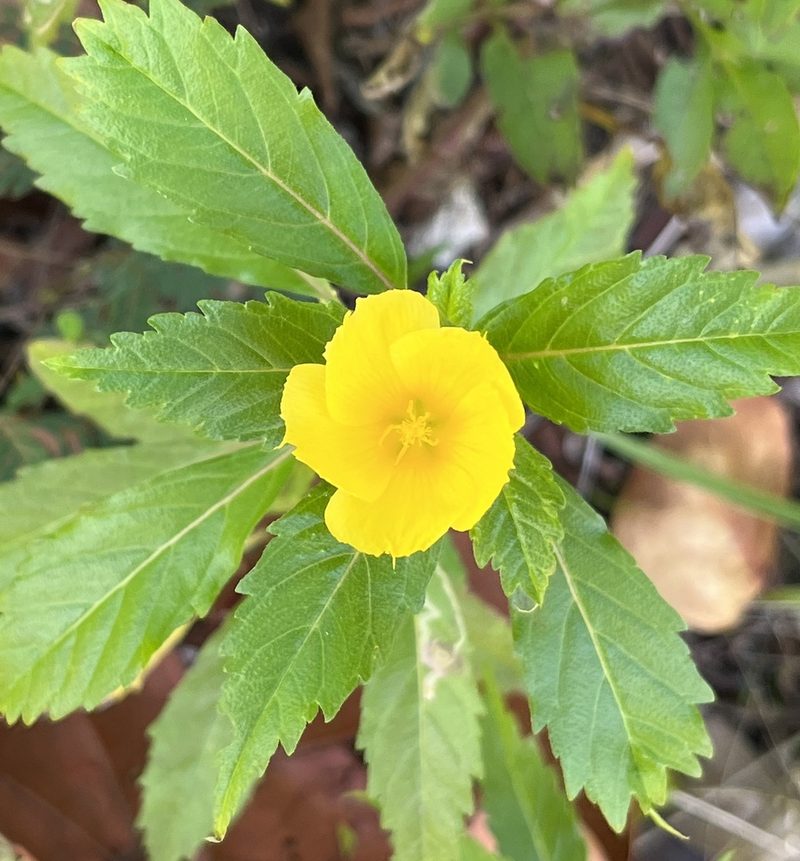
Turnera (yellow alder) Turnera ulmifolianativeA small native shrub with bright yellow, five-petalled flowers that open in the morning.Photo: Thomas Irvine (CC BY) 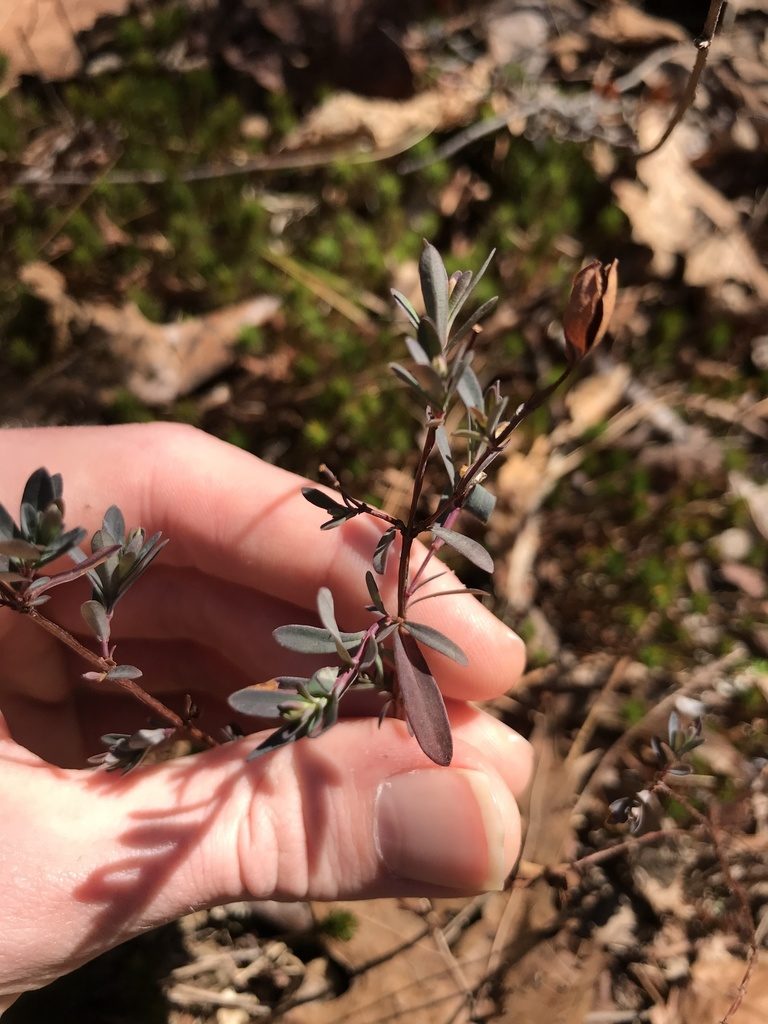
St Andrew’s cross Hypericum hypericoidesnativeA low native shrub whose four small yellow petals form a cross.Photo: Andrew Conboy (CC BY) 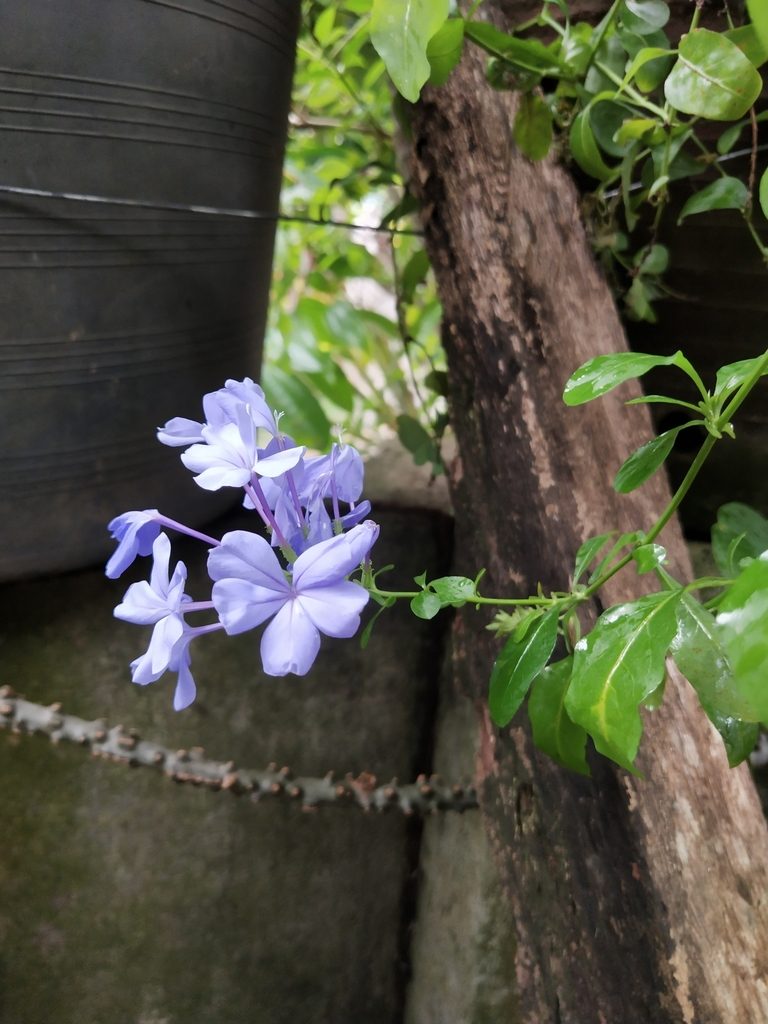
Plumbago Plumbago auriculataintroducedA South African shrub with clusters of pale sky-blue flowers, common in hedges and gardens.Photo: Greg III Espera (CC BY) 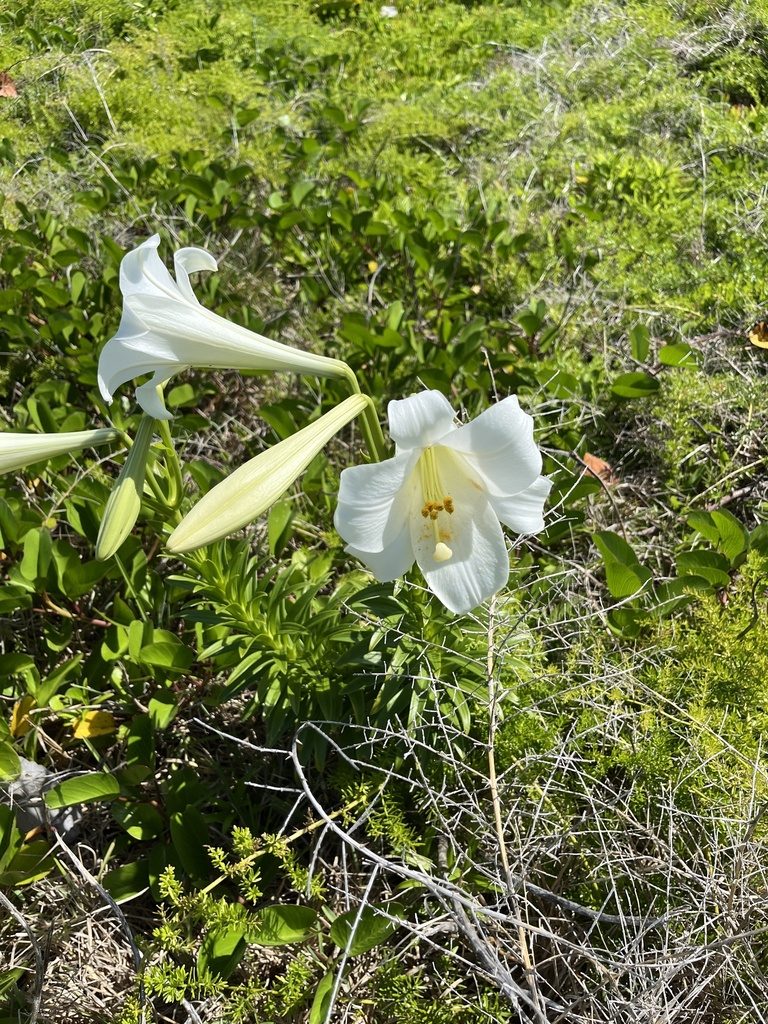
Easter lily Lilium longiflorumintroducedBermuda was once famous for growing Easter lilies for export, and they still flower in spring gardens around Easter.Photo: iNaturalist user (CC0) 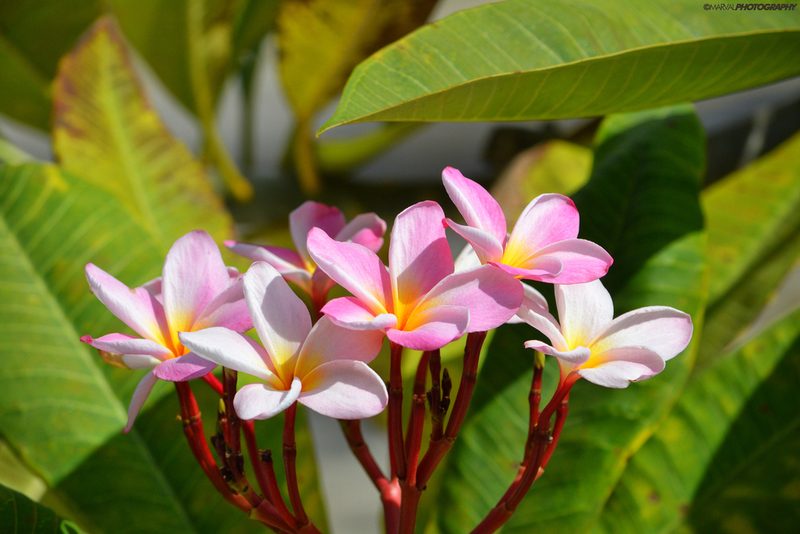
Frangipani Plumeria rubraintroducedA small tree with thick branches and wonderfully scented waxy flowers in summer.Photo: MarvalPhotography19 (CC BY)
Seaside plants
Plants on a rocky Bermuda shoreline like ours have to cope with salt spray, wind and thin soil. Most of the tough little plants along the rocks and dunes are native.
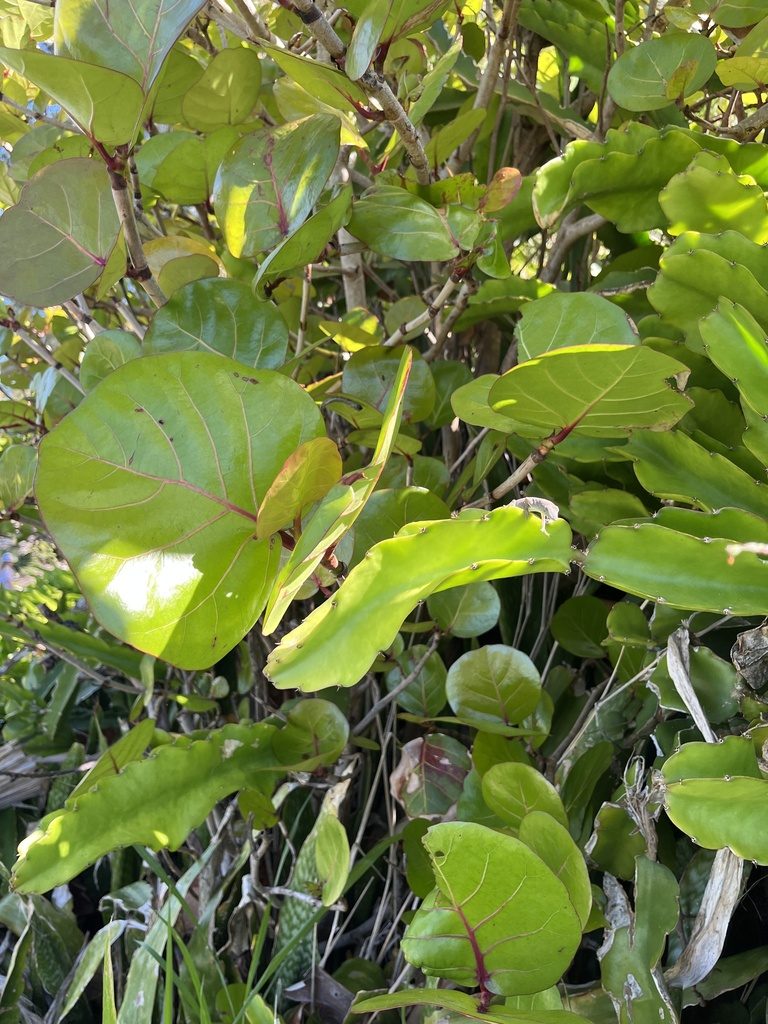
Bay grape Coccoloba uviferanativearound the cottagesBig, round, leathery leaves and bunches of grape-like fruit in late summer. It grows right down to the shore.Around the cottages: Along the shoreline.Photo: iNaturalist user (CC0) 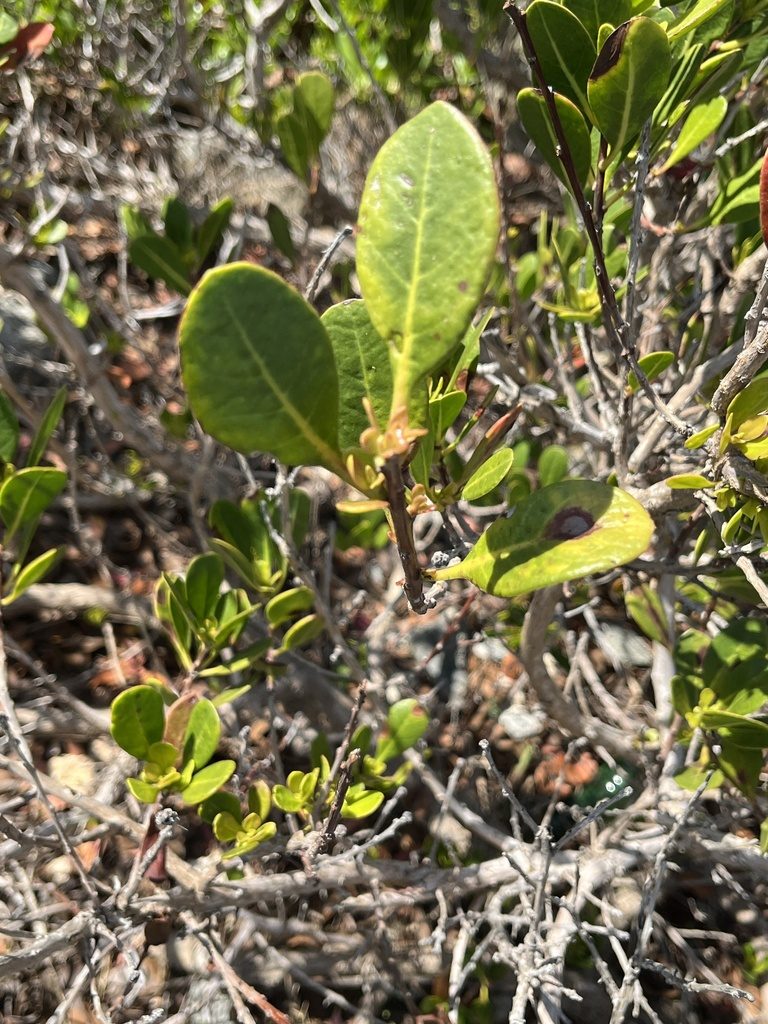
Buttonwood Conocarpus erectusnativearound the cottagesA salt-tolerant native shrub or small tree of rocky shores and mangrove edges, named for its little button-like fruit.Around the cottages: Along the shoreline.Photo: iNaturalist user (CC0) 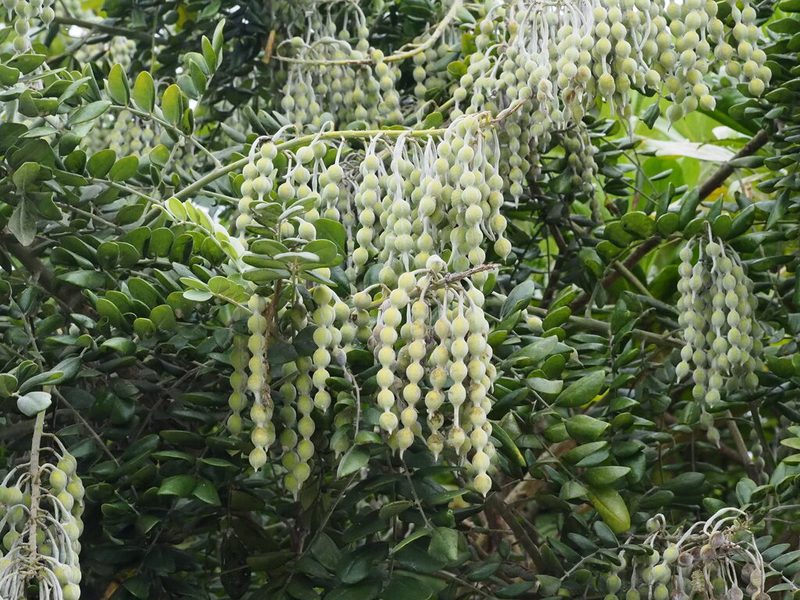
Coast sophora (necklace pod) Sophora tomentosanativearound the cottagesA silvery-grey seaside shrub with spikes of yellow pea-flowers; its seed pods are pinched between the seeds like a string of beads.Around the cottages: In our garden.Photo: Moogoo Lee (CC BY) 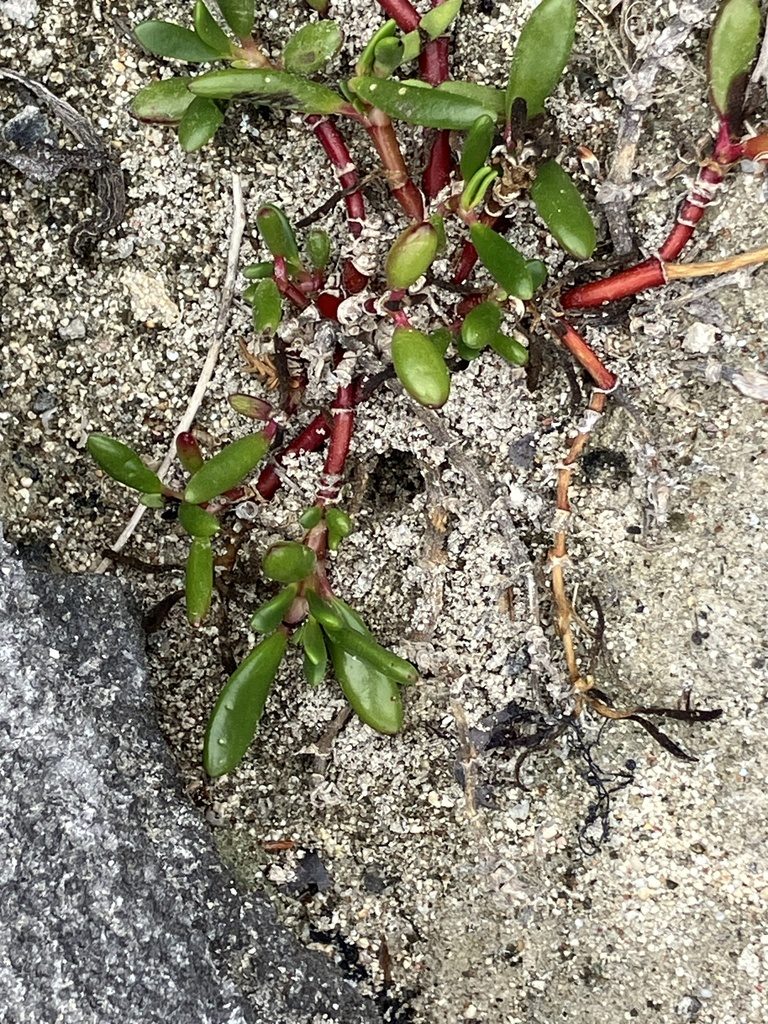
Sea purslane Sesuvium portulacastrumnativearound the cottagesA succulent creeper with fleshy leaves and small pink star-shaped flowers, on rocks and sand just above the tide.Around the cottages: Along our shoreline.Photo: iNaturalist user (CC0) 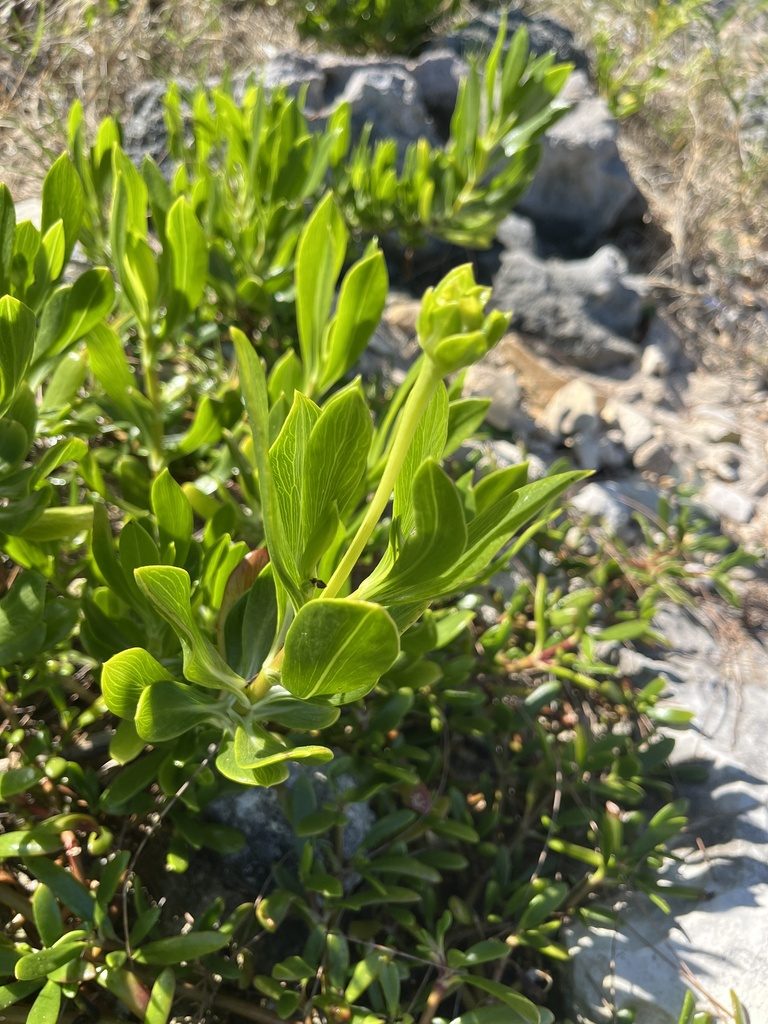
Seaside oxeye Borrichia arborescensnativearound the cottagesA low shrub with fleshy grey-green leaves and yellow daisy flowers, very common on rocky coasts.Around the cottages: Along our shoreline.Photo: iNaturalist user (CC0) 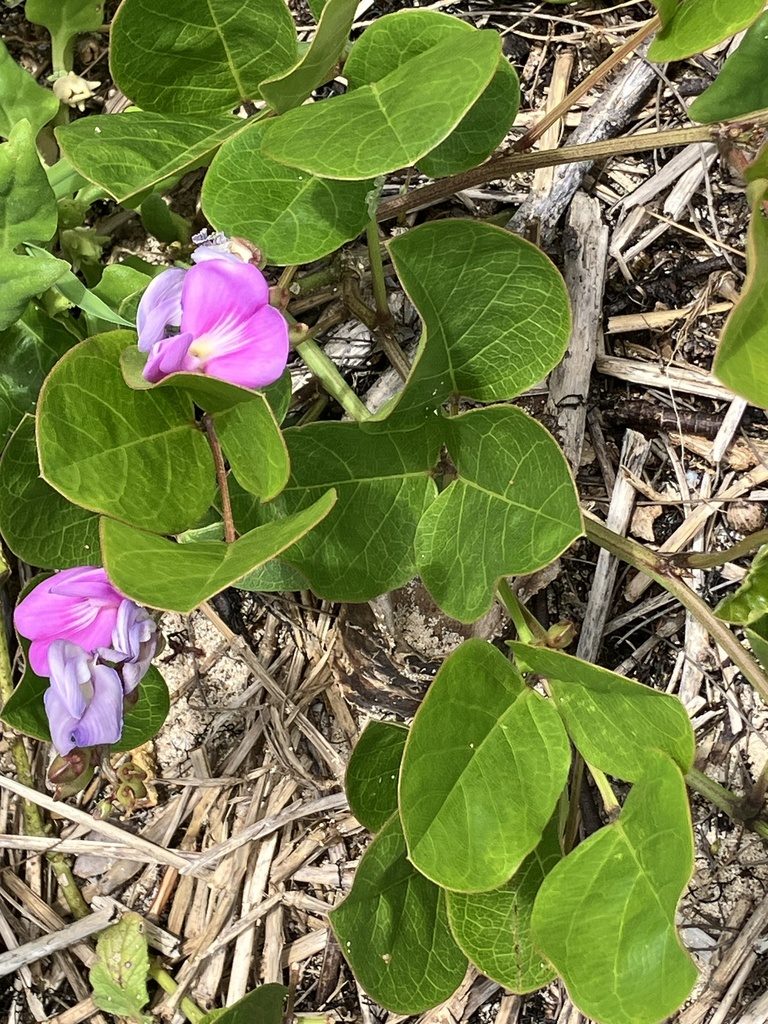
Bay bean Canavalia roseanativeA trailing vine of beaches and dunes with pink pea flowers and big pods.Photo: iNaturalist user (CC0) 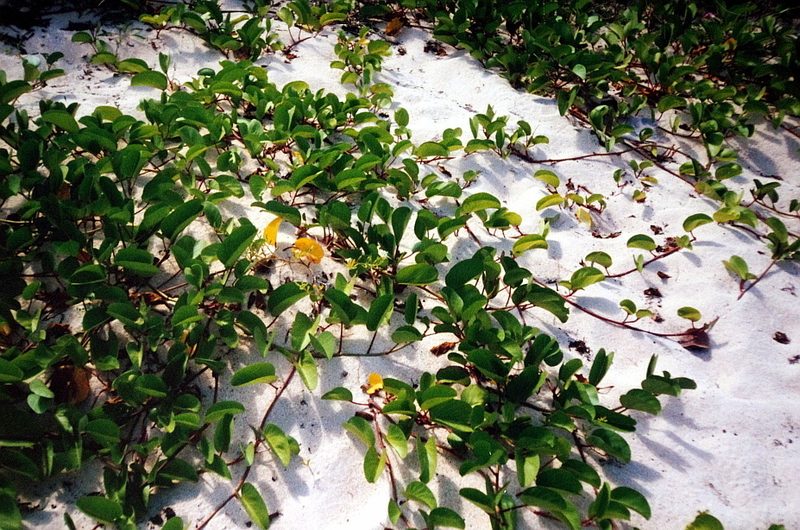
Beach morning glory Ipomoea pes-capraenativeLong runners across the sand with pinkish-purple trumpet flowers and leaves shaped like a goat’s hoof.Photo: Георгий Виноградов (Georgy Vinogradov) (CC BY) 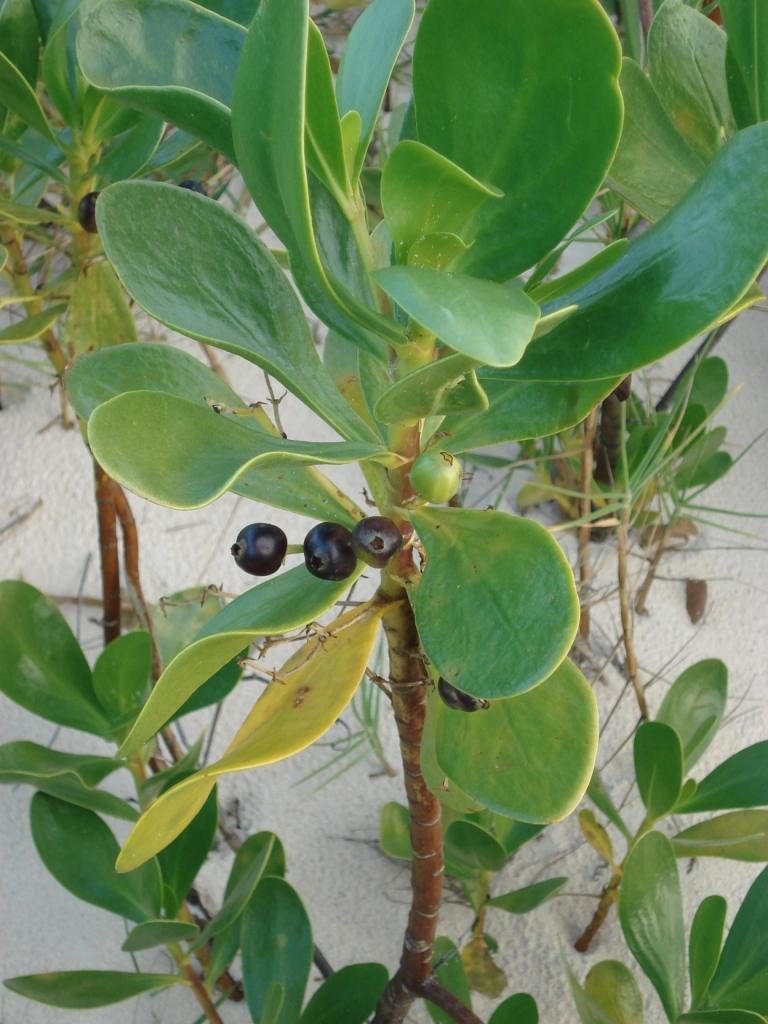
Beach lobelia (inkberry) Scaevola plumierinativeA native dune shrub with white half-flowers (all five petals on one side) and shiny black berries. Easily confused with the invasive beach naupaka.Photo: Alison Copeland (CC BY) 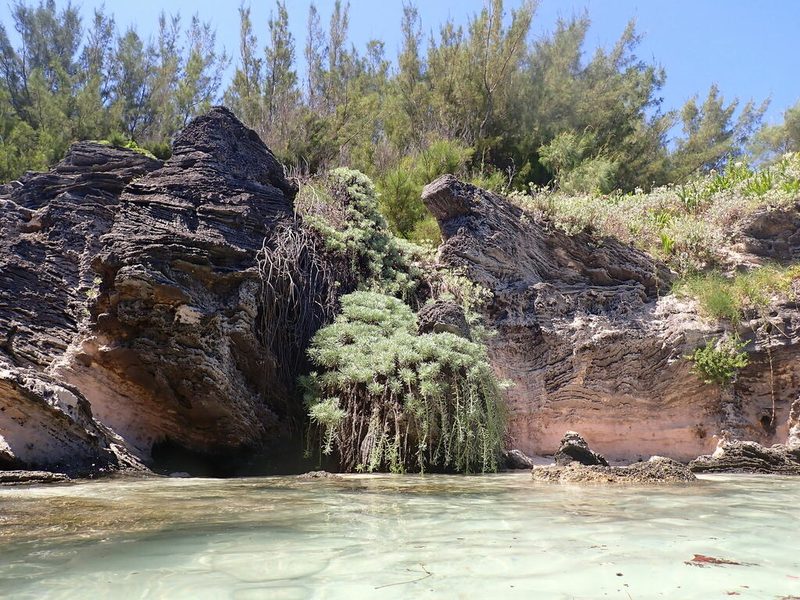
Sea lavender Tournefortia gnaphalodesnativearound the cottagesA silvery-grey, velvety shrub of dunes and rocky shores, with curled sprays of tiny white flowers.Around the cottages: Along our shoreline.Photo: Zakqary Roy (CC BY) 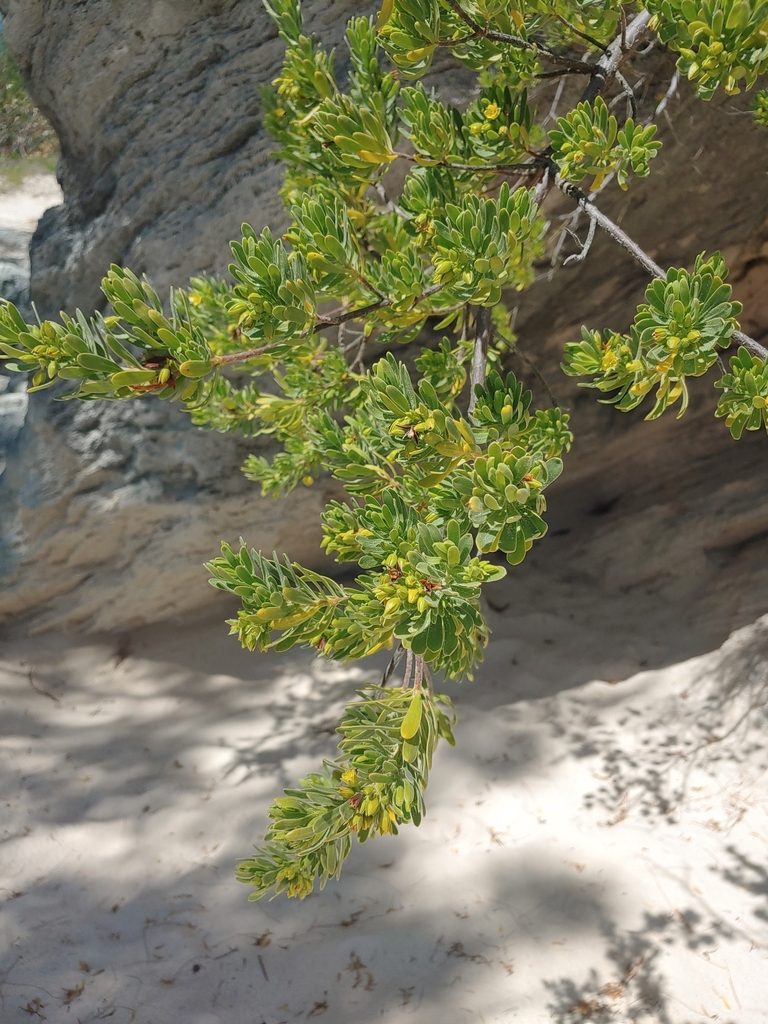
Bay lavender (bay cedar) Suriana maritimanativeA low, grey-green coastal shrub with small yellow flowers.Photo: Scott Harris (CC BY) 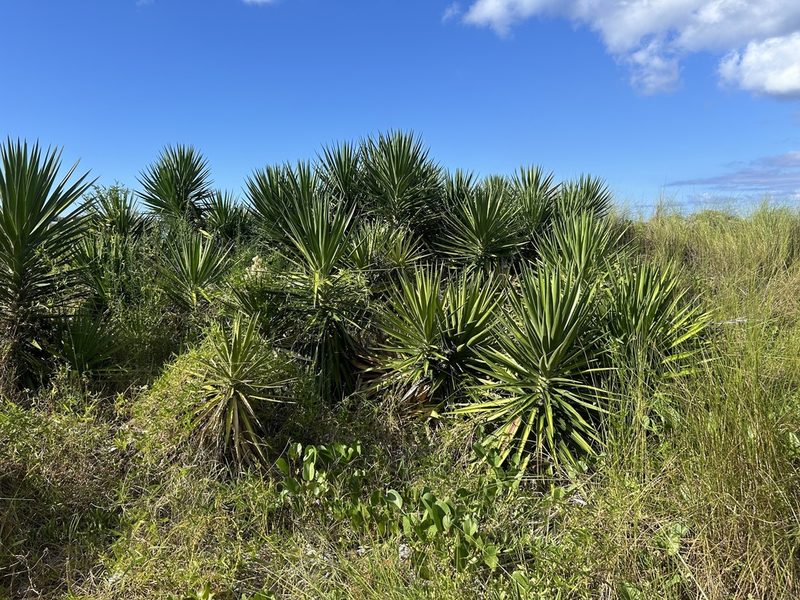
Spanish bayonet Yucca aloifolianativeStiff, sword-like leaves with very sharp tips, and tall spikes of creamy flowers. Mind your legs!Photo: martin_livezey (CC BY) 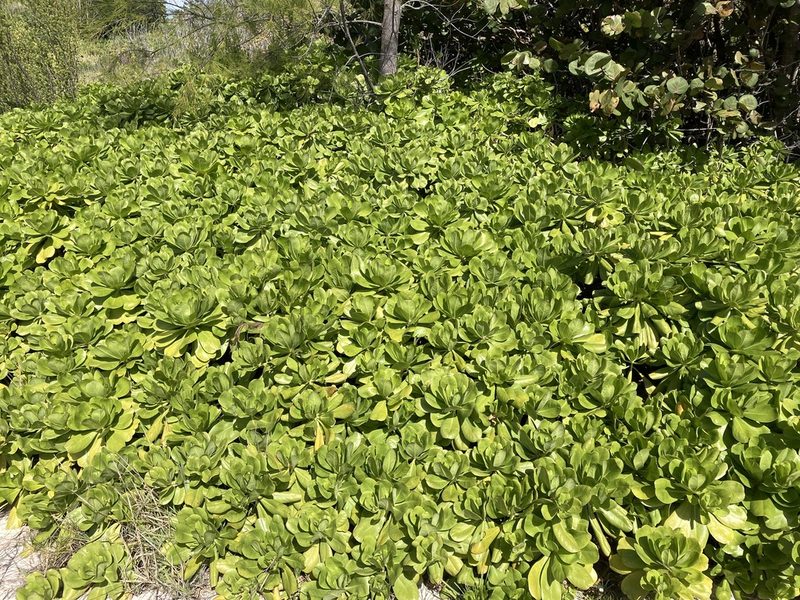
Beach naupaka Scaevola taccadainvasiveA garden shrub from the Pacific that has escaped onto beaches and dunes, forming thickets that crowd out native dune plants.Photo: iNaturalist user (CC0) 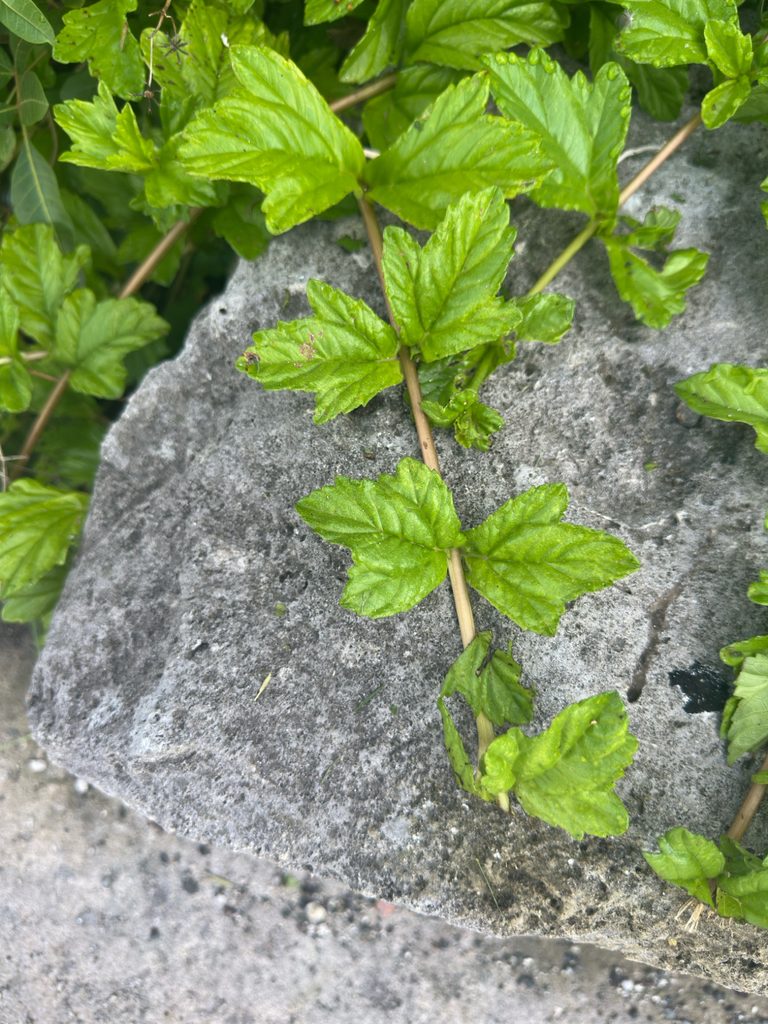
Wedelia (creeping daisy) Sphagneticola trilobatainvasiveA ground cover with yellow daisy flowers that forms dense mats, smothering native plants, mainly along the South Shore.Photo: iNaturalist user (CC0)
Ferns and mosses
Bermuda’s caves, sinkholes and damp limestone are home to some special ferns. Three are endemic (above); several others are rare and protected. The best places to look are the Walsingham area and Blue Hole Park, and Paget Marsh.
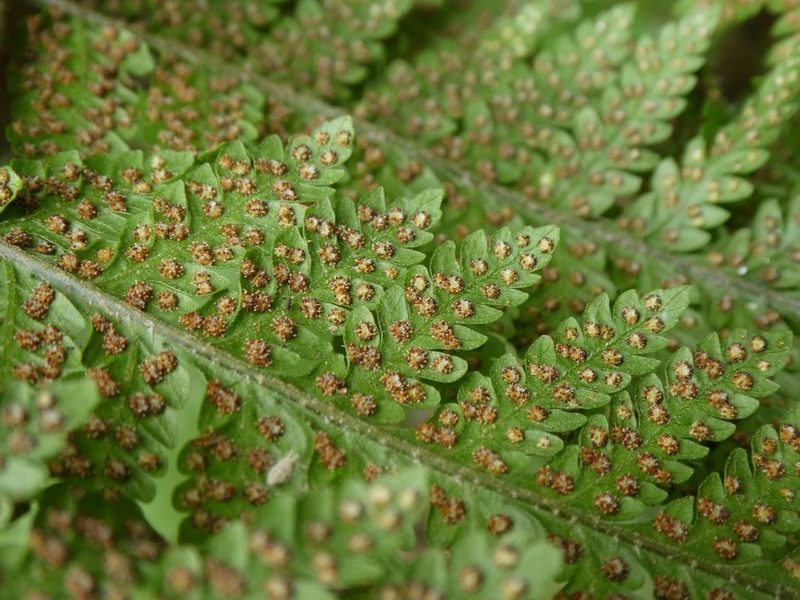
Bermuda cave fern Ctenitis sloaneinativeprotectedOnce thought to be endemic, it is now known to be a Bermuda population of a fern also found in Florida and the Caribbean. Very rare here, in caves and sinkholes.Photo: Alison Copeland (CC BY) 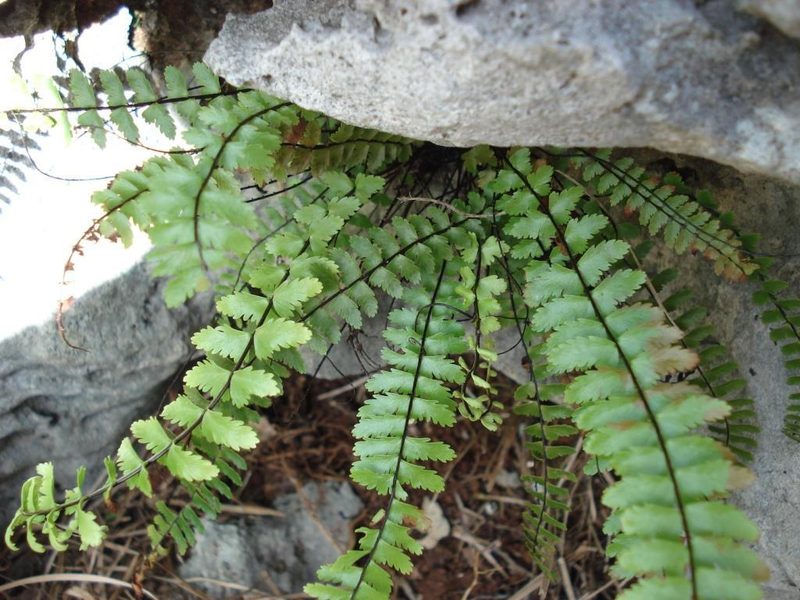
Long spleenwort Asplenium heterochroumnativeprotectedA small fern with long, narrow fronds growing from limestone in shady sinkholes and cave mouths.Photo: Alison Copeland (CC BY) 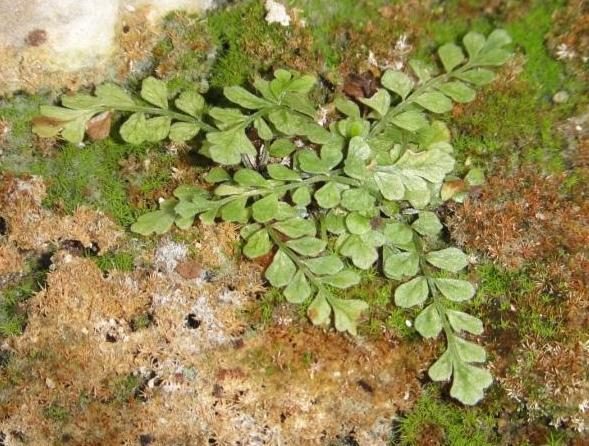
Toothed spleenwort Asplenium dentatumnativeprotectedA tiny fern of damp limestone crevices, with small toothed leaflets.Photo: Alison Copeland (CC BY) 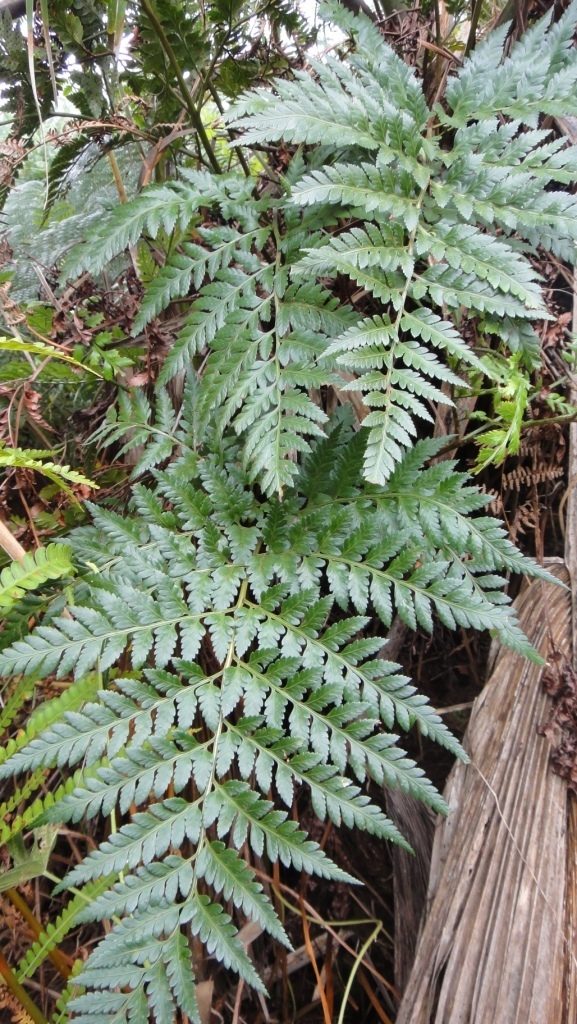
Ten-day fern Rumohra adiantiformisnativeprotectedA tough, glossy fern, rare in the wild in Bermuda. Elsewhere it is better known as the leatherleaf fern of florists’ bouquets.Photo: Alison Copeland (CC BY) 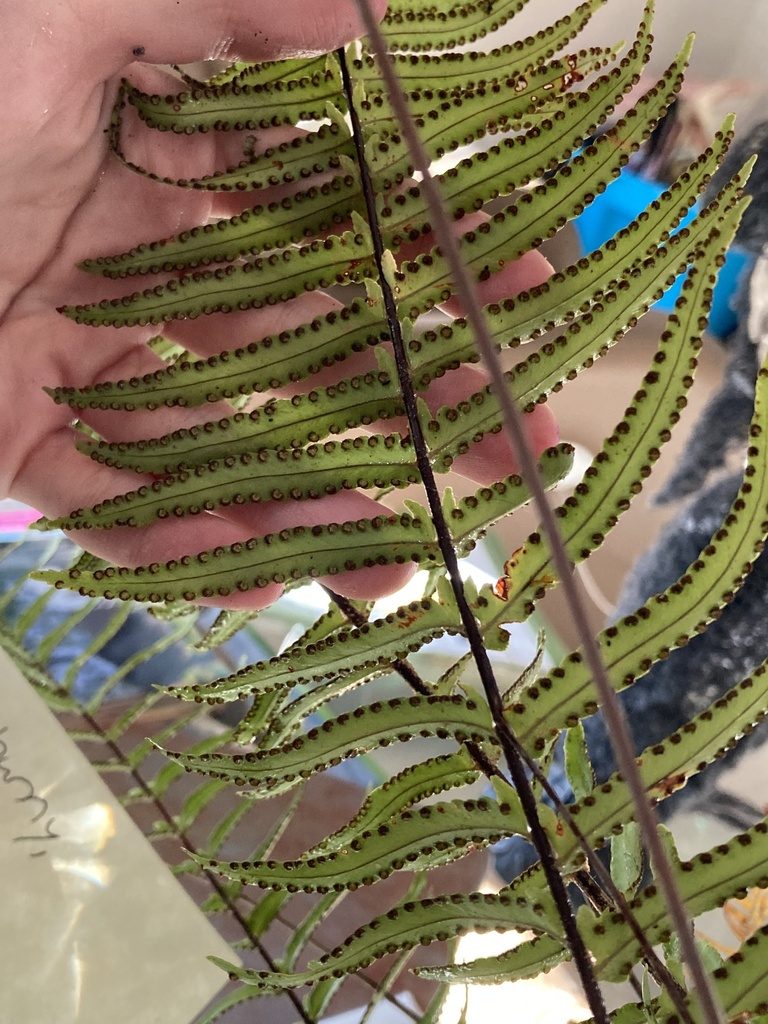
Sword fern Nephrolepis exaltatanativeThe wild parent of the familiar Boston fern, common on rocks, walls and palmetto trunks.Photo: iNaturalist user (CC0) 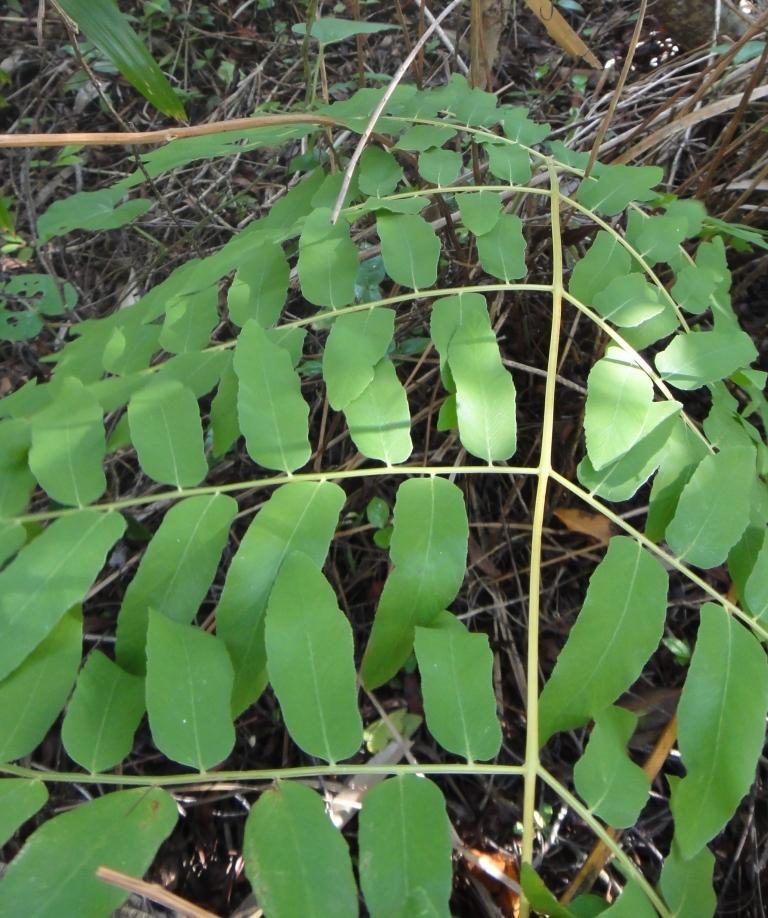
Royal fern Osmunda spectabilisnativeA large fern of wet ground, found in the peat marshes such as Paget Marsh.Photo: Alison Copeland (CC BY)
Seagrasses and seaweeds
Seagrasses are true flowering plants that live underwater, unlike seaweeds, which are algae. Their meadows shelter young fish and are the main food of the green turtles that graze in Bermuda’s bays, including Mangrove Bay (see Reptiles). All four seagrasses are protected, and Bermuda’s seagrass beds have declined badly in recent years, so please do not anchor or drag anything over them.
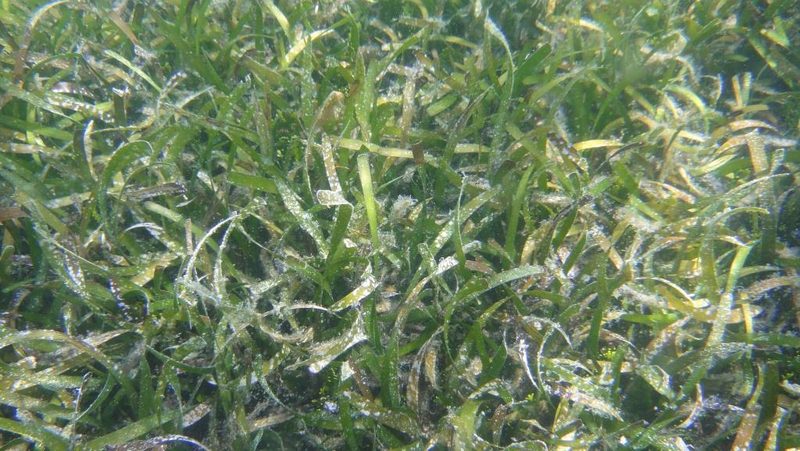
Turtle grass Thalassia testudinumnativeprotectedaround the cottagesBroad, flat, ribbon-like blades; the green turtles’ favourite food.Around the cottages: In Mangrove Bay. About three years ago the green turtles grazed it away completely, but it is now coming back well.Photo: Alison Copeland (CC BY) 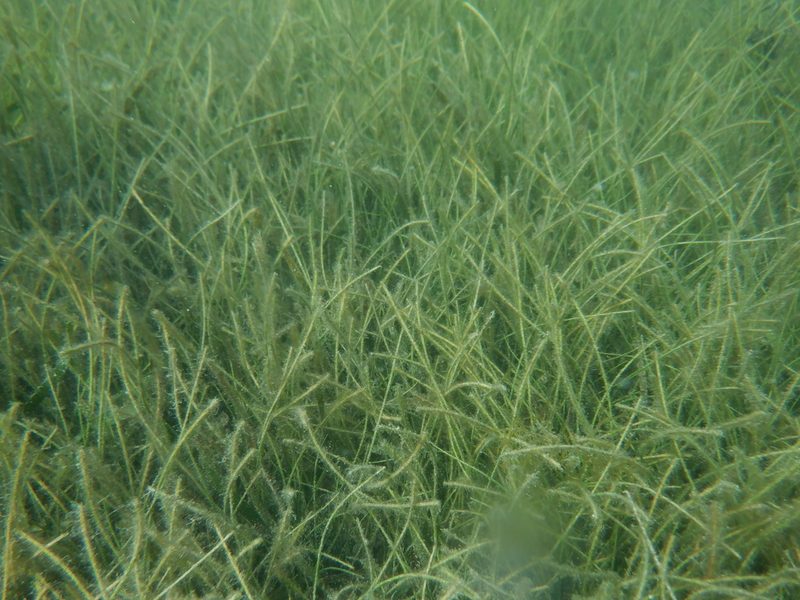
Manatee grass Syringodium filiformenativeprotectedThin, round, spaghetti-like blades.Photo: Thomas Irvine (CC BY) 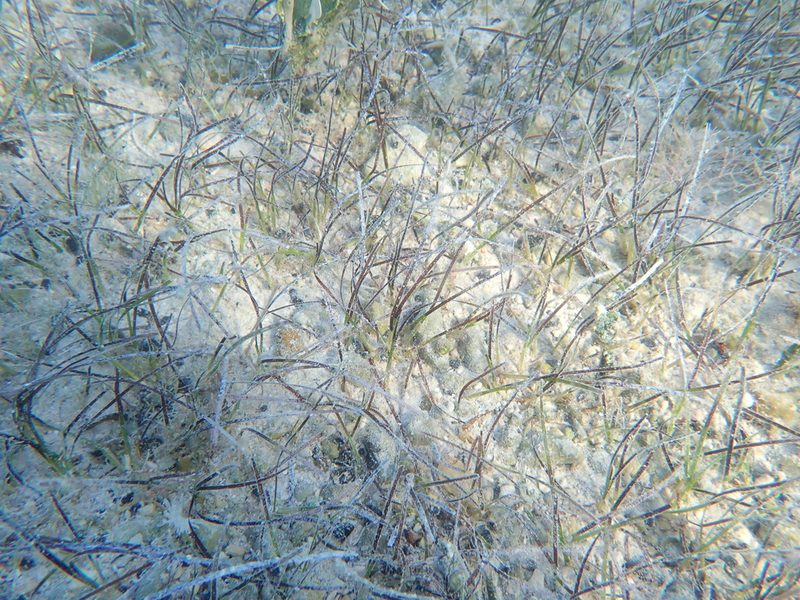
Shoal grass HalodulenativeprotectedFine, flat blades in shallow water. Bermuda’s shoal grass was described as its own species, Halodule bermudensis, but many botanists treat it as the widespread H. wrightii.Photo: Thomas Irvine (CC BY) 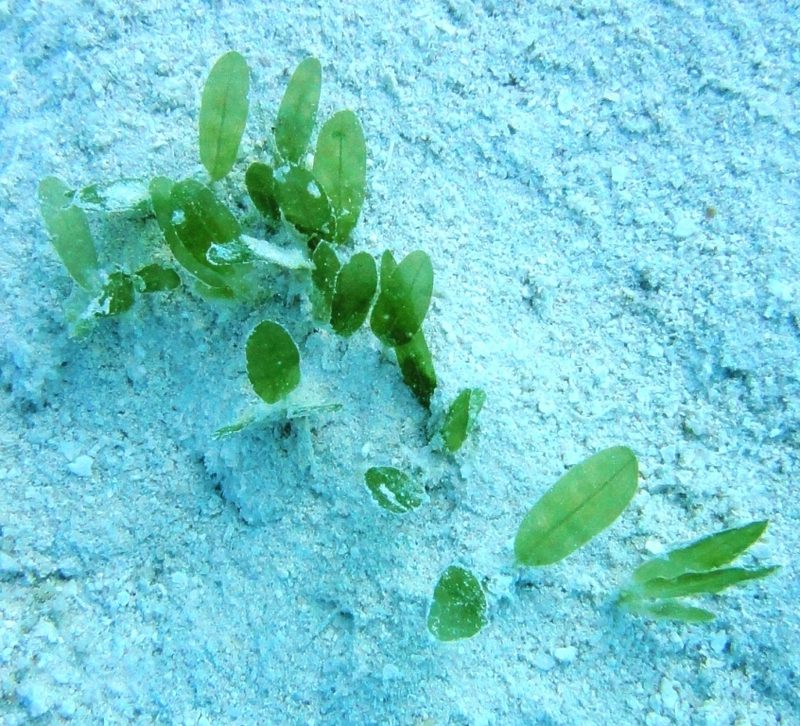
Paddle grass Halophila decipiensnativeprotectedTiny paired, paddle-shaped leaves, often in deeper water.Photo: Alison Copeland (CC BY) 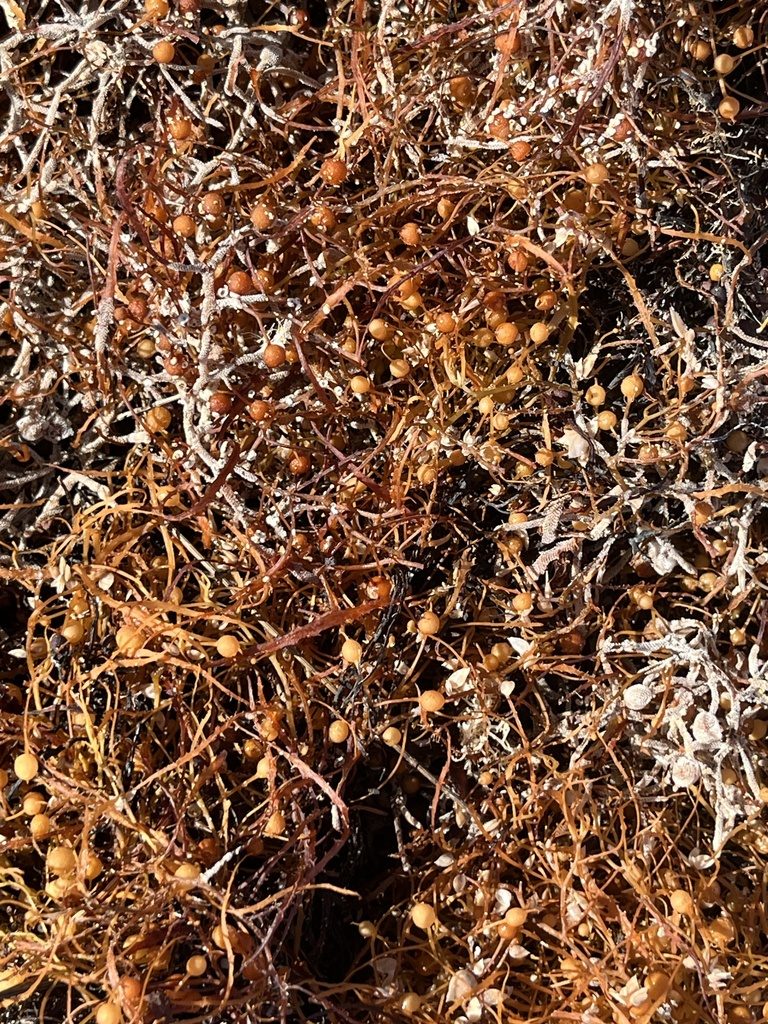
Sargassum (gulfweed) Sargassumaround the cottagesGolden-brown floating seaweed held up by small air bladders. It drifts in from the Sargasso Sea, which surrounds Bermuda, and sometimes piles up on the shore. Look closely in the water and you may see tiny crabs and fish living in it.Around the cottages: Washes up on the beaches at times. We collect it, leave it out in the rain for a while to wash out the salt, then use it to fertilise our citrus trees.Photo: iNaturalist user (CC0) 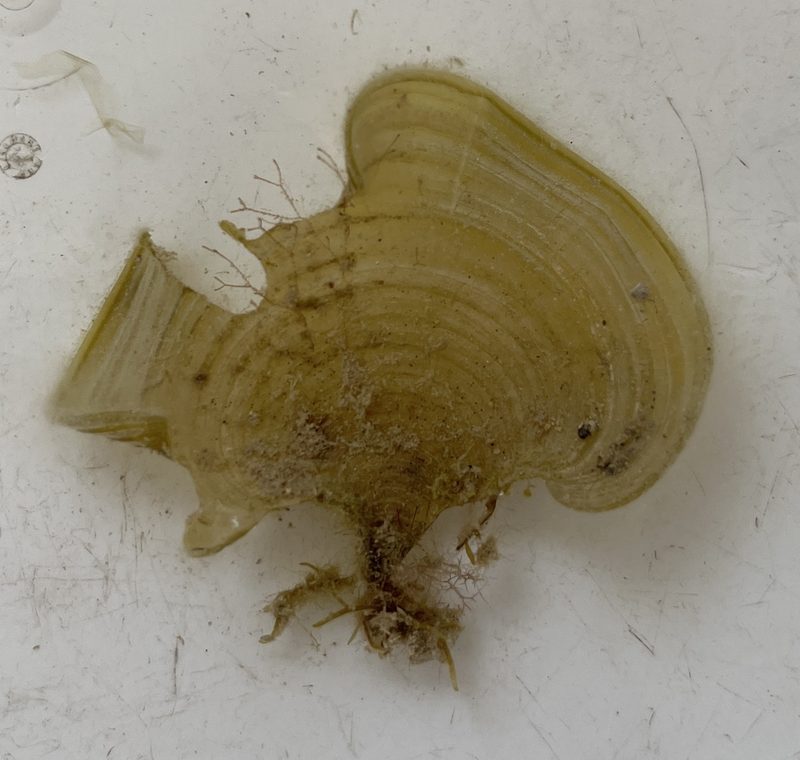
Peacock’s tail PadinaA small fan-shaped brown seaweed with curved bands, common in shallow water.Photo: Thomas Irvine (CC BY) 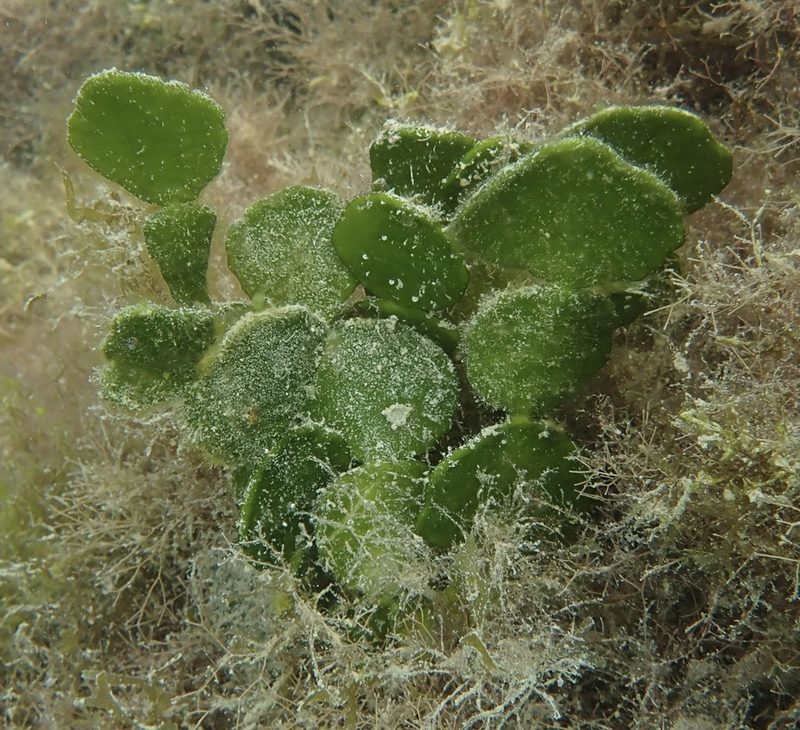
Halimeda (cactus seaweed) HalimedaA green seaweed made of chains of small chalky discs. When it dies the discs break down into sand.Photo: Thomas Irvine (CC BY) 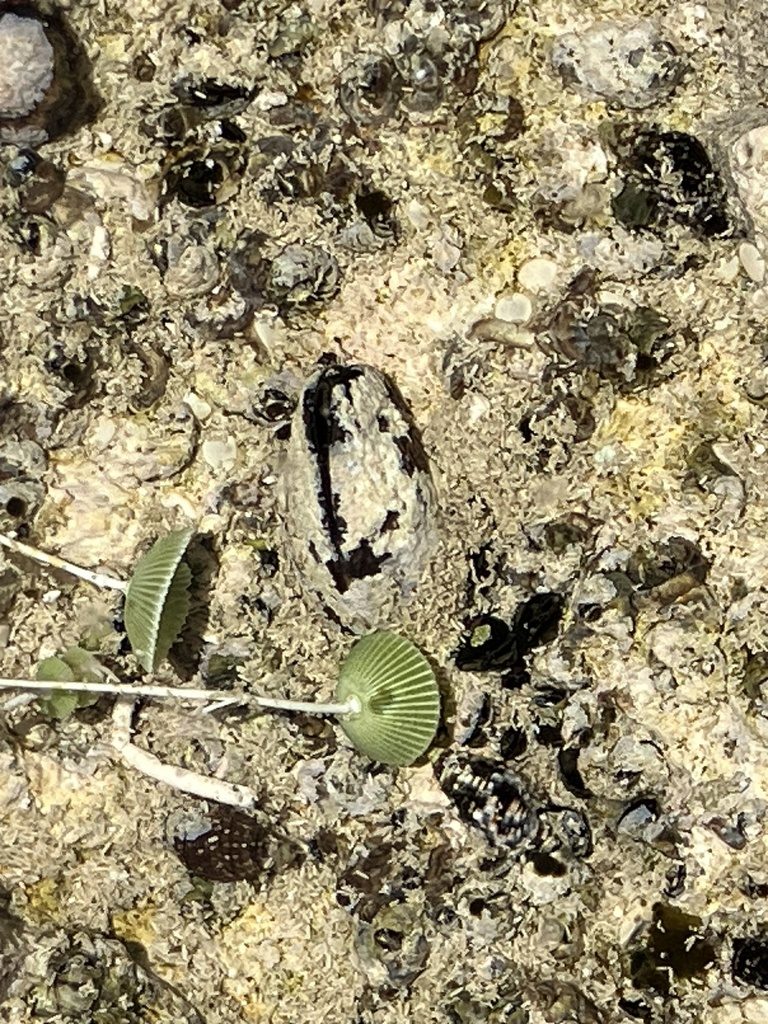
Mermaid’s wine glass AcetabulariaTiny green parasols on thin stalks, each one a single giant cell, in calm shallow water.Photo: iNaturalist user (CC0) 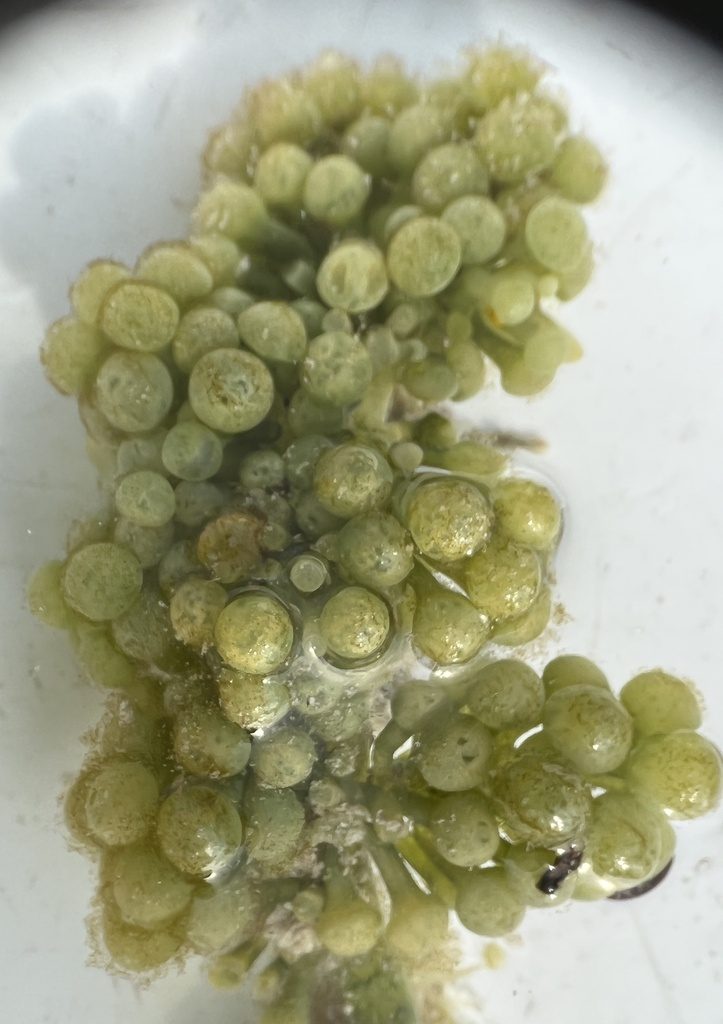
Sea grapes (seaweed) Caulerpa racemosaA green seaweed with little bead-like branches that look like bunches of grapes.Photo: Thomas Irvine (CC BY) 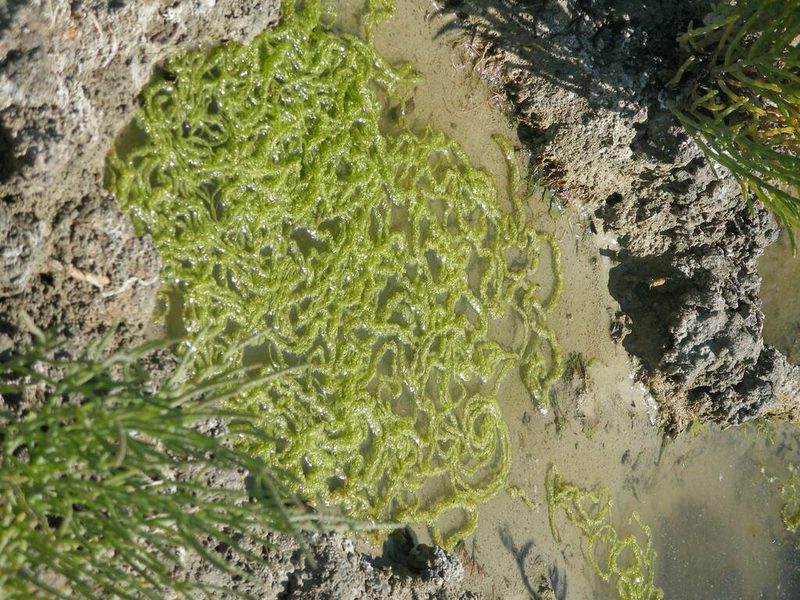
Sea lettuce UlvaThin, bright green, lettuce-like sheets on rocks near the tide line.Photo: Анна Митрошенкова (CC BY)
Fruit and garden plants
Bermuda gardens grow a wonderful mix of fruit. Some of these plants are also important for wildlife, and we grow several of them on purpose.
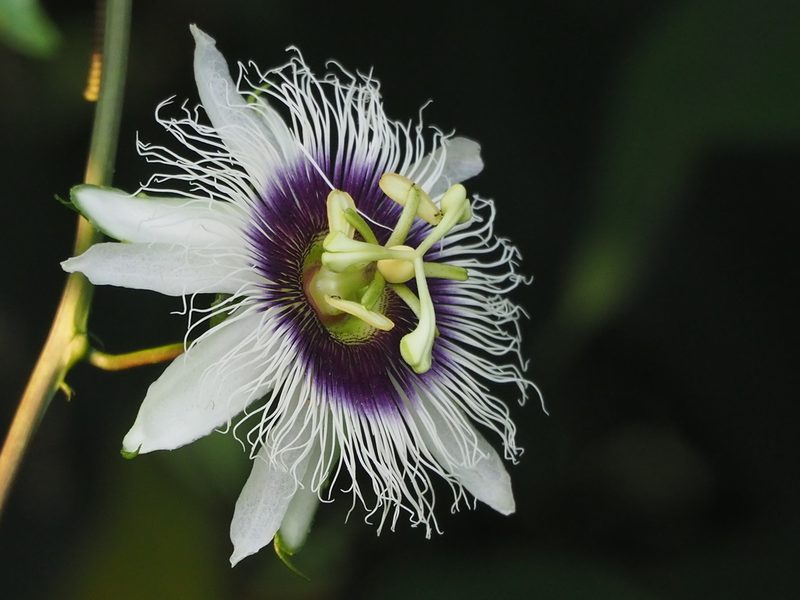
Passion fruit Passiflora edulisintroducedaround the cottagesA climbing vine with extraordinary purple-and-white flowers and round fruit. Its leaves are the only food of the gulf fritillary butterfly’s spiky orange caterpillars.Around the cottages: We grow passion fruit for the gulf fritillary butterflies.Gulf fritillary »Photo: iNaturalist user (CC0) 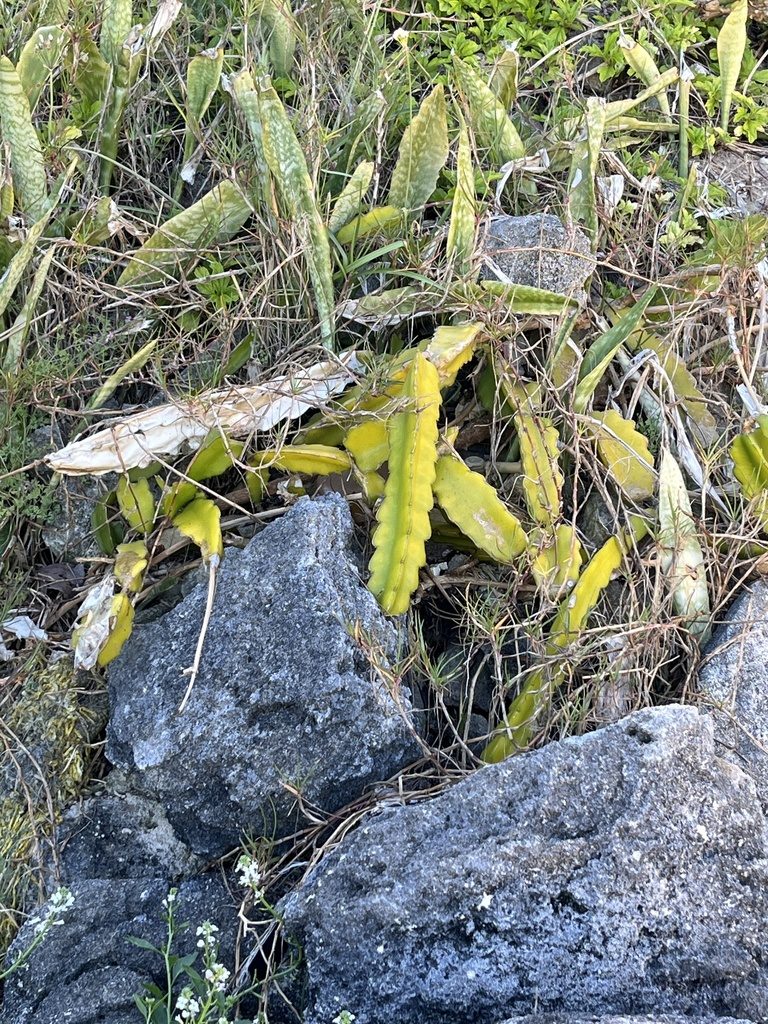
Dragon fruit (night-blooming cereus) Selenicereus undatusintroducedaround the cottagesA climbing cactus whose huge, scented white flowers open for a single night. In Bermuda they are pollinated by big hawkmoths; the bright pink fruit follows.Around the cottages: Our dragon fruit flowers at night, visited by hawkmoths at dusk.Hawkmoths »Photo: iNaturalist user (CC0) 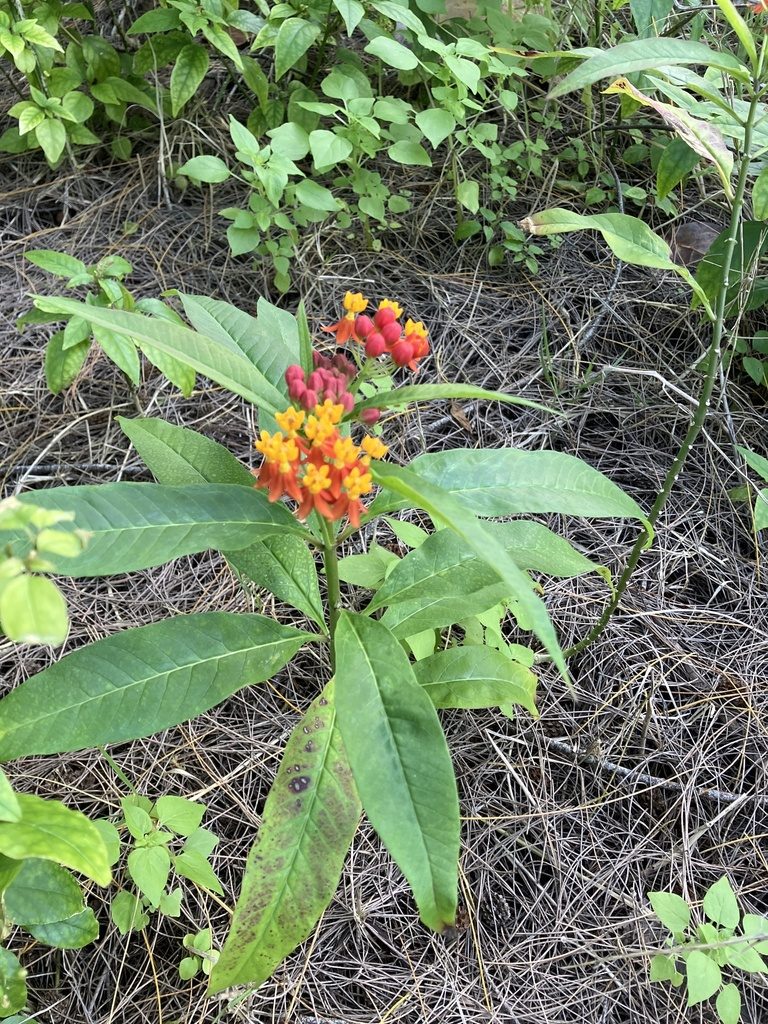
Milkweed Asclepias curassavicaintroducedaround the cottagesRed-and-orange flowers and seed pods full of silky floss. Milkweed is the only food of monarch caterpillars, and Bermuda’s resident monarchs depend on garden plantings now that the wild pasture milkweed has mostly gone.Around the cottages: Planted around Studio II for the monarchs.Bermuda’s monarchs »Photo: iNaturalist user (CC0) 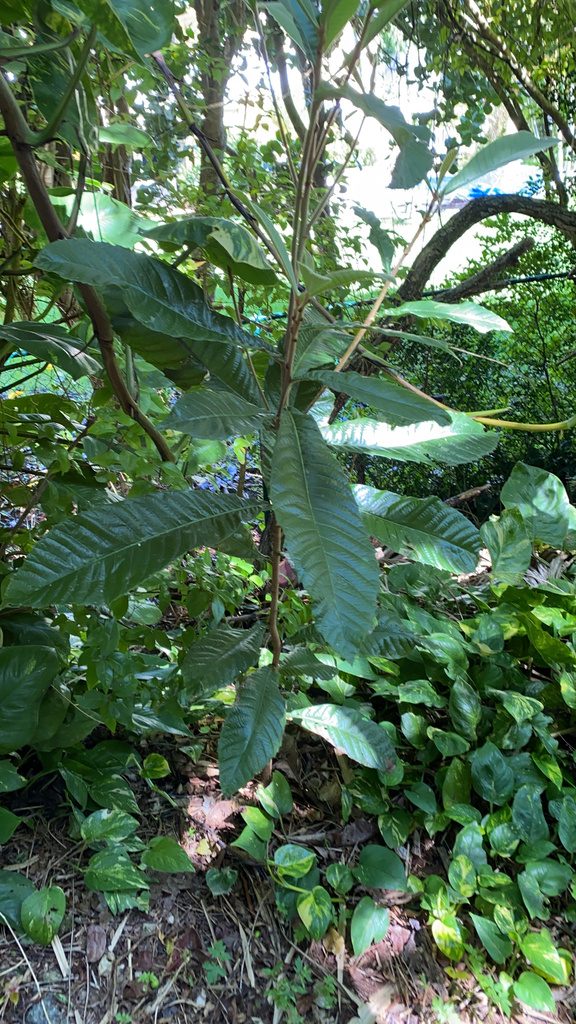
Loquat Eriobotrya japonicaintroducedA small tree whose sweet orange fruit ripens in late winter and spring. A Bermuda favourite, eaten fresh or made into jam and loquat liqueur.Photo: nebrooks (CC BY) 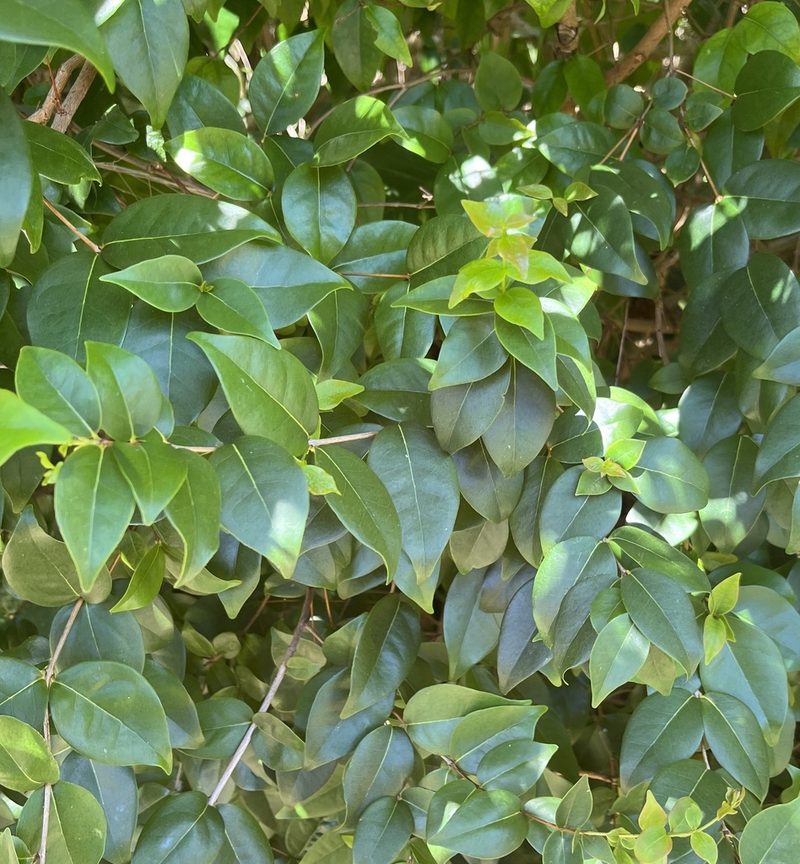
Surinam cherry Eugenia uniflorainvasiveSmall, ribbed red cherries with a tangy taste. Birds spread its seeds, and in places such as Blue Hole Park it has formed dense woods where little else grows.Photo: Thomas Irvine (CC BY) 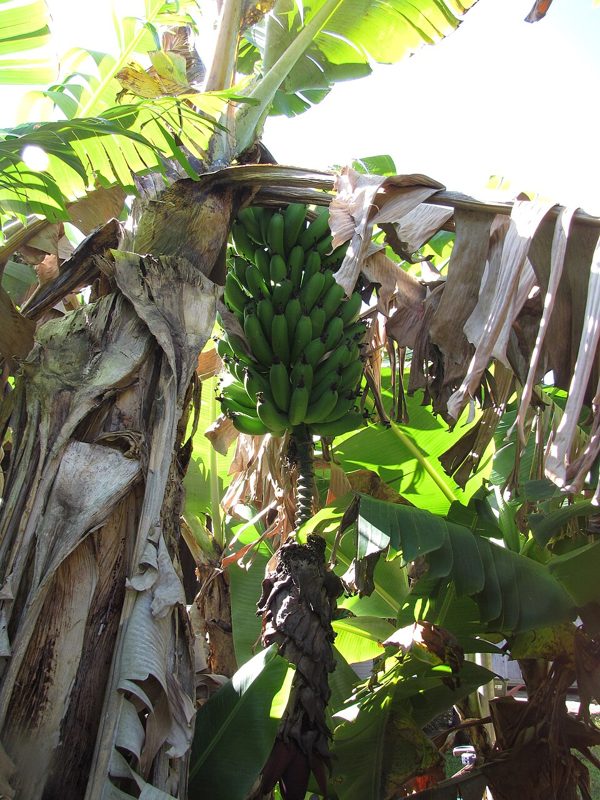
Banana Musaintroducedaround the cottagesGrown in gardens and small plots across the island.Around the cottages: We grow Cavendish bananas around the cottages.Photo: Forest and Kim Starr / Wikimedia Commons (CC BY) 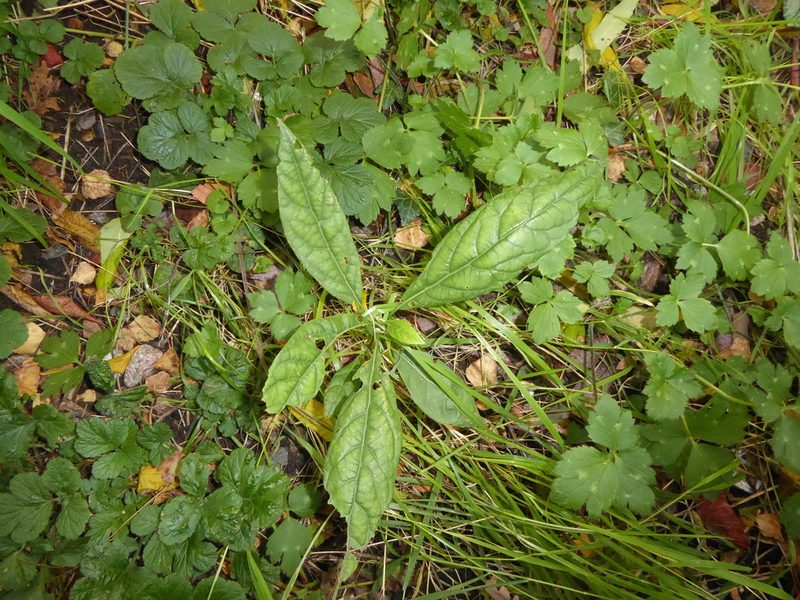
Avocado Persea americanaintroducedBig garden trees, often heavy with fruit; Bermuda-grown avocados are sold locally in season.Photo: jamie-aa (CC BY) 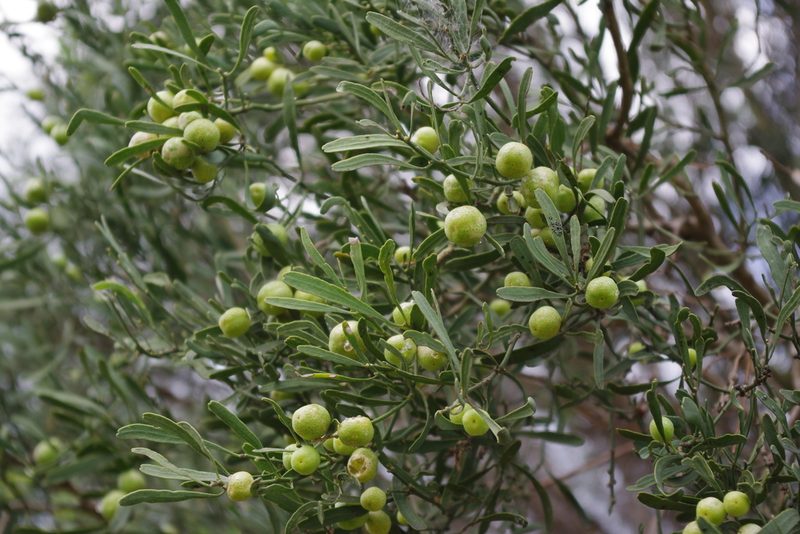
Citrus: oranges, lemons and limes CitrusintroducedGrown in Bermuda gardens since the early days of the colony.Photo: coenobita (CC BY) 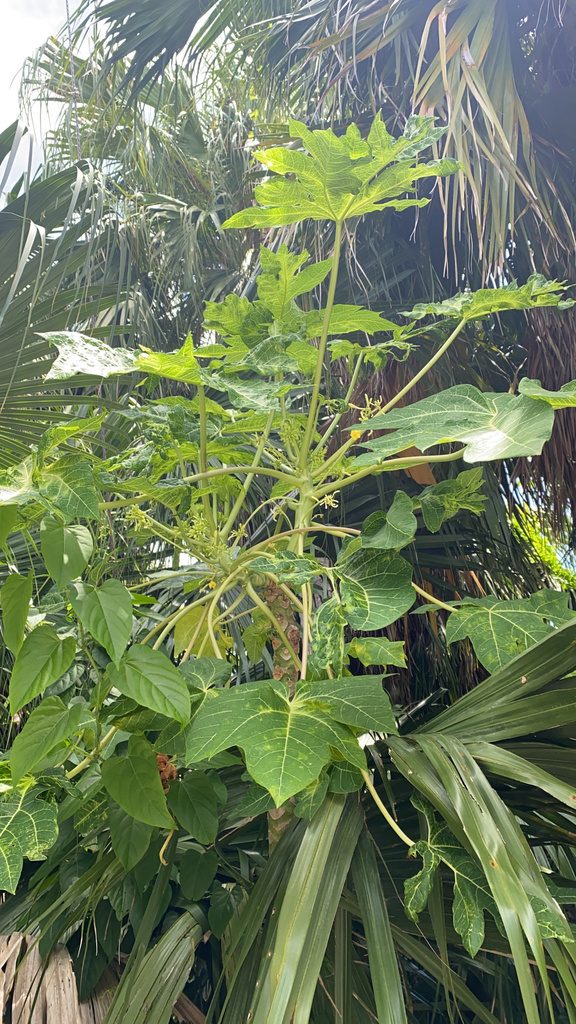
Pawpaw (papaya) Carica papayaintroducedA fast-growing, palm-like tree with fruit clustered under the leaves; green pawpaw is a traditional Bermudian vegetable dish.Photo: nebrooks (CC BY) 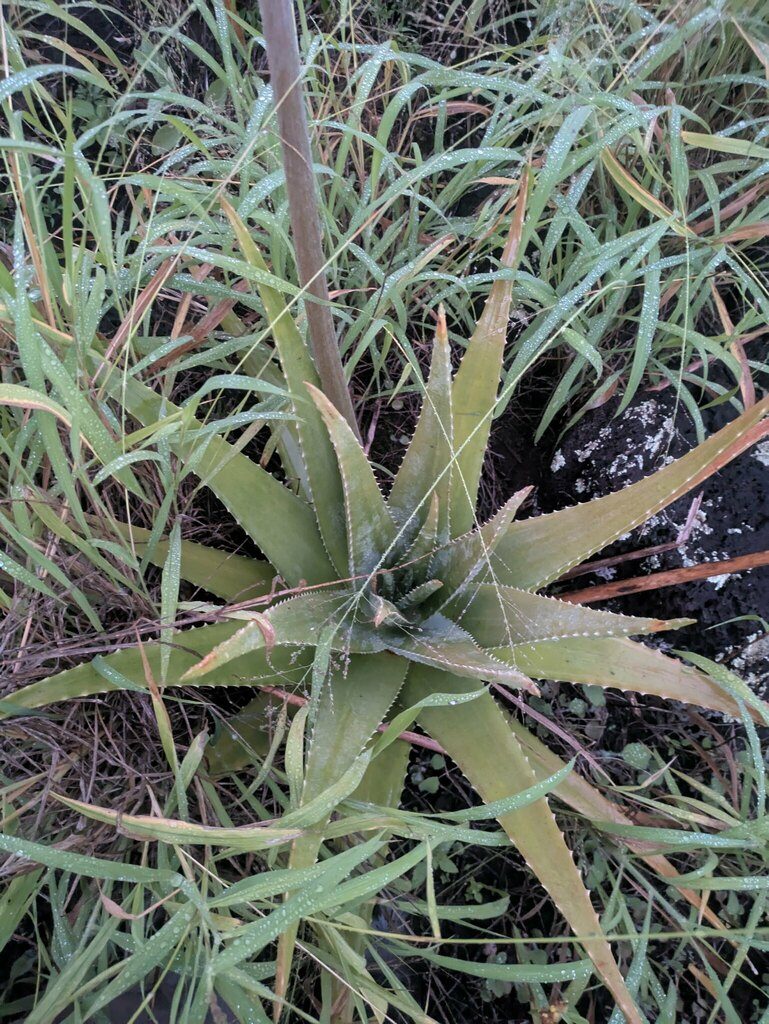
Aloe vera Aloe veraintroducedaround the cottagesThe soothing gel inside its thick, spiny-edged leaves is a traditional remedy for sunburn and minor burns.Around the cottages: In our garden.Photo: Kevin Faccenda (CC BY)
Plants that cause trouble
Many plants brought to Bermuda for gardens have escaped and now crowd out native plants. The Bermuda Government’s Department of Environment and Natural Resources lists these among the island’s invasive plants:
- Brazil pepper (Mexican pepper) (Schinus terebinthifolia): dense thickets; perhaps the most damaging of all
- Casuarina (Casuarina equisetifolia): smothers the ground with needles; blows down in hurricanes
- Indian laurel (Ficus microcarpa): roots split walls and foundations
- Chinese fan palm (Livistona chinensis): mistaken for the endemic palmetto
- Surinam cherry (Eugenia uniflora): forms dense woods, e.g. at Blue Hole Park
- Pride of India (Melia azedarach): woodlands and roadsides; poisonous berries
- Queensland umbrella tree (Heptapleurum actinophyllum): spread by birds; grows in walls
- Asparagus fern (Asparagus aethiopicus): dense ground cover (not a true fern)
- Wedelia (creeping daisy) (Sphagneticola trilobata): mats that smother native plants
- Beach naupaka (Scaevola taccada): thickets on beaches and dunes
- Lablab (hyacinth bean) (Lablab purpureus): a climbing vine
- Ardisia (jetberry, marlberry): an escaped garden shrub in wetlands
- Water hyacinth (Pontederia crassipes): chokes ponds; one of the world’s worst invasive plants
Fiddlewood and allspice are also listed among the introduced or invasive woodland species. Bermuda’s conservation groups and volunteers work to pull these plants out of the nature reserves and replant native ones. Source: environment.bm: invasive species.
Around the cottages
Our cottages sit right on the water at Sugar Cane Point, on Mangrove Bay in Somerset. Our garden is planted with Bermuda’s endemic and native plants first, then useful things: vegetables, fruit and herbs. Some of our plants are there for the wildlife: we grow passion fruit for the gulf fritillary butterflies, dragon fruit whose night flowers feed hawkmoths, and milkweed for the monarchs. In the garden, along the shore and out in the bay, look out for:
- Bermuda cedar: In the graveyard near the cottages.
- Bermuda palmetto: In the graveyard near the cottages.
- Bermuda olivewood: The hedge at Sugar Cane Cottage is Bermuda olivewood.
- Bermudiana: Look for it in spring in the grass and garden beds.
- Coconut palm: We have coconut palms at Sunset and Sugar Cane Cottage.
- Bay grape: Along the shoreline.
- Buttonwood: Along the shoreline.
- Coast sophora (necklace pod): In our garden.
- Sea purslane: Along our shoreline.
- Seaside oxeye: Along our shoreline.
- Sea lavender: Along our shoreline.
- Turtle grass: In Mangrove Bay. About three years ago the green turtles grazed it away completely, but it is now coming back well.
- Sargassum (gulfweed): Washes up on the beaches at times. We collect it, leave it out in the rain for a while to wash out the salt, then use it to fertilise our citrus trees.
- Passion fruit: We grow passion fruit for the gulf fritillary butterflies.
- Dragon fruit (night-blooming cereus): Our dragon fruit flowers at night, visited by hawkmoths at dusk.
- Milkweed: Planted around Studio II for the monarchs.
- Banana: We grow Cavendish bananas around the cottages.
- Aloe vera: In our garden.
See the complete list of every plant recorded in Bermuda (1390) »
Where to see native plants: our Parks & Nature Reserves page, especially Paget Marsh (cedar and palmetto forest), the Walsingham area and Blue Hole Park (caves and rare ferns), Spittal Pond and the South Shore (Darrell’s fleabane and seaside plants) and the Bermuda Botanical Gardens.
« Flora & Fauna | Plants of Bermuda | Old Roses | All the plants | Parks & Nature Reserves | Insects