
Old Roses of Bermuda
« Flora & Fauna | Plants of Bermuda | Old Roses | All the plants | Parks & Nature Reserves | Insects
Roses have grown in Bermuda almost since the first settlers: a Spaniard shipwrecked here in 1639 wrote that the island’s gardens were full of them. Over the centuries settlers, sailors and governors brought roses from England, America and perhaps directly from China, and in Bermuda’s mild climate the tough old China and Tea roses flourished in gardens and churchyards long after they had gone out of fashion, and in some cases disappeared, elsewhere. A visiting garden historian called Bermuda “a living museum of roses”.
Today the Bermuda Rose Society, founded in 1954, looks after this heritage: finding, propagating and identifying the old roses, and caring for a garden of them at Waterville in Paget. In Bermuda roses bloom almost all year, but best from October to May; in the heat of summer they rest.
The rose that came home: Slater’s Crimson China
In the late 18th century four roses from China reached Europe and changed rose growing for ever. Unlike European roses, which flowered once a year, these China roses flowered again and again, and almost every modern repeat-flowering rose descends from them. Rose growers call them the four “stud” Chinas: Slater’s Crimson China, Parsons’ Pink China, Hume’s Blush Tea-scented China and Parks’ Yellow Tea-scented China.
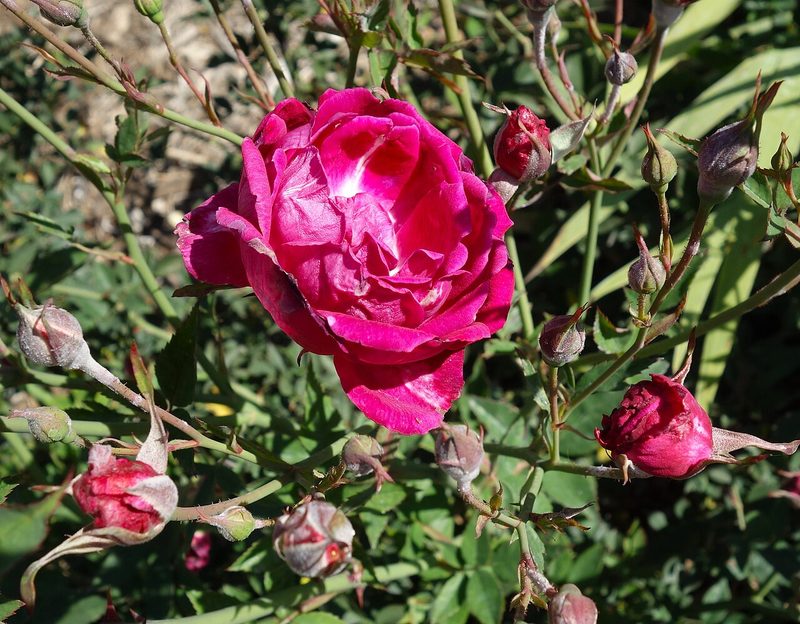
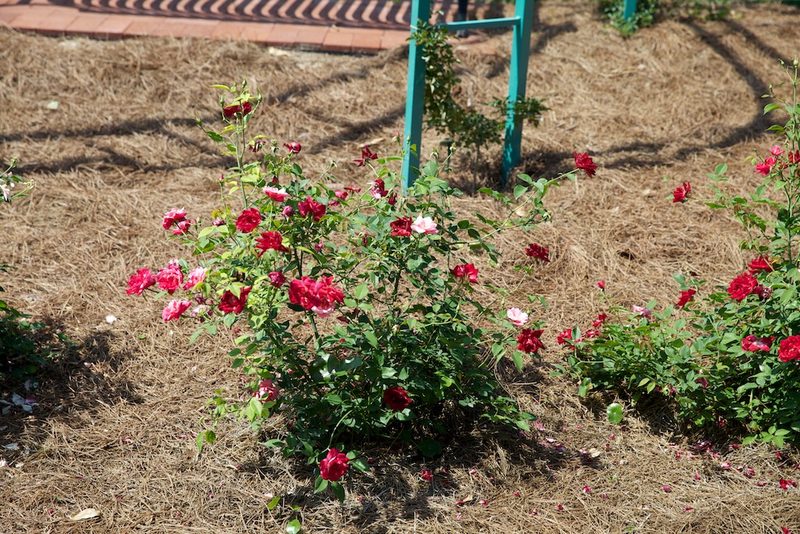
Slater’s Crimson China, the source of the deep crimson in modern roses, was thought to have been lost from cultivation. Then in 1953 Richard Thomson, chairman of the American Rose Society’s Old Rose committee, came across it growing at Belfield, in Somerset by Somerset Long Bay, a short walk from our cottages. He said he felt like an art collector who had stumbled on a lost Rembrandt. After three years of research he confirmed it in 1956. Bermudians had long known it simply as the “Belfield rose”. Plants were carried back to England by sea and the rose was shown at the Chelsea Flower Show; it is now grown around the world, and it is the Bermuda Rose Society’s emblem.
Bermuda’s mystery roses
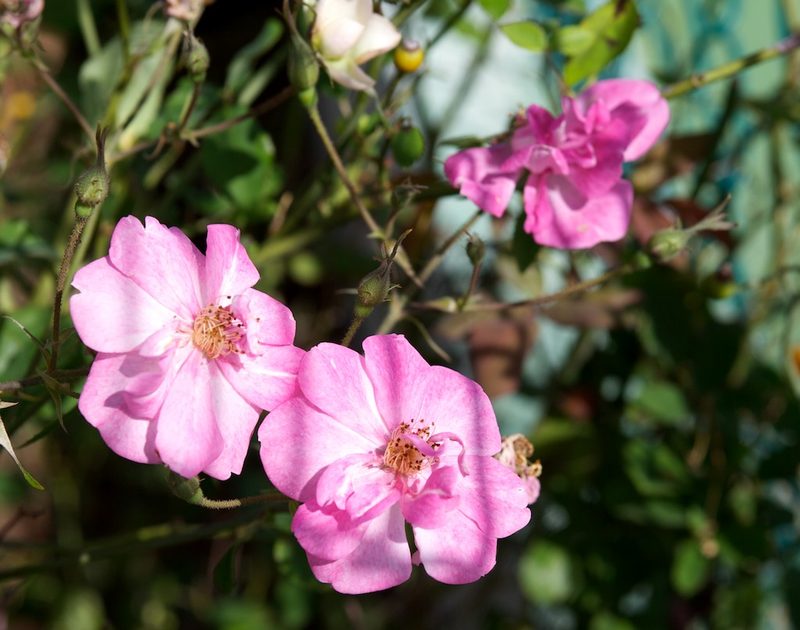
Many of Bermuda’s old roses have lost their original names over the years. Rather than guess, the Bermuda Rose Society gives each one a local name, usually after the garden, owner or place where it was found, and keeps it until its true identity is beyond reasonable doubt. These Bermuda mystery roses are now recognised as a class of their own, and several are sold by nurseries in the United States as “Bermuda roses”. Some may be long-lost roses from 19th-century Europe or China; others may be local seedlings or sports.
| Mystery rose | What is known |
|---|---|
| Belfield | Identified in 1956 as Slater’s Crimson China (see above). |
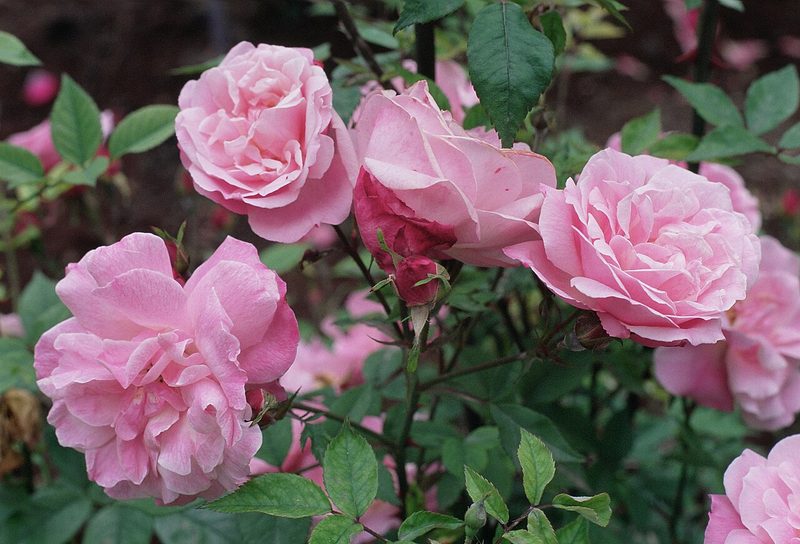
| Spice | Pale blush-pink, double, with a peppery scent. Thought possibly to be Hume’s Blush Tea-scented China, but not proved. |
| Smith’s Parish | Creamy white, often streaked crimson. Named after the parish where it was found; possibly ‘Fortune’s Five-coloured Rose’. |
| Vincent Godsiff | Glowing deep pinky-red flowers all year on a small, prickly bush. Found in Vincent Godsiff’s garden on Point Finger Road, Paget. |
| St. David’s | Found on St. David’s Island; a seedling or sport, very like the China rose ‘Fabvier’. |
| Emmie Gray | Single bright pink flowers that deepen to crimson as they age. From the garden of a long-serving teacher at the Bermuda High School for Girls; once thought to be ‘Sanguinea’. |
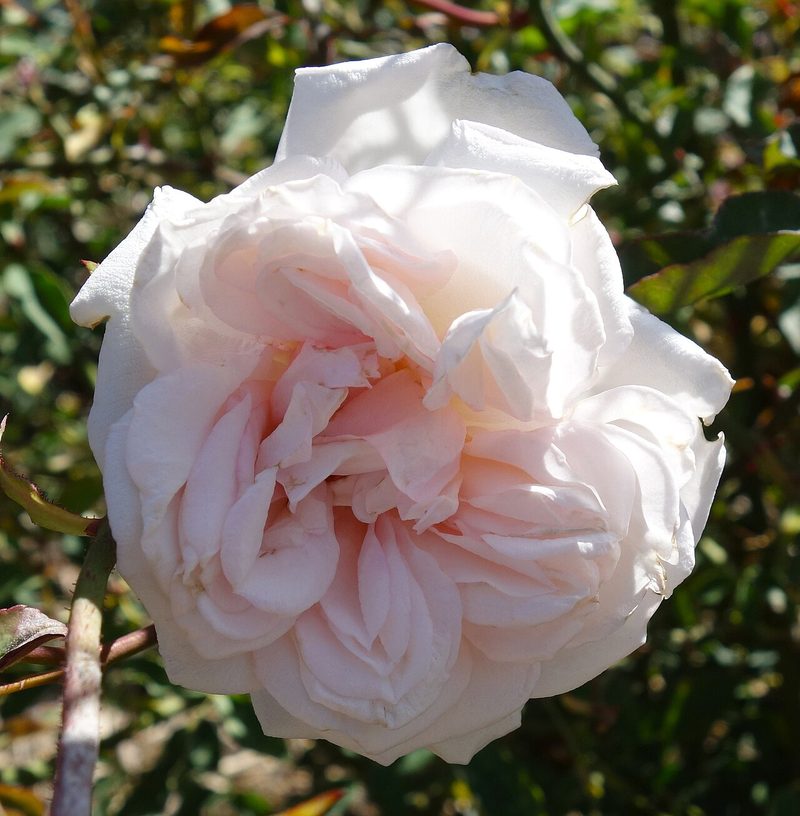
| Bermuda’s Kathleen | Found in 1956; cream-white ageing to pink. Not the hybrid musk ‘Kathleen’ it was once thought to be. |
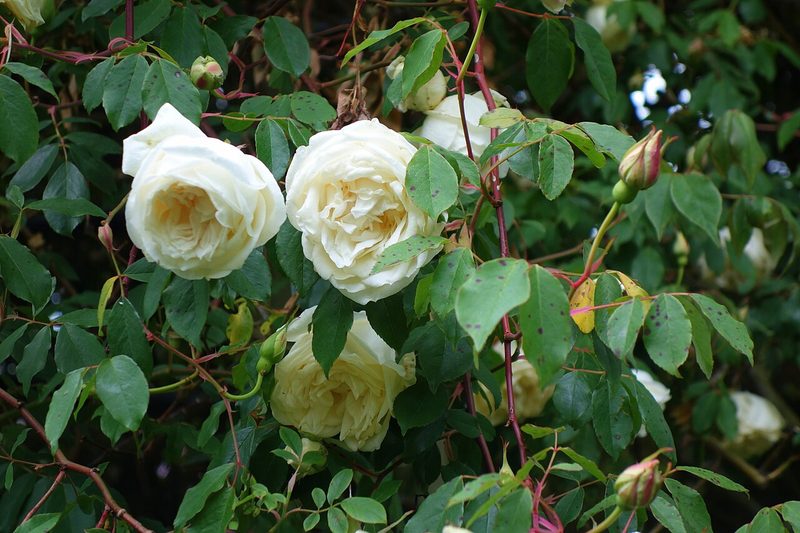
| Brightside Cream | Scented, creamy white flowers; sold in the United States as a Bermuda found rose. |
| Maitland White | Little has been published; described by US nurseries as a white, fragrant, repeat-flowering Bermuda rose. |
| Carnation | Featured on a Bermuda postage stamp in 2014; little else published. |
Solving the mysteries
The Bermuda Rose Society is now mapping the genomes of the Bermuda Mystery Roses. Its members voted for the project at the Society’s annual general meeting on 1 May 2026, and the work is being done with Bermudian geneticist Dr Carika Weldon and Jean-Pierre Rouja of BioQuest, the island’s own genomics firm, whose genome work includes the Bermuda cedar, the Bermuda skink and the cahow. The first step is a reference genome from one historic rose, sequenced at the Bermuda College laboratory; then the 25 or so identified mystery roses will be sequenced and compared with each other and with rose genomes from around the world, to discover their origins and, it is hoped, some of their lost names. The Society plans to share its first findings at its annual general meeting in May 2027. It builds on earlier DNA work the Society commissioned in Lyon, France (2004) and Montreal, Canada (2009). The project is funded by donations: see the Bermuda Rose Society if you would like to help.
Where to see old roses
- Waterville Rose Garden, Paget. The Bermuda Rose Society’s Rose Repository Garden, in the waterside garden of Waterville, the 18th-century house that is the headquarters of the Bermuda National Trust. Created in 1988 and rebuilt for the Millennium, it holds the Society’s collection of Bermuda mystery roses and other old roses, tended by Society volunteers. By bus: Route 7 or 8 towards Hamilton; Waterville is on Pomander Road at the Paget end of Hamilton Harbour, near the roundabout at the foot of Crow Lane: ask the driver for the nearest stop.
- Bermuda Botanical Gardens, Paget (on our Parks page). A rose garden behind Camden House (the Premier's official residence, used for official functions), and the Society’s monthly meetings (October to May, first Friday morning) at Horticultural Hall, where visitors are welcome. By bus: Route 7 (South Road) passes the gardens; ask the driver.
- Heydon Trust, Somerset (on our Parks page). Peaceful gardens near us in Somerset, around the tiny Heydon Chapel, and a good repository of Bermuda's old roses: one of the best places near the cottages to see them. By bus: Routes 7 or 8 along Somerset Road (ask the driver for Heydon).
Over the years the Society has also given rooted cuttings to public gardens, churches, museums and Government House, so keep an eye out for old roses in churchyards and historic gardens around the island. The Society sells young plants raised from cuttings twice a year, and enters roses at the spring Agricultural Exhibition (the “Ag Show”) at the Botanical Gardens.
To find out more, visit the Bermuda Rose Society (also on Instagram). Its book Roses in Bermuda Revisited (2013) won the World Federation of Rose Societies’ literary award in 2015.
Sources: the Bermuda Rose Society (rosesinbermuda.com), including its history of roses in Bermuda and its Bermuda Mysteries page; The Royal Gazette; HelpMeFind Roses. Photos from Wikimedia Commons under their Creative Commons or public-domain licences (not necessarily taken in Bermuda); click a credit to see the original.
« Flora & Fauna | Plants of Bermuda | Old Roses | All the plants | Parks & Nature Reserves | Insects