
Bermuda's Forts
For four hundred years Bermuda was one of the most heavily fortified places on earth, nicknamed "the Gibraltar of the West". Nearly a hundred forts and gun batteries were built on these small islands, from the first wooden forts of 1612 to the big guns of the Second World War. Many are now parks, free to explore, with ramparts, tunnels, cannons and wonderful views.
Here are the forts most worth seeing, grouped by area and listed nearest first from the cottages in Somerset. Each one has a link to directions in Google Maps. Tap a number to see the fort on the map.
The West End, near the cottages | Hamilton | St. George's and the East End | Island forts you can see from the water | A short history | Tips
Watford StudiosThe West End, near the cottagesHamiltonSt. George's and the East EndIsland forts you can see from the water. Numbers match the list below.
A short history
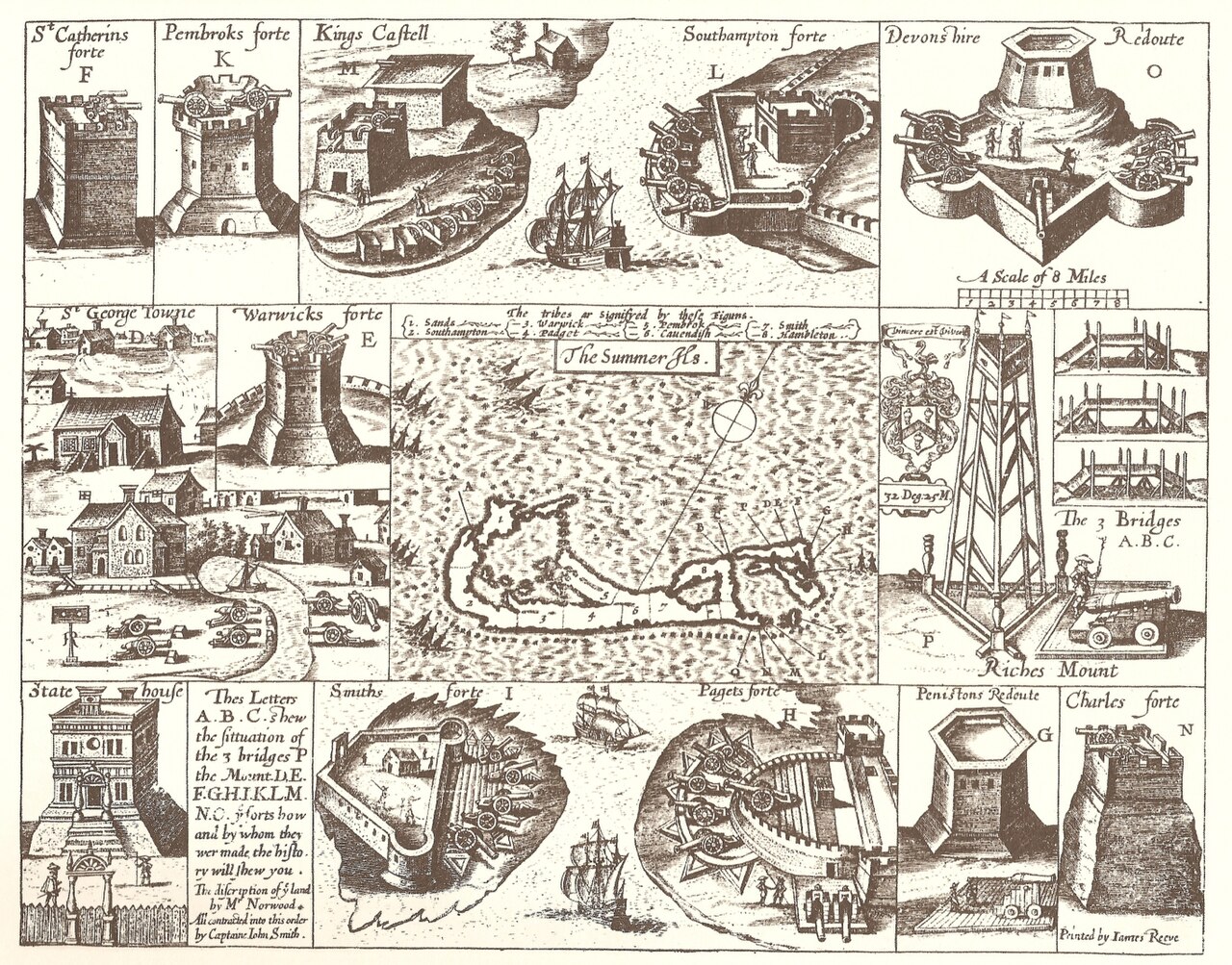
The first forts (1612 onwards). Bermuda was settled after the Sea Venture was wrecked on the reefs in 1609. When settlers arrived in 1612, they built forts straight away at the entrances to St. George's Harbour and Castle Harbour, the only ways in for ships. These stone forts are the oldest surviving English forts in the New World. In 1614 the guns of Castle Island fought off the only Spanish attack Bermuda has ever had.
The Imperial fortress (1783 to 1957). After American independence, Britain lost its bases on the American coast and turned Bermuda into its main naval base in the western Atlantic. The Royal Navy built the great Dockyard at the West End, and the Army built forts and batteries all over the island to protect it, especially at the East End, where the only deep channel through the reef runs close to shore. The British garrison left in 1957.
A World Heritage Site. In 2000, the Town of St. George and its forts, spanning the whole history of English settlement in the Americas, became a UNESCO World Heritage Site: the Historic Town of St. George and Related Fortifications.
The West End, near the cottages
The Royal Navy's great dockyard was at the West End, so the forts here were built to protect it, from the sea and from the land.
- 1
Scaur Hill Fort (Fort Scaur)
Scaur Hill Fort Park, Somerset Road, Sandys
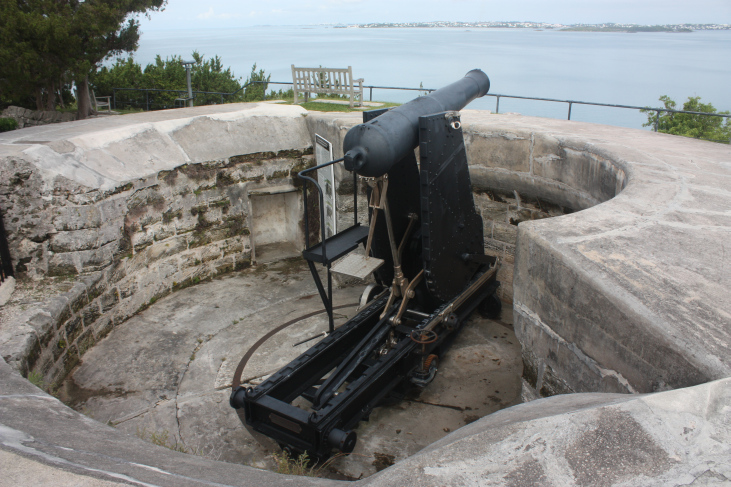
Photo: Seán Pòl Ó Creachmhaoil, CC BY-SA 3.0, via Wikimedia Commons Built in the 1870s across the narrowest part of Somerset Island, so that an enemy who landed further east could not march on the Dockyard. A deep dry moat runs right across the island, and you can explore the gun pits, galleries and passages cut into the hillside. One of the old guns still sits on its "disappearing" mount, which dropped the gun out of sight after each shot to be reloaded. The 22-acre park has some of the best views in Bermuda, over Ely's Harbour and the Great Sound, and is a lovely place to watch the sunset.
Good to know: Free. The park has picnic tables, benches, toilets and a small public dock. Keep children away from the moat edges and walls.
Bus, routes 7 or 8 towards Hamilton (pink pole): get off at Somerset Road and Scaur Lane, then a short walk uphill. Or walk or cycle along the Railway Trail, which runs just below the fort.
- 2
The Keep and the Royal Naval Dockyard
National Museum of Bermuda, Royal Naval Dockyard, Sandys
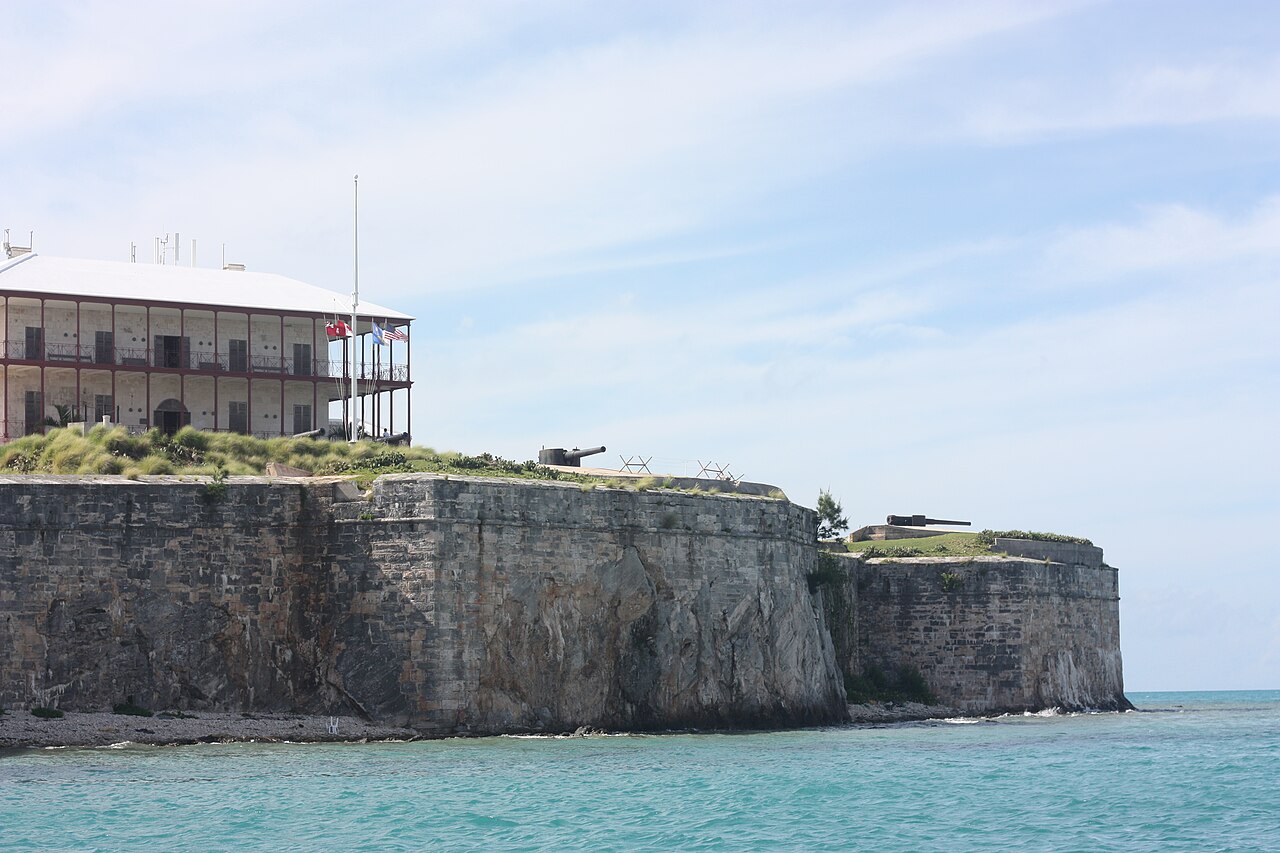
Photo: Seán Pòl Ó Creachmhaoil, CC BY-SA 3.0, via Wikimedia Commons After American independence, Bermuda became Britain's main naval base in the western Atlantic, and the Royal Navy built a huge dockyard at the West End, much of it with convict labour. The Keep is its fortress, with massive stone bastions and guns looking out to sea. Today the Keep is home to the National Museum of Bermuda: shipwreck treasures, the story of the Dockyard and the grand Commissioner's House. Nearby, the long Casemates Barracks housed the Royal Marines and later became Bermuda's prison.
Good to know: Museum: children under 16 go free with an adult; adults $20, seniors $18. Opens 9am on weekdays in summer (9.30am at weekends), 10am in winter; closes 5pm, last admission 4pm. The rest of Dockyard is free to walk around.
Bus, routes 7 or 8 to Dockyard (blue pole), the end of the line; then walk to the end of Maritime Lane.
National Museum: plan your visit | Kids & Families | Directions in Google Maps
- 3
Whale Bay Battery
West Whale Bay Park, Whale Bay Road, Southampton
A battery on a grassy headland that guarded Hogfish Cut, the channel through the reef that small ships could use to reach the West End. Little is left of the first fort, but you can explore the later gun emplacements and the magazine. From the top there are wide views over the ocean, and in March and April you may see humpback whales passing.
Good to know: Free. West Whale Bay Park has picnic tables, toilets and a small beach below.
Bus, routes 7 or 8 towards Hamilton (pink pole): ask the driver for Whale Bay Road, then walk down Whale Bay Road to the park.
Hamilton
Most of the South Shore batteries have gone, but Hamilton's fort is one of the best-kept in Bermuda.
- 4
Fort Hamilton
Happy Valley Road, Pembroke
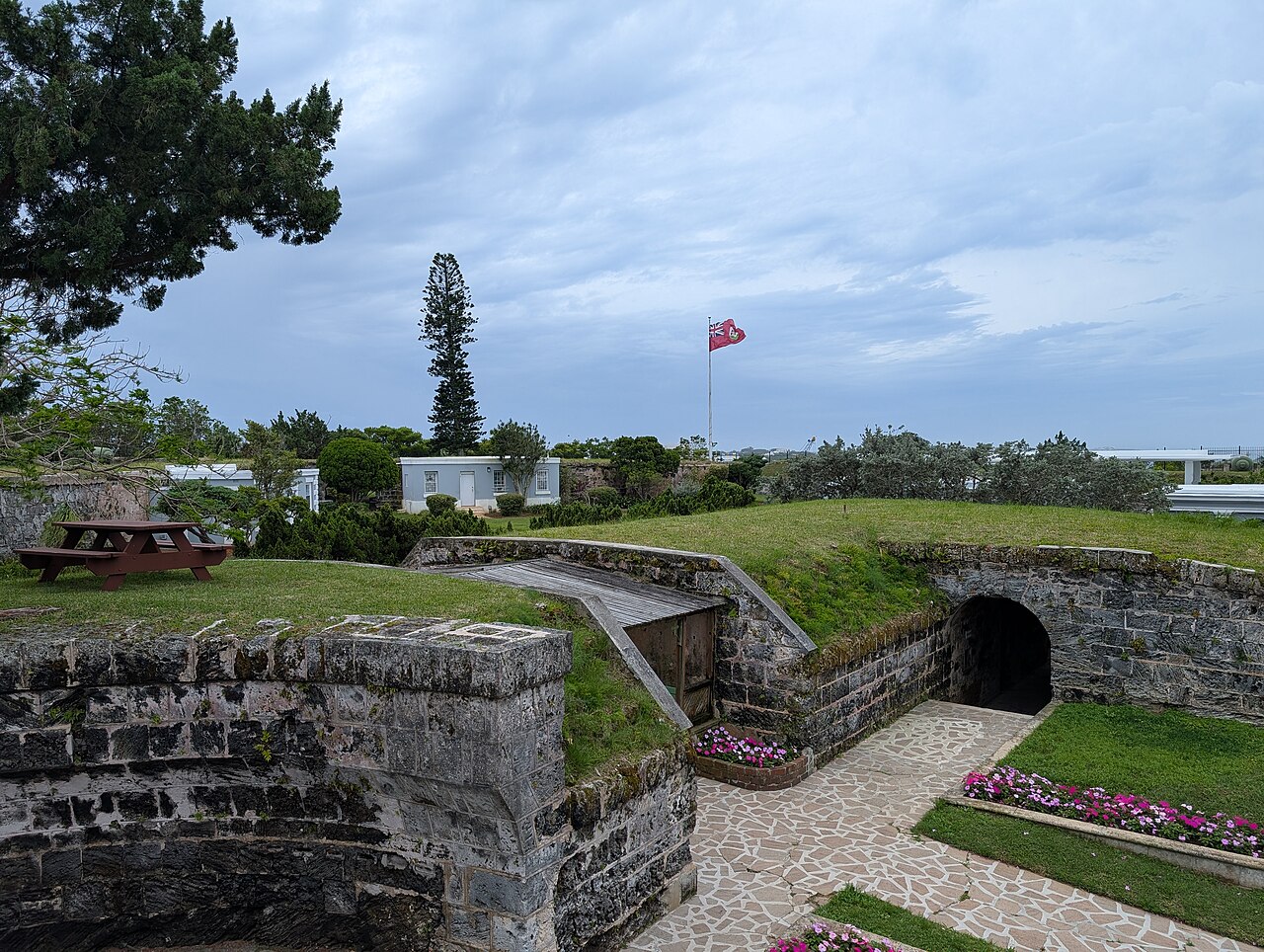
Photo: Aboutmovies, CC BY-SA 4.0, via Wikimedia Commons A Victorian fort on the hill above the City of Hamilton, built to protect the town and harbour from an attack by land. You cross a bridge over a deep dry moat, which is now a shady garden full of ferns and palms, with tunnels leading down into it. On top are lawns, cannons and great views over Hamilton Harbour. On some days in season, pipers in kilts perform a "skirling" ceremony at noon.
Good to know: Free. There are steps and a narrow path round the moat, so it is not suitable for wheelchairs.
Bus, routes 7 or 8 to Hamilton (pink pole), then walk east along Front Street, up King Street (steep) and right onto Happy Valley Road. Or take a taxi from the bus terminal.
St. George's and the East End
The only deep-water channel through the reef runs close to the East End, so this is where Bermuda's forts are thickest. The Town of St. George and its forts are a UNESCO World Heritage Site. You can see several forts in a day: take the bus or, in summer, the ferry to St. George's, and combine them with a swim at Tobacco Bay or Building's Bay.
- 5
Martello Tower
Ferry Point Park, St. George's
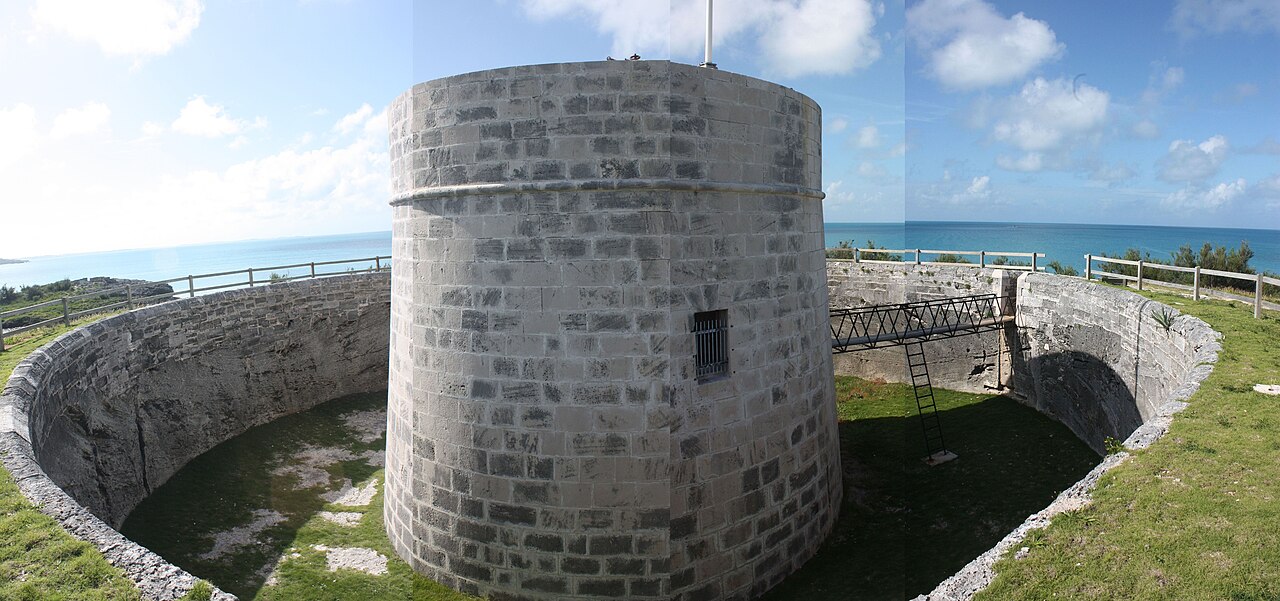
Photo: Aodhdubh, CC BY-SA 3.0, via Wikimedia Commons A squat, egg-shaped stone tower from the 1820s, with walls about 9 to 11 feet thick, standing in its own dry moat. Martello towers were built all round the British Empire, and this is one of the few in the Americas.
Good to know: Free. You can walk round it, but not go inside.
Bus to Hamilton, then route 1, 3, 10 or 11 towards St. George's: ask for Ferry Road, then walk into Ferry Point Park. It is close to Ferry Island Fort, so see both together.
- 6
Ferry Island Fort
Ferry Point Park, St. George's
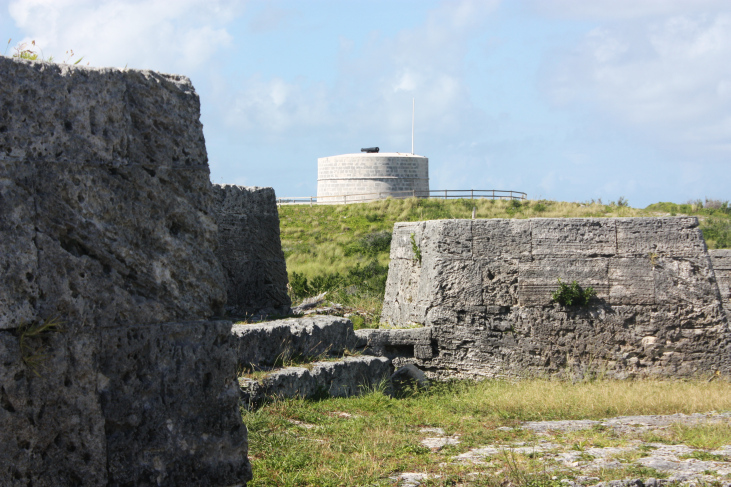
Photo: Seán Pòl Ó Creachmhaoil, CC BY-SA 3.0, via Wikimedia Commons The ruins of a fort from the 1790s on a tiny island at Ferry Point, reached by a small footbridge. Before the Causeway was built in 1871, a ferry here was the only way to get to St. George's.
Good to know: Free, in Ferry Point Park, one of the loveliest stretches of the Railway Trail.
Bus to Hamilton, then route 1, 3, 10 or 11 towards St. George's: ask for Ferry Road, then walk along Ferry Road into the park.
- 7
Fort George
Fort George Hill, St. George's
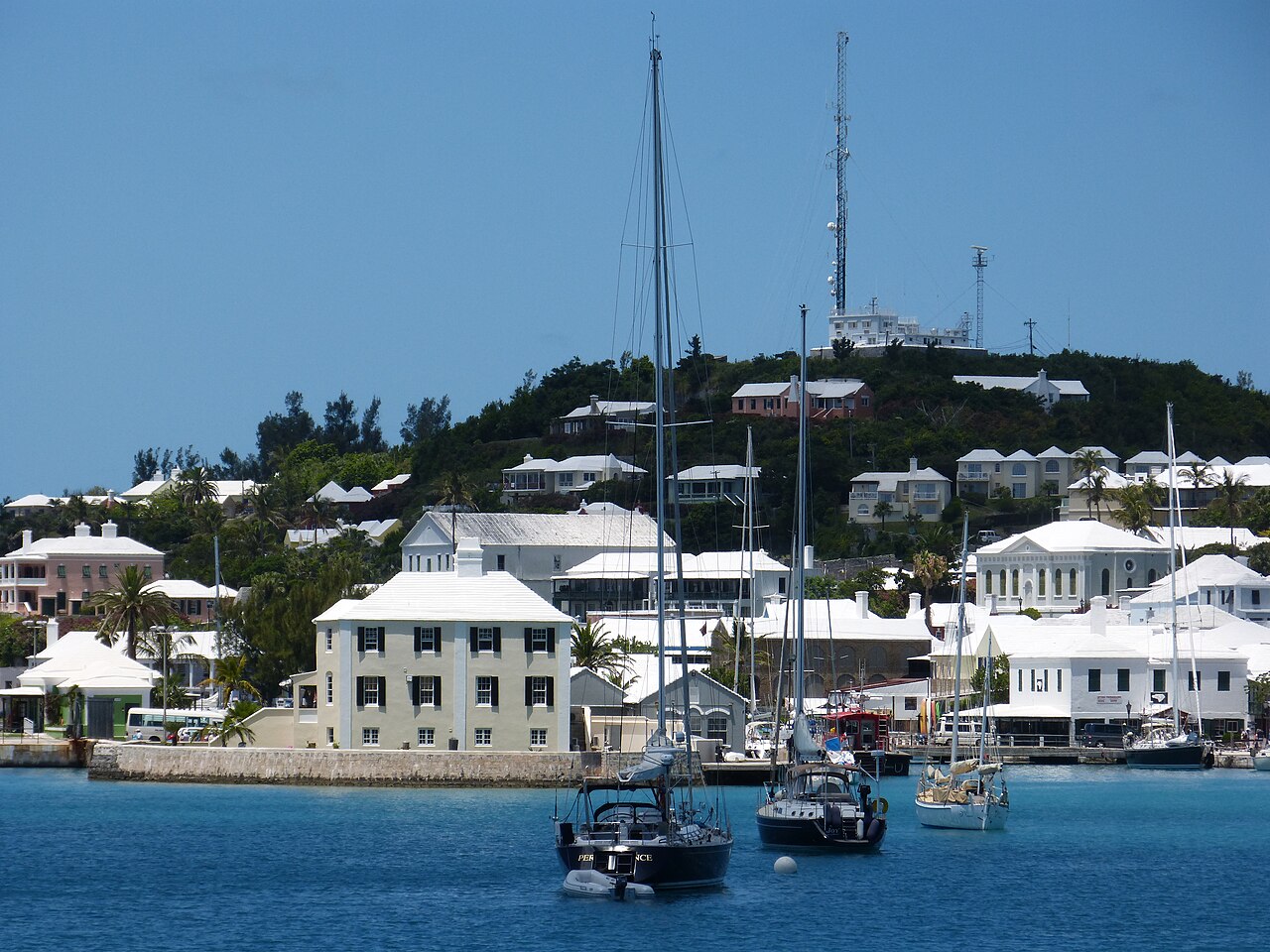
Photo: Seán Pòl Ó Creachmhaoil, CC BY-SA 4.0, via Wikimedia Commons A square fort on the hilltop above St. George's, on a site used for a lookout since 1612. Today it is home to Bermuda Radio, which watches over shipping around the island, so it is usually seen from outside, but the hill gives a fine view over the old town and harbour.
Bus to Hamilton, then route 1, 3, 10 or 11 to St. George's, then walk up Fort George Hill from the town.
- 8
Fort Victoria and Fort Albert
Retreat Hill, St. George's
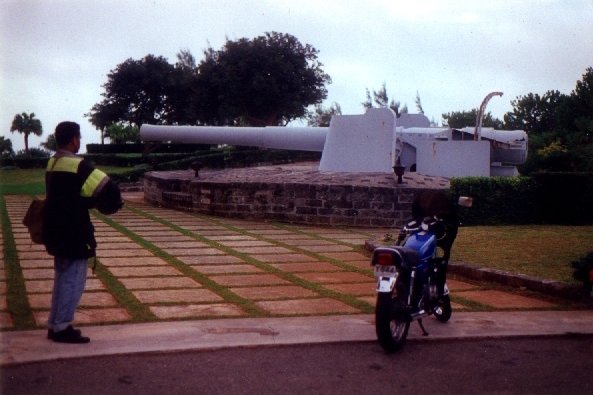
Photo: Seán Pòl Ó Creachmhaoil, CC BY-SA 3.0, via Wikimedia Commons Two forts built in the 1840s on the hill behind Fort St. Catherine and named after Queen Victoria and Prince Albert. Later Fort Victoria was armed with a huge 9.2-inch gun, which made the older forts below it unnecessary. Both are now overgrown ruins on the land of the old Club Med hotel.
Good to know: Mostly overgrown ruins, best seen from outside.
Bus to Hamilton, then route 1, 3, 10 or 11 to St. George's, then walk towards Fort St. Catherine.
- 9
Fort St. Catherine
Barry Road, St. George's
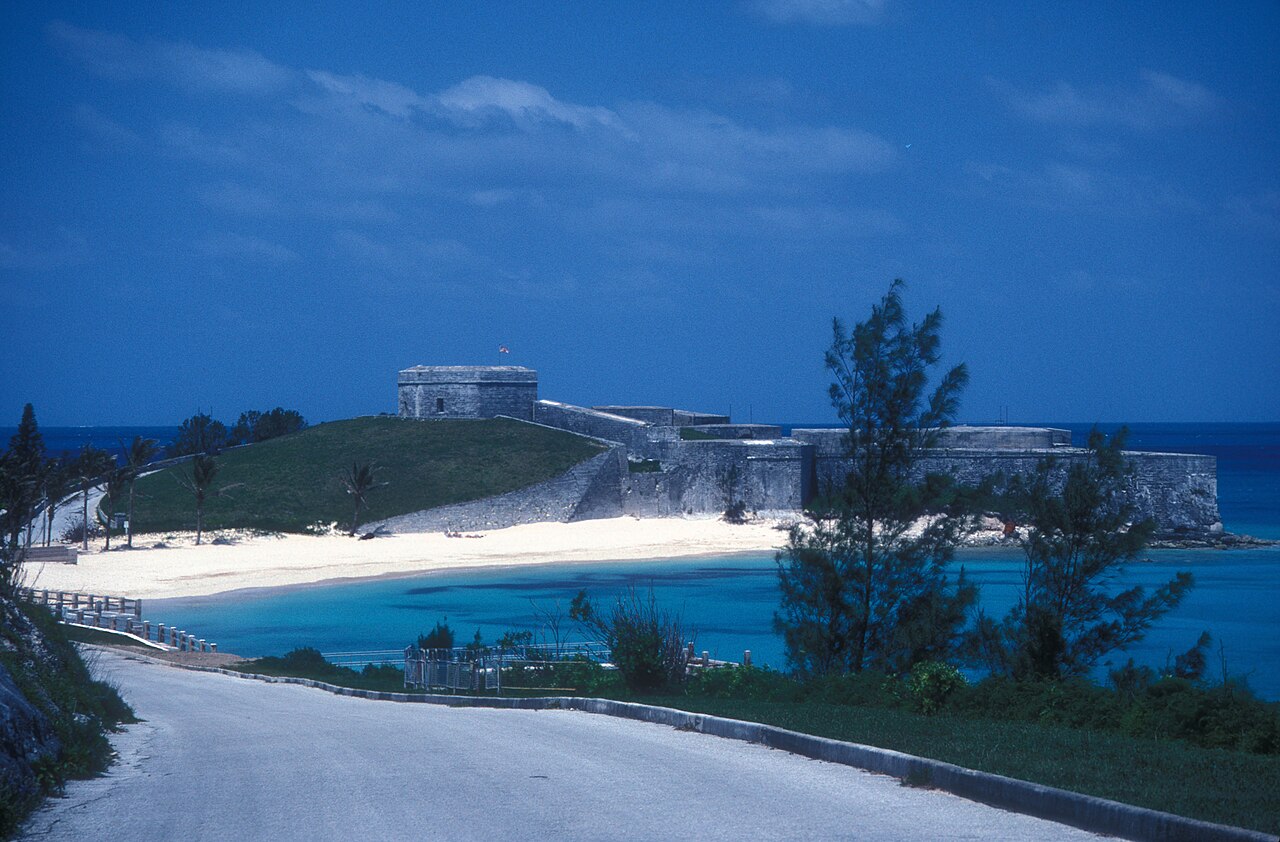
Photo: Jerrye and Roy Klotz MD, CC BY-SA 3.0, via Wikimedia Commons Bermuda's best-known fort, on the north-east tip of the island above the beach where the shipwrecked Sea Venture settlers came ashore in 1609. The first fort here was built of wood in 1612 and replaced in stone two years later, and it was rebuilt five times. Today it is a museum, with tunnels, a keep, cannons and exhibits on four centuries of Bermuda's defences. In the 1950s Charlton Heston starred in a production of Macbeth staged here.
Good to know: Usually open Monday to Friday, 10am to 4pm (daily in summer). Adults $7, children 5 to 15 $3, seniors $5. Guided tours can be booked by phone. Check times on gov.bm before you go.
Bus to Hamilton, then route 1, 3, 10 or 11 to St. George's, then a walk (about 1.5 km) or a taxi. In summer, the ferry from Dockyard is a lovely alternative. Combine it with a swim at Tobacco Bay.
- 10
Alexandra Battery
Barry Road, St. George's
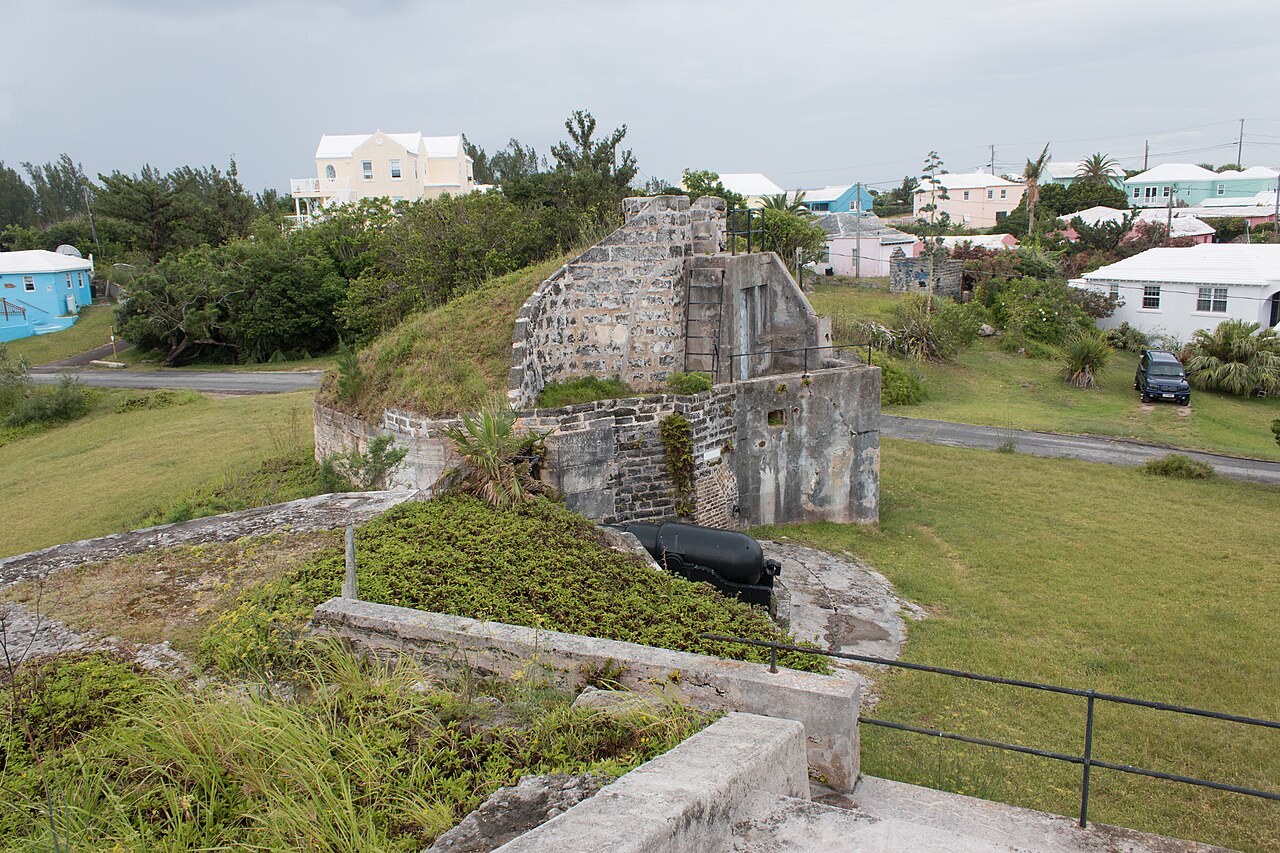
Photo: Captain-tucker, CC BY-SA 4.0, via Wikimedia Commons A battery from the 1860s, named after Princess Alexandra of Denmark, the Princess of Wales. It once had nine guns; one big muzzle-loader is still there. Next door, Building's Bay beach is famous for its sea glass.
Good to know: Free to explore the grounds.
Bus to St. George's (see Fort St. Catherine), then walk along Barry Road, or take a taxi.
- 11
Gates Fort
Cut Road, St. George's
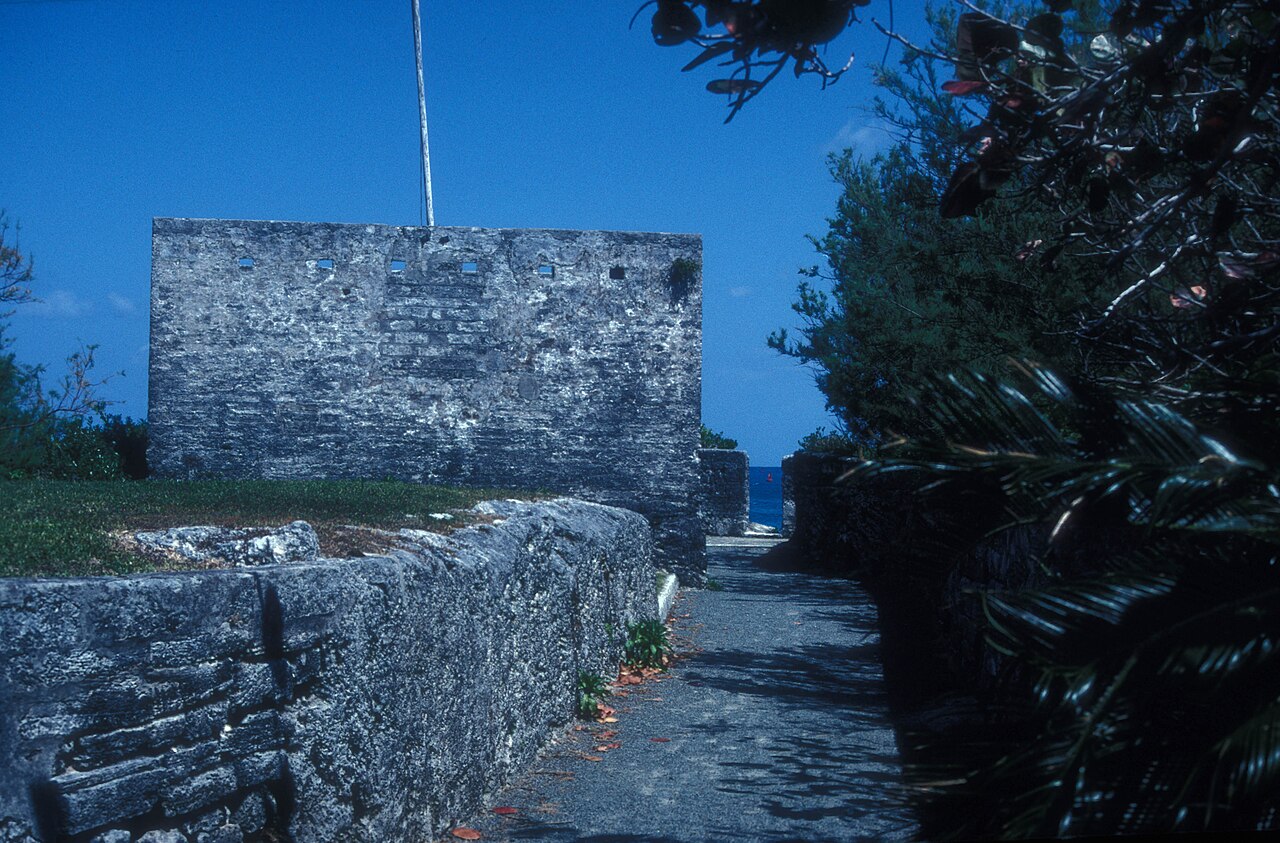
Photo: Jerrye And Roy Klotz Md, CC BY-SA 3.0, via Wikimedia Commons A small fort at the end of Cut Road, guarding Town Cut, the narrow channel that ships use to enter St. George's Harbour. It is named after Sir Thomas Gates, one of the leaders of the Sea Venture survivors. There is not much inside, but it is a great place to watch boats, and sometimes cruise ships, squeeze through the Cut.
Good to know: Free.
Bus to St. George's (see Fort St. Catherine), then walk along Barry Road and Cut Road, or take a taxi.
- 12
St. David's Battery (Great Head Park)
Great Head Park, St. David's
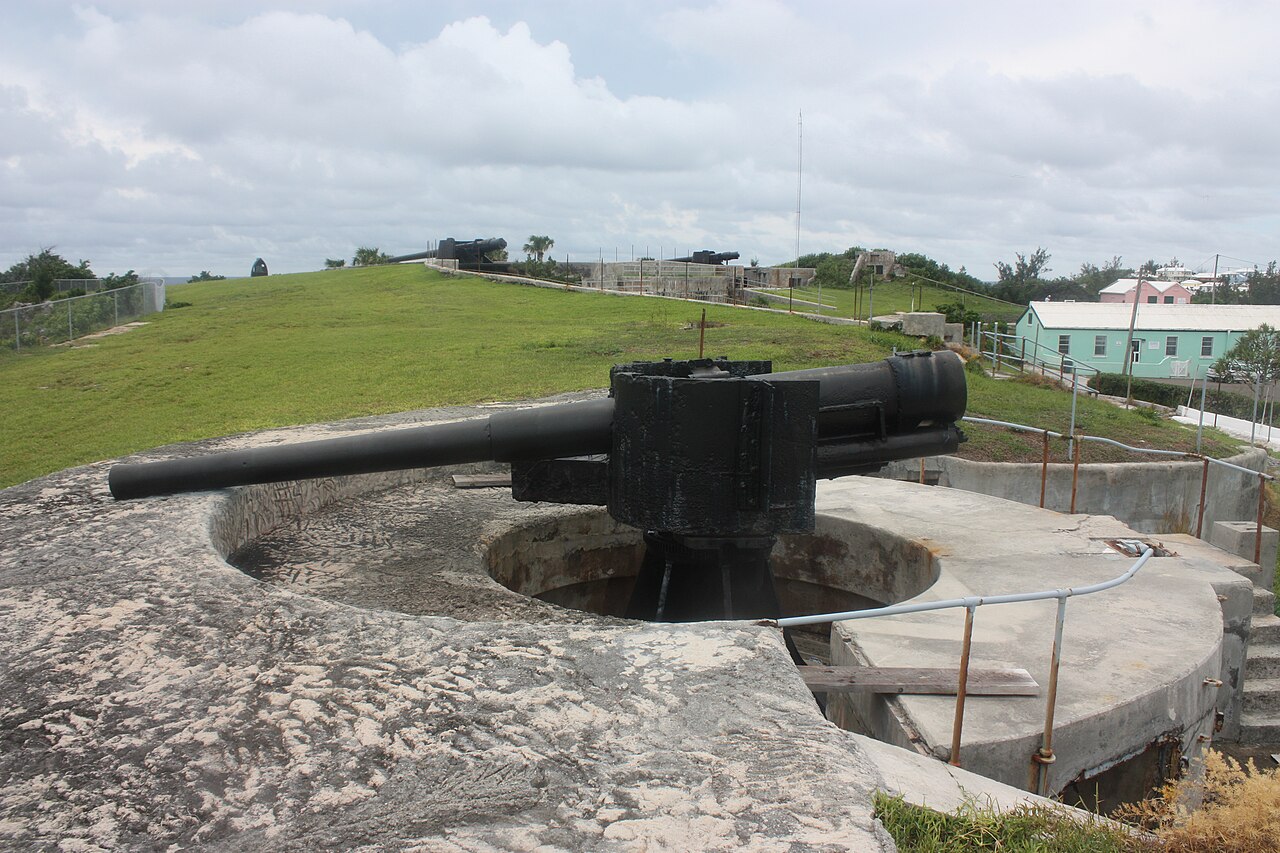
Photo: Seán Pòl Ó Creachmhaoil, CC BY-SA 3.0, via Wikimedia Commons One of the last forts built in Bermuda, finished in 1910 and used until 1953. Its two 9.2-inch and two 6-inch guns are still in place on the headland. In both World Wars it was the "examination battery", watching every ship that came through the reef. The 24-acre park around it is a memorial to Bermudian servicemen, with views out to sea from the island's eastern tip.
Good to know: The park is free. The battery buildings are open only at certain times.
Bus to St. George's (see Fort St. Catherine), then route 6 to St. David's.
- 13
Fort Popple and Little Head Park
Little Head Park, St. David's
Fort Popple dates from the 1700s and is named after Alured Popple, a Governor of Bermuda. The fort itself is closed, but next door Little Head Park has the ruins of old military bunkers and views over the sea, close to St. David's Lighthouse and Cooper's Island Nature Reserve.
Good to know: Fort Popple is not open to the public; Little Head Park is free.
Bus to St. George's (see Fort St. Catherine), then route 6 to St. David's.
Island forts you can see from the water
Bermuda's oldest forts stand on small islands at the East End. You can't usually land on them, but you can see them from a boat or from the shore.
- 14
Castle Island and the Castle Harbour forts
Mouth of Castle Harbour
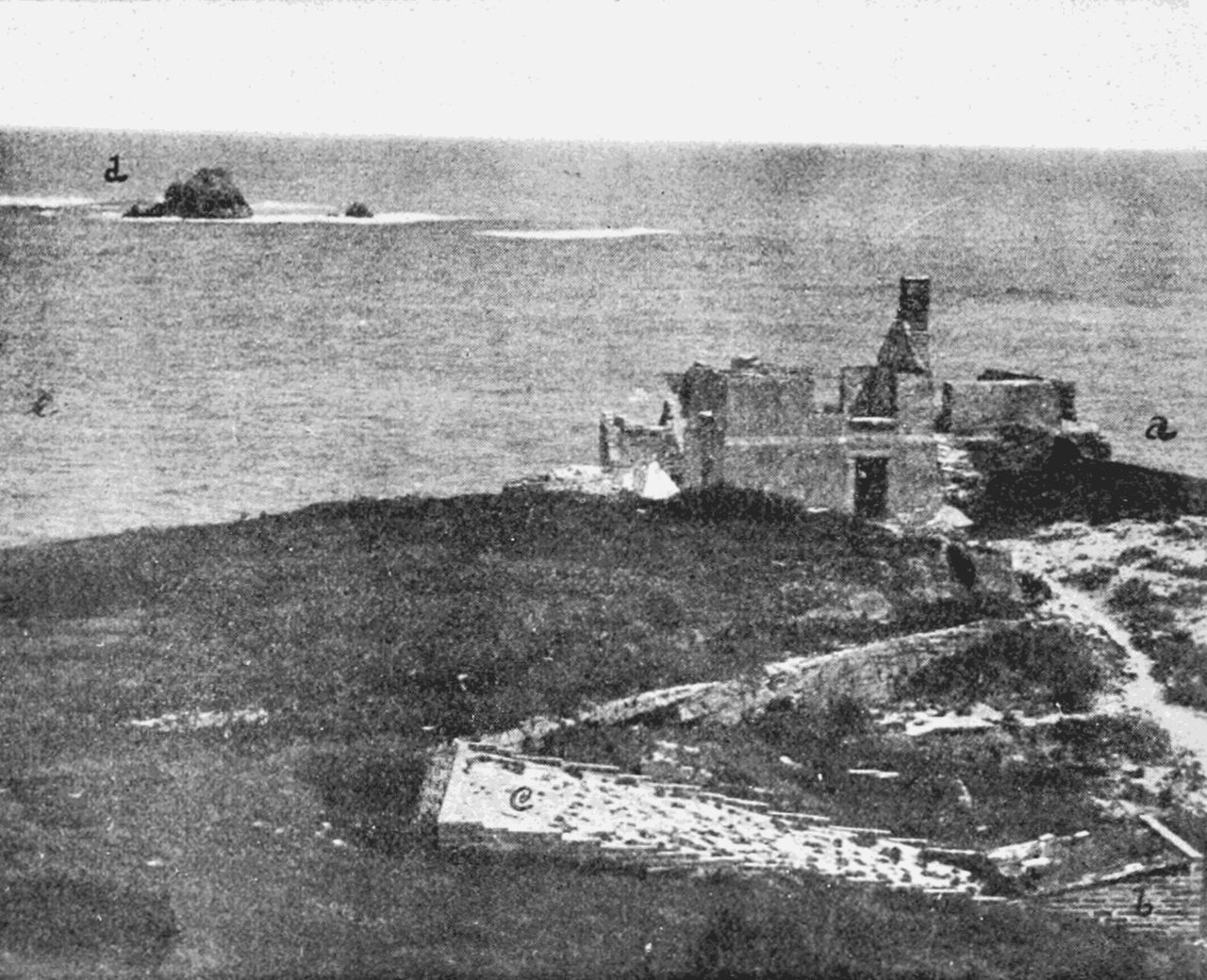
Photo: Popular Science Monthly, 1901, Public domain, via Wikimedia Commons The forts on the little islands across the mouth of Castle Harbour are the oldest surviving English forts in the New World, begun in 1612. King's Castle on Castle Island is Bermuda's oldest standing stone building, and its Captain's House (1621) is the oldest English stone house in the Americas. In 1614 its gunners fired two shots at Spanish ships, the only Spanish attack on Bermuda. Neither hit, but the ships sailed away, not knowing the fort had only enough powder for one more shot. Nearby are Devonshire Redoubt and Southampton Fort.
Good to know: Castle Island is a nature reserve and you can't usually land there. See the forts from a boat tour of Castle Harbour, or across the water from Tucker's Town and St. David's.
Look out for boat tours of Castle Harbour from St. George's, or view from the shore.
- 15
Paget Island and Fort Cunningham
St. George's Harbour entrance
A fort was first built on Paget Island in 1612, guarding the old main channel into St. George's Harbour. It was rebuilt in 1875 with iron-armoured gun positions and named Fort Cunningham. Later it was a prisoner-of-war camp in the Second World War.
Good to know: Not open to the public (the island is a camping site by permit only). You can see it across the water from Gates Fort and from boats entering the harbour.
See it from Gates Fort or from a boat trip in St. George's.
More forts and batteries
There are many more, mostly ruins or on private or military land. A few you may notice:
- Fort William: on the hill above St. George's, near the old Garrison (seen from outside).
- Smith's Fort, Pembroke Fort and Paget Fort: early forts on the islands around St. George's Harbour, now ruins.
- Warwick Camp: once the rifle ranges and a South Shore battery, now home of the Royal Bermuda Regiment.
- Casemates Barracks: at Dockyard, near the Keep (see above).
Tips for fort visits
- Most forts are free and in public parks. Fort St. Catherine and the National Museum at Dockyard charge admission, and hours change with the seasons, so check before you go.
- Wear good shoes and bring water and sun cream: there are steps, uneven paths and little shade on the ramparts.
- Keep children close near moats, walls and cliff edges, which often have no railings.
- Make a day of the East End: St. George's, Fort St. Catherine, Alexandra Battery and Gates Fort are close together, with Tobacco Bay and Building's Bay for a swim. In summer the ferry from Dockyard to St. George's is the most relaxing way to get there. See Getting Around for buses and ferries.
- Near the cottages: Fort Scaur makes a lovely half day with a walk or bike ride along the Railway Trail.
Opening times and prices change, so please check before you go. Prices are in Bermuda dollars, which are equal to US dollars. Map data © OpenStreetMap contributors.
« Back to Info | Parks | Railway Trail | Kids & Families | Beaches